A perspective piece from The Listening Market
There is a particular betrayal that happens between six and seven in the morning, felt by anyone who has ever been jolted upright by an alarm, poured coffee directly down the throat, and answered a work message before the day had technically begun. Somewhere in the last decade, mornings stopped being a time and became an obstacle course: inbox triage over breakfast, headlines before the kettle, a phone consulted before the curtains are open. The day began at a sprint that never slowed, and the hours before it were simply spent rather than lived. A quiet rebellion against all this has been building, and in 2026 it has a name on the lips of everybody from wellness writers to ordinary commuters: the slow morning.
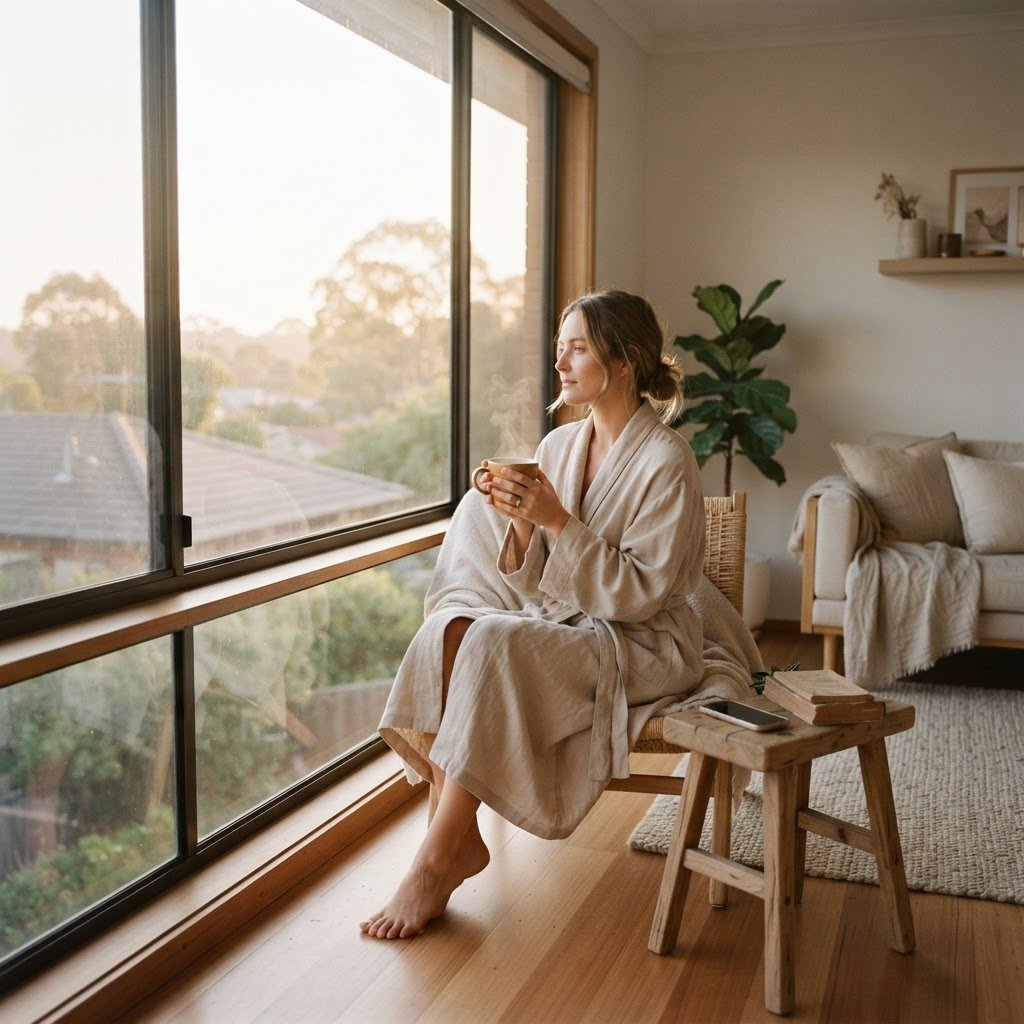
Not a routine, exactly. Not a ritual, with its incense and its performance. The slow morning is better understood as a refusal, a deliberate widening of the gap between waking and working. Its practitioners rise early enough to feel no rush, keep the phone face-down long enough to remember their own thoughts, and treat breakfast as an activity rather than a logistics problem. On paper it sounds almost offensively simple. In practice, it has become one of the most sought-after lifestyle goals of the decade, and the reasons why say a great deal about the era that produced it.
How the morning was lost
To understand the appeal, it helps to remember how the morning was colonised in the first place. The smartphone did something the landline, the newspaper, and even the television never managed: it made everyone reachable before they were ready. The commute added its own taxes. Flexible work followed, dissolving the boundary that once made nine-to-five start at nine, until for a large share of workers the first hour of the day belonged to other people’s priorities, served on a screen that lived on the bedside table. The morning did not disappear. It was annexed, ten minutes at a time, by an economy that never sleeps and expects the same of everyone else.
The health research only sharpened the point. Studies kept circling the same unspectacular conclusions: cortisol highest at waking, decision quality degraded by immediate demands, mood measurably worse when the day begins with a stressful input. The phone alarm’s snooze button became a small hourly referendum on how the day would be spent, and the phone’s first hour of notifications tended to win the referendum before the sleeper had even opened the curtains. People were not choosing a frantic morning, exactly. They were defaulting into one, every single day, and defaulting is exhausting when it happens that many times a week for that many years.
The rebellion, conducted softly
What distinguishes the slow morning movement is how unrevolutionary it looks. There are no products essential to it, though commerce has dutifully tried to attach them. There is no club and no leaderboard. At its core sit a handful of unglamorous commitments: the alarm placed across the room, the phone denied until a reasonable hour, a breakfast eaten sitting down, perhaps a walk, perhaps just sunlight through a window absorbed in silence. The point is not the specific ingredients but the tempo, a morning that belongs, in its full unbranded emptiness, to the person living it.
The parents of small children, the shift workers, the people with three jobs are entitled to roll their eyes, since an unhurried morning is not evenly distributed, and the movement’s cheerleaders could stand to acknowledge that more often. But the quiet part that many practitioners eventually confess is that slow mornings have little to do with how much time exists and everything to do with the character of the time spent. Ten minutes of genuinely unhurried tea, no screen in hand, lands differently from forty minutes of fragmented screen-lit chaos. The slow morning is a mood before it is a schedule, which is exactly why it survives its own interruption.
What the habits actually look like
Among the people who have made the practice stick, a few common shapes keep reappearing, each of them less about self-improvement theatre and more about the subtraction of noise. Wake times tend to sit earlier than the world requires, not for productivity’s sake but so that hurry never arrives. Phones stay dark and face-down, often physically exiled from the bedroom overnight, since the hand cannot reach what the hand cannot find. Breakfast happens at a table, sometimes with company, sometimes with nothing but the news withheld. There is frequently light: a walk, a yard, a stretch by a window, since morning sunlight is one of the few wellness interventions supported by nearly everyone who studies sleep.
But the deeper habit is editorial rather than mechanical. Slow-morning people tend to have decided, consciously, what the first hour is for, and the answer is almost never information intake. The news will still exist at eight. The inbox will still be full at nine. The morning is treated as the one part of the day with a protected status, like a nature reserve for attention, and the boundary is policed with the same seriousness a meeting with the boss would be, because in a sense that is exactly what it is.
Why the appetite grew in an accelerating decade
The trend did not emerge from nowhere; it rose precisely because its opposite intensified. As work bled into evenings, entertainment fragmented into fifteen-second increments, and the phrase on everyone’s lips became something about the world speeding up, the untouched morning became the last easily defensible territory for anyone who wanted their day back. It requires no permission from an employer. It requires no purchase beyond perhaps a better alarm clock. It is one of the very few autonomy-restoring moves available to a person whose schedule is otherwise fully subscribed.
There is also the matter of what it reveals about status, because every lifestyle shift eventually does. For a while, the flex of a busy era was business: breakfast meetings, five-a-m flights, a calendar defended like a fortress. The current flex runs the other way. The person who can say no to the morning meeting, who visibly keeps bicycle rides and unhurried coffee and a Saturday without obligations, signals that their time is genuinely their own. Busyness was once currency. In 2026, the scarcer and more enviable commodity is calm, and the slow morning is calm in its most visible, most shareable form.
The commerce of the quiet hour, for better and worse
Naturally, an enormous industry has assembled around people who want to buy their way into tranquillity. Sunrise alarm clocks, linen robes, matcha sets, enormous ceramic mugs whose handles fit four fingers, journals with prompts, apps that simulate the sound of a distant cafe. Some of it is pleasant, and much of it is beside the point, since the slow morning was never fundamentally about equipment. A person who owns a laughably expensive espresso machine and scrolls through their phone while it brews has not achieved the morning. A person who makes instant coffee and drinks it while watching the street has.
The commercial version risks turning the whole practice into another performance metric, morning routine as content, sunlight as an aesthetic. That would be a shame, because the actual value lies in its unremarkableness and refusal to optimise. The slow morning is not a productivity hack wearing a bathrobe, whatever the content mills say. It is a small, daily act of noticing, one that happens to improve sleep, mood, and focus precisely because it declines to optimise for them.
A modest utopia, one sunrise at a time
The likeliest future for the slow morning is that it stops being called a trend at all. Like remote work and home cooking, it is on the path from aspirational hashtag to unremarkable preference, practiced by people who would never dream of describing themselves as part of a movement. The phrase itself may fade while the habit spreads, which is how most successful revolutions in daily life eventually mature.
For now, its appeal is easy enough to explain. The world outside the bedroom window remains fast, loud, and lit. The hours after nine o’clock remain spoken for by employers, algorithms, and obligations of every shape. But the first hour of the day is still, quietly, up for grabs, and a growing number of people are grabbing it back. They are not waking up early to get ahead of anyone. They are waking up early to get ahead of the noise, and the tea, the light, and the silence are better company than they remembered.