A perspective piece from The Listening Market
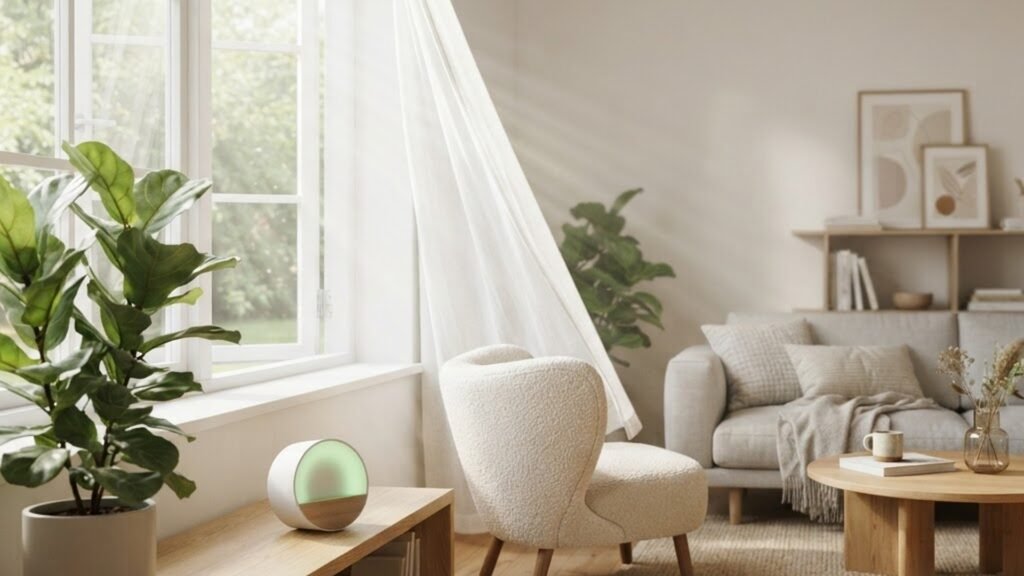
In a quiet suburb of Perth, a mother of two has spent the past year doing something that would have seemed absurd a decade ago: she has been buying devices that measure the air inside her house. A small monitor sits on the kitchen shelf beside the fruit bowl, glowing green on most days. When it glows orange, she opens windows, checks the range hood and moves a potted plant. Her friends used to tease her. Now three of them own the same monitor, and the group chat has a channel dedicated to humidity readings.
A decade of wellness obsession has covered almost everything the human body consumes and performs. Sleep trackers quantified the night. Gyms and step counts quantified the day. Fermented everything quantified the gut. Yet the most fundamental substance of all — the roughly ten thousand litres of air a person breathes each day — spent years as a second-class citizen of the wellness conversation. That has changed. Indoor air quality has become the new frontier of home health, and it is moving from niche obsession to mainstream habit at startling speed.
The invisible became measurable
What changed first was not air. It was information. For most of history, indoor air announced itself only when it was obviously wrong: smoke, mould smell, a stuffy room after a party. Worse air did not always smell worse. Carbon dioxide builds silently in a closed bedroom. Fine particles from cooking, candles or bushfire smoke drift far below the threshold of notice. People lived inside bad air the way fish live in water, unaware of anything else.
Air monitors have fallen in price and multiplied in kind. A consumer can now measure carbon dioxide, fine particulates, humidity, temperature and volatile organic compounds for less than the cost of a mid-range kettle. The readings cluster on phone apps with traffic-light colors, and the effect is psychological as much as technical. A number makes the invisible feel accountable. People who would never have opened a window on instinct will open one the instant a screen says the carbon dioxide in the study has crept into four digits.
Schools discovered this first, in many places, during the years when ventilation became an education policy issue. Carbon dioxide monitors installed in classrooms to reassure parents did something else as well: they taught an entire generation of families that inside air is a metric, and that it moves up and down with behaviour. The device in the Perth kitchen is downstream of that lesson.
Working from home exposed the problem
The shift to working from home quietly relocated the workday into rooms never designed for eight-hour occupancy. Spare bedrooms converted to studies tend to have a single window, a closed door and a heater. The headaches and afternoon fog that office workers once blamed on fluorescent lighting turned out, in many cases, to be plain stale air. Once people measured their home offices, they found carbon dioxide levels in the afternoon that no parenting article would recommend for a sleeping infant.
Fixing it turned out to be almost embarrassingly simple. Cracking a window restored alertness. Some workers now schedule ventilation like hydration, a small clockwork habit that sits beside the daily standup. The productivity industry, always searching for a lever, found a cheap one: fresh air beats another espresso, and the improvement is measurable about an hour after the window opens.
Cooking, candles and the particle surprise
If one finding has travelled furthest into ordinary kitchens, it is that cooking is a major source of indoor pollution. Fried dinners, especially in poorly ventilated kitchens, release fine particles at concentrations that briefly rival peak-hour traffic. Range hoods, it turns out, are widely installed and rarely used, and many vent nothing anywhere except back into the room.
The home fragrance industry has taken a reputational knock as well. Scented candles, incense and popular aroma diffusers are fine occasionally in large airy rooms, but daily use in sealed winter households is now known to be more noticeable to a particle monitor than a weekday of outdoor exposure. Awareness has not destroyed the candle market; it has merely educated it. People who once burned three candles a night now burn one, and open the window afterwards, which is a change nobody would have predicted from a wellness brochure.
The purifier became furniture
The most commercially visible sign of the trend is the arrival of the air purifier as normal household furniture. Once a niche appliance for allergy sufferers, it now sits in living rooms the way a fan once did: understood, unremarkable, switched on when the season demands. Bushfire-prone regions drove early adoption, but the category has broadened into pollen seasons, winter stuffiness and post-renovation dust. Some newer models even hide inside other objects, and purifying lamps and fans sell on the promise of doing the work invisibly.
Architects and builders have noticed, too. New homes increasingly advertise ventilation intelligence the way they once advertised stone benchtops. Heat-recovery systems that exchange stale air for fresh without throwing away warmth have moved from eco-home catalogues to volume builders. The double-glazing industry, already riding energy prices, now sells airflow alongside insulation. Even the humble range hood is being redesigned around capture rather than decoration.
Old knowledge, new packaging
For all the gadgetry, much of the movement is a rediscovery. Grandmothers threw windows open at dawn regardless of the weather. Italians of a certain generation schedule the whole household around airing bedrooms and airing clothes. Schools built in the twenties were designed with high ceilings and leaky windows precisely because the relationship between fresh air and clear thinking was accepted wisdom before it was called unscientific and forgotten under the reign of sealed, climate-controlled boxes.
The modern difference is feedback. Tradition opened windows because it felt right; the new habit opens them because a screen confirms a number falling. The phenomenon repeats a familiar pattern of contemporary wellness: behaviour returns, rewrapped in data, and finally sticks. Nobody worries the pendulum will swing back to total trust in sealed buildings, because the monitors are now installed and the numbers do not negotiate.
A calmer kind of clean
There is also a quieter aesthetic shift behind the trend. The same households that bought the monitors have been simplifying what they put in the air in the first place: fewer plugins, fewer aerosols, a growing suspicion of any spray that promises a forest. The “clean home smell” is undergoing a re-brand, from chemically floral to chemically faint. Baking soda and vinegar never left; they simply regained status.
That change has consequences for wellbeing that reach past particulates and into psychology. Rooms that smell of almost nothing are increasingly read as rooms that are genuinely clean. The scent of lemon bleach still has loyalists, and they are not wrong about its pleasures, but its dominance is a generation older than the nursery it is sprayed in. The freshest room, in the new common sense, is the one where the loudest smell is yesterday’s bread.
Plants, paint and the chemical question
A newer branch of the trend scrutinises not just outside air but what the house itself emits. Paint, furniture, carpets and cleaning products release volatile organic compounds, sometimes for months after installation, and awareness of off-gassing has changed both shopping and renovation habits. Low-emission paint has moved from enthusiasts’ forums to the mainstream shelf. New furniture is increasingly aired on a verandah for a week before entering a bedroom. Floors are being chosen in the name of what a household breathes rather than only what it looks like.
Houseplants deserve a brief honest word here, since they were credited in the popular imagination with powers they mostly lack. A spider plant does not purify a living room, and the famous studies suggesting otherwise measured sealed chambers rather than real homes. But plants earn their place in the fresh-air era in subtler ways: their soil hosts microbes, their leaves signal care, and a person who waters living things tends to keep windows open. Freshness is a culture as much as a measurement, and few objects create that culture faster.
From gadget to garden to habit
Where the trend heads next is visible in the periphery: filtration in schools becoming political bread-and-butter rather than emergency measure, restaurants advertising dining-room air the way they once advertised organic produce, rental listings including ventilation as a feature. The checklist for a healthy home in 2026 now reads: sleeping room, quiet street, breathable air.
The little monitor on the kitchen shelf will probably end up just another forgotten purchase; gadgets fade. But the habit it trained is likely to stay: windows opened at predictable hours, cooking ventilation that actually vents, bedrooms cooled at night despite winter, and an intuitive resistance to any room sealed long enough to feel heavy. Air became legible, and once a thing is legible people find it difficult to unsee. The Perth mother’s monitor glows green most mornings now. The orange days are rarer, and when they come, something in the household simply moves, and the light turns green again.