A perspective piece from The Listening Market
Carpets have a way of telling stories. They hold the memory of every spill, every footstep, every pet, every gathering. They absorb the texture of daily life in a home, and over time, all that absorption takes a toll. What was once plush and inviting becomes flattened, dulled, and quietly stained in places no one quite remembers when it happened.
Keeping a carpet looking and feeling fresh is not about heroic interventions or expensive professional treatments every few months. It is about understanding what causes carpets to age prematurely and building a few simple habits that prevent the damage before it starts. The difference between a carpet that looks tired after two years and one that still feels new after five is almost entirely in the maintenance routine.
Understanding What Actually Wears a Carpet Down
Most people assume stains are the primary enemy of carpet longevity. They are not. The real culprit is something far more mundane: dirt. Not the visible kind that prompts a spot clean, but the fine, gritty particles that settle deep into the fibres and act like sandpaper every time someone walks across the surface. Every step grinds those particles against the carpet fibres, causing microscopic abrasion that dulls the colour, flattens the pile, and weakens the structure over time.
Moisture is the second major factor. Carpets are designed to handle occasional spills, but persistent dampness, whether from humid air, wet shoes, or over-wetting during cleaning, creates an environment where mould and mildew can take hold beneath the surface. Once that happens, the carpet develops a musty odour that no amount of surface cleaning will remove, and the fibres begin to break down from within.
Sunlight plays a role as well. Ultraviolet light fades carpet colours unevenly, particularly in areas near windows where the exposure is concentrated. The fading is gradual and often goes unnoticed until furniture is moved and the contrast between exposed and protected areas becomes stark.
Understanding these three forces, abrasive dirt, moisture, and sunlight, is the foundation of every effective carpet care strategy. The habits that follow all address one or more of these factors.
The Weekly Habit That Changes Everything
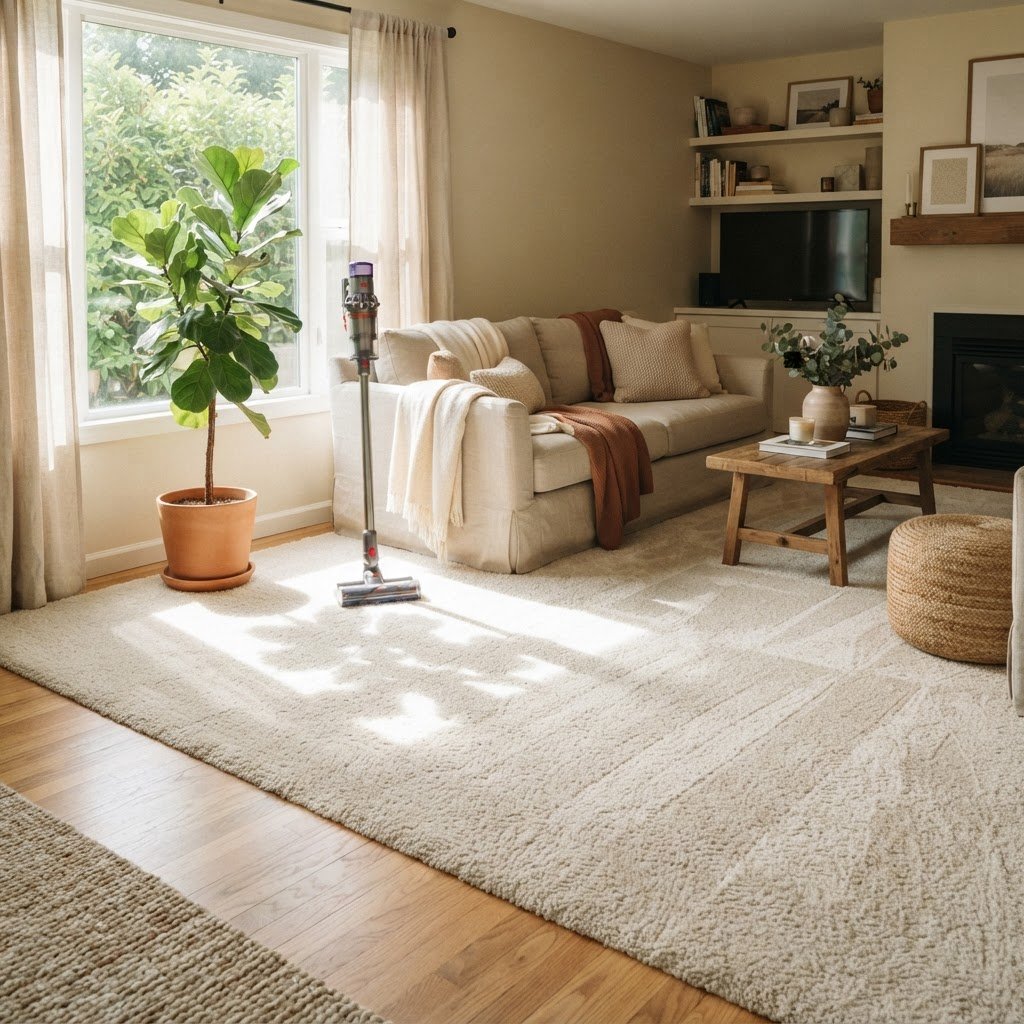
If there is a single practice that has the greatest impact on carpet longevity, it is regular vacuuming. Not the occasional once-over when the carpet looks like it needs it, but a consistent weekly routine that removes abrasive dirt before it has a chance to settle and grind.
The technique matters as much as the frequency. Slow, deliberate passes with the vacuum allow the brush to agitate the fibres and lift embedded particles. Rushing through the job leaves dirt behind, and that dirt does not go away. It accumulates week after week, working deeper into the pile with every step.
High-traffic areas deserve extra attention. Hallways, the path from the front door to the living room, the area around a favourite chair: these zones collect dirt faster than the rest of the house and benefit from a twice-weekly vacuum. Using a vacuum with a HEPA filter also captures the finest particles, the ones most likely to settle deep and cause long-term damage.
Managing Spills Before They Become Stains
The golden rule of spill management is speed. A fresh spill is a problem that can be solved. A stain that has set is a problem that can only be disguised. The difference between the two is often a matter of minutes.
The correct approach is counterintuitive to most people. The instinct is to scrub, to apply pressure and work the spill out with friction. This is exactly wrong. Scrubbing pushes the liquid deeper into the fibres and damages the pile, creating a rough spot that will look worn even after the stain itself is removed.
Instead, the spill should be blotted. A clean cloth or paper towel pressed gently against the spill absorbs the liquid without driving it further into the carpet. Working from the outside of the spill inward prevents the liquid from spreading. Once as much moisture as possible has been absorbed, a mild cleaning solution, just a few drops of dish liquid in warm water, can be applied with a clean cloth and blotted again.
Different substances require different responses. Water-soluble spills like juice, coffee, or sauce respond well to the blot-and-clean approach. Oil-based spills benefit from a small amount of rubbing alcohol applied to a cloth before blotting. Biological spills, anything involving food, pet accidents, or blood, should be treated with an enzyme cleaner that breaks down the organic matter rather than just masking it.
The Case for Professional Cleaning
Even with impeccable daily habits, carpets benefit from a periodic deep clean that goes beyond what a household vacuum can achieve. Professional hot water extraction, typically recommended every twelve to eighteen months, flushes out the deep-set dirt, allergens, and residual cleaning products that accumulate over time.
The timing of a professional clean matters. Waiting until the carpet looks visibly soiled means the dirt has already been grinding against the fibres for months. Scheduling a clean before the carpet looks like it needs one preserves the fibre structure and extends the overall lifespan significantly.
Between professional treatments, a carpet cleaner can be rented or purchased for a mid-cycle refresh. These machines are less powerful than professional equipment but are effective for addressing high-traffic areas or spot-cleaning after a particularly active season. The key is not to over-wet the carpet. Excessive moisture takes too long to dry and creates the damp conditions that lead to mould and odour.
Small Changes That Extend Carpet Life
Beyond cleaning, a few environmental adjustments make a substantial difference. Placing doormats at every entrance gives people a place to wipe their feet before stepping onto carpet, dramatically reducing the amount of dirt tracked inside. The doormats themselves need regular cleaning, or they simply become a source of the dirt they were meant to trap.
Rearranging furniture periodically changes the traffic patterns across a carpet, preventing any single area from bearing the brunt of daily use. It also allows shaded areas to receive some sunlight exposure and faded areas to be protected, keeping the colour more uniform over time.
Removing shoes inside the house is perhaps the single most effective change a household can make. Shoes track in not just visible dirt but oils, road salt, and abrasive particles that are invisible to the eye but devastating to carpet fibres over time. A shoe basket by the door and a pair of indoor slippers can add years to a carpet’s useful life.
Pet owners face additional challenges. Regular grooming reduces the amount of hair and dander that settles into the carpet, and keeping nails trimmed prevents snags in loop-pile carpets. For households with pets, a pet-specific vacuum attachment that reaches deep into the pile is a worthwhile investment.
A Worthwhile Investment of Attention
Carpets are one of the most significant investments in a home, both in terms of initial cost and impact on the feel of a space. A fresh, clean carpet makes a room feel cared for. A tired, stained one makes even a well-decorated space feel neglected.
The good news is that keeping a carpet fresh is not a matter of expensive products or complex routines. It is a matter of consistent, simple habits: vacuum regularly, blot spills immediately, deep clean annually, and minimise the dirt that enters the house in the first place. None of these practices is difficult. Together, they form a routine that can keep a carpet looking and feeling good for years longer than neglect would allow.
The most satisfying part of carpet care is that the results are visible and immediate. A freshly vacuumed carpet looks richer. A well-maintained carpet holds its colour and texture. And a carpet that has been cared for from the start still feels welcoming years later, carrying the stories of a home without showing every one of them on its surface.