A perspective piece from The Listening Market
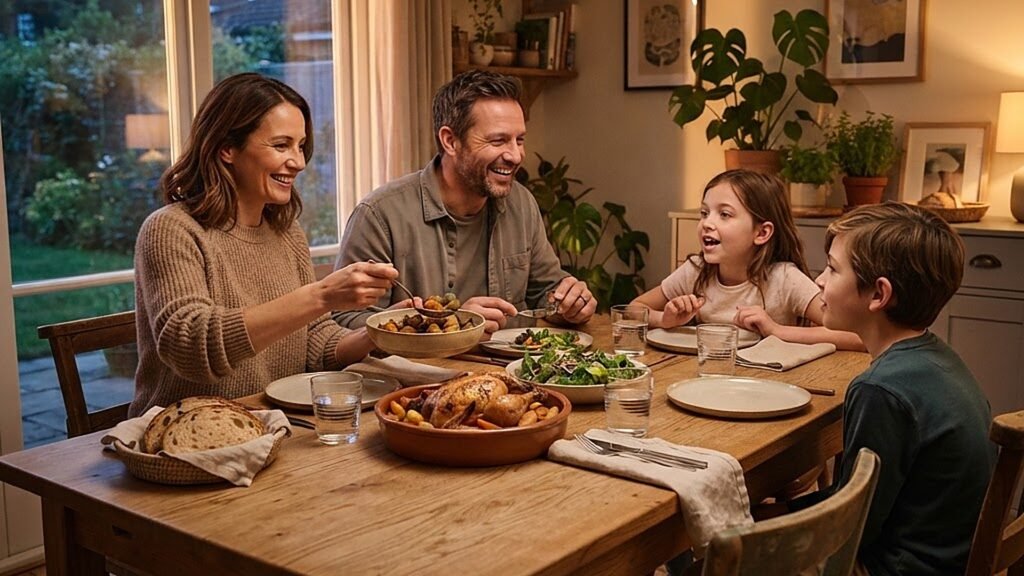
On a street in a middling suburb, at a window, sits one of the quiet markers of 2026: a kitchen lit up at half past five in the afternoon. Inside, dinner is being cooked, eaten and cleared away before many commuters have even begun the journey home. By nine the house is dark except for a reading lamp, and the occupants are, by modern standards, suspiciously close to asleep. A decade ago this schedule belonged to retirees and young children. Today the early dinner, once an accident of geography or age, is being adopted as a deliberate practice by people in their twenties, thirties and forties, and the reasons behind it say as much about the decade as about dinner.
The schedule quietly rewrote itself
Elective earlier eating arrives on the back of structural change. The boom in flexible and hybrid work untethered the evening from a fixed office departure, and for millions of people the logistical reason to eat at eight vanished with it. If the working day can end at four, the meal can start at five. Meanwhile, the habits of the pandemic years, when home cooking and earlier evenings became the default for much of the world, never fully unlearned themselves. Gyms emptied of the post-work crowd and refilled with the mid-morning one. The morning has already been rescheduled once this decade; dinner is simply the next appointment to move.
There is also a social drift beneath the surface. The long-standing ritual of eating late at a screen, fork in one hand and phone in the other, has been quietly downgraded from normal evening to cautionary tale. Digital wellness culture moved from an obsession of the fringe to ordinary family policy, and the shared evening meal now carries a faint ceremonial seriousness, phones parked, lights low, food at the centre. Once people start treating dinner as an event rather than a refuelling stop, the timing becomes deliberate, and deliberate tends to mean earlier, leaving room for the evening to be something more than digestion.
Sleep science found its way to the table
The loudest advocate for the early dinner is sleep. As sleep tightened its grip on the cultural imagination, from wellness influencer obsession to genuine medical consensus, meal timing surfaced as one of the levers everyone can actually reach. The rule of thumb now rehearsed in pop-health circles, leave a solid gap before bed, made eating earlier the cheapest sleep intervention available. Digestion competes with rest for the body’s attention, heartburn and reflux worst of all, and for people who spent years staring at the ceiling after a late heavy meal, the fix turned out to be beautifully simple.
For a large cohort of shift workers and early risers this was never news; it was the natural rhythm of lives that begin before seven. But the mainstream adoption of the habit was powered by ordinary people noticing effects, described with the repetitive clarity of anecdote: deeper sleep, easier mornings, no 3 a.m. reckoning with the fridge light. Clinicians now routinely advise earlier meals for reflux, blood sugar and circadian alignment, and their voice has been amplified by a generation of wearables that turn sleep into a scored competition. Once a watch starts awarding points for rest, the late dinner becomes the thing that cost the user eighty-one.
The gut got a vote too
If sleep supplied the momentum, digestion supplied the respectability. The explosion of mainstream interest in gut health over recent years gave the early dinner a second scientific endorsement, since the digestive system keeps its own clock and does its most reliable work upright and awake. Eating late, particularly the sugar-heavy, screen-lit grazing that fills modern evenings, now carries a reputation for leaving the microbiome grumbling. A lighter earlier meal followed by a fast until morning has become one of the most repeated pieces of everyday nutrition advice of the decade, which is how habits propagate: not through one dramatic study but through a hundred small reinforcements, from pharmacists to running clubs to grandmothers nodding sagely.
Intermittent timing deserves its share of the credit. Fans of early time-restricted eating discovered an awkward truth: a sixteen-hour fast works beautifully until dinner is at nine, at which point it collides with breakfast and sanity. The practical solution, moving dinner to the early evening, pulled the meal forward without anyone needing to call it a diet. The early dinner thus arrived wearing everyday clothes while doing the work of a wellness protocol, an unmarketable habit, which is perhaps why it spread the way it did.
Different kitchens, the same ticking clock
The trend also arrives with a cultural footnote: much of the world never ate late to begin with. In parts of Scandinavia an early evening meal is simply what dinner is, and generations of northern households would find nothing trend-worthy about a kitchen going dark by six. The global conversation about meal timing has come with its own gentle defamiliarisation, with the late-dinner cultures of Spain and Latin America openly debating, sometimes ruefully, whether their beloved ten o’clock tables can coexist with a decade obsessed with sleep scores and morning discipline. Cultural habits like these do not surrender quickly, and they should not have to; an evening meal eaten late among friends contains its own kind of nourishment no wearable measures.
What mainstream shift workers keep quietly pointing out is that their lives have always been the evidence. Nurses, bakers, farmers and builders have eaten early for the practical reason that their days begin at hours other people consider theoretical. The rest of the workforce is not discovering something new so much as being released, by flexible schedules and persuasive gadgets, into a rhythm that physical labour always imposed. The twenty-first century is, in this small corner of it, catching up with the bakery.
What it is like to eat early on purpose
Those who have changed their mealtime describe an unexpected reordering of the evening. With dinner cleared by seven, the hours that used to be occupied by cooking, eating and the slow wind-down become genuinely free, and the change feels less like a sacrifice than an inheritance of time. Walks after dinner, once reserved for holidays and grandparents, have become a fixture of ordinary Tuesdays. Reading happens. Conversations extend past the table because nobody is exhausted mid-mouthful. The evening stretches, and with it, paradoxically, so does the appetite for mornings, since bed arrives before the second wind of late-night wakefulness.
There are frictions, and honesty requires they be named. Social life runs late and does not intend to change its schedule for anyone’s circadian rhythm. Restaurants still treat six o’clock as the early-bird special and eight-thirty as the real booking hour, though the number of kitchens cheerfully serving a proper dinner at five-thirty has noticeably risen. Families juggling training sessions and commutes find the shift fragile, a habit that survives one school sport fixture and dies the next.
The food industry has started to notice, and supply is quietly rearranging itself around demand. Cafes that once closed at three now stay open for an early dinner service, and some restaurants report their five-thirty seatings growing faster than any other hour of the evening. Supermarket shelves tell the same story in a softer key, with the growth of quick, complete early-meal solutions pitched explicitly at people who want dinner done by six and the evening to themselves. Cookbooks and food publications have followed the appetite, with the family meal that grazes into the early evening now treated as its own genre, somewhere between tradition and self-care. The early dinner has achieved the quiet status every durable food change achieves: it stopped being a recommendation and started being a product category.
The early dinner is less a rule than a gravitational pull, and its adopters tend to defend it exactly that way, zigging late when life demands and returning to early eating when it relents.
A small rebellion with compounding interest
The revival of the early dinner fits a pattern now visible across ordinary life: the quiet rehabilitation of unglamorous habits, sleep, walking, cooking at home, on the grounds that they work, that they work without costing money, leaves nothing to buy and can be started tonight. There is a deeper commentary embedded in the trend too. After decades in which dinner was squeezed to the edge of the day, its time stolen by work and its attention stolen by screens, moving the meal earlier is a small act of reclamation, a statement that the evening belongs to the person living it, not the schedule imposed on it.
The kitchen light at half past five is easy to miss as a trend because it is so unphotogenic. There is nothing to post. There is only a meal eaten with daylight still in the sky, and the strange, compounding wealth of an evening that arrives already paid for.