
A perspective piece from The Listening Market
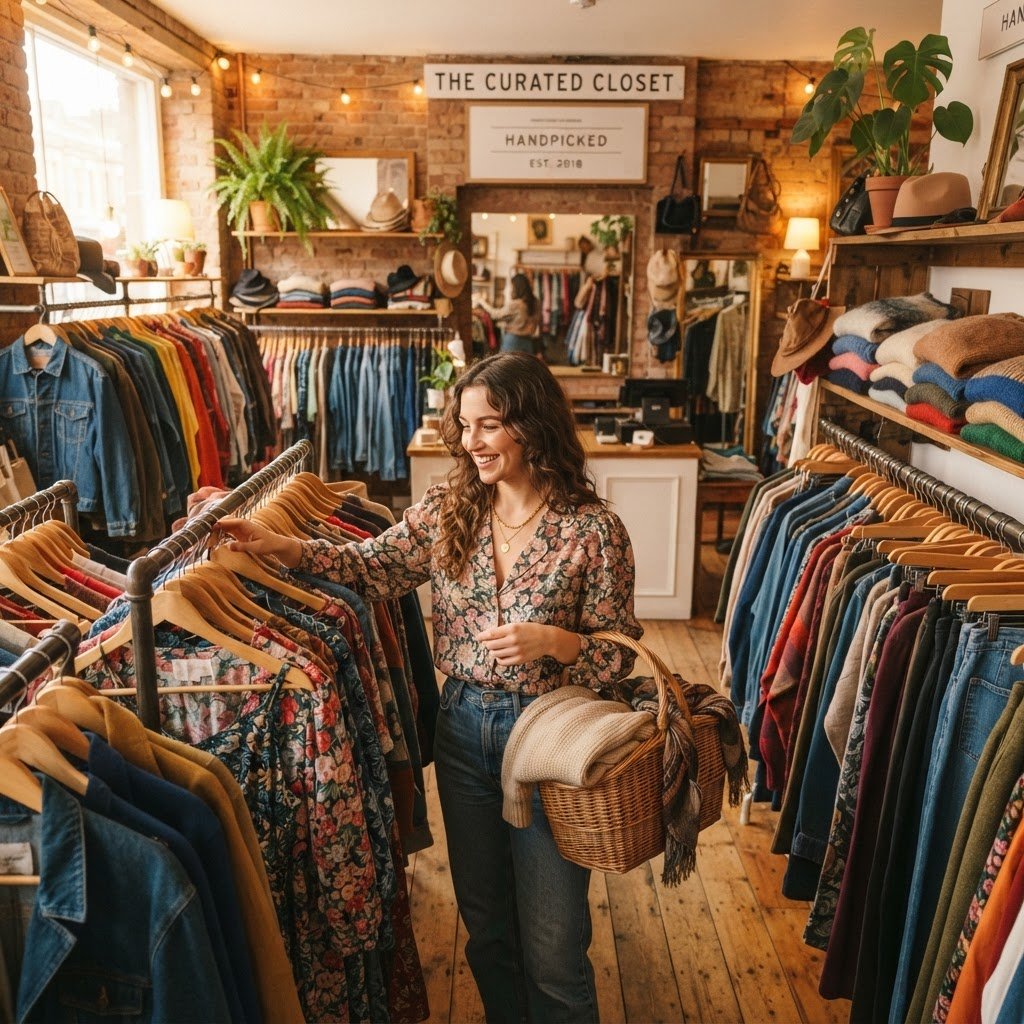
There was a time, not so long ago, when walking into a second-hand shop carried a quiet stigma. Thrifting was something people did quietly, almost apologetically, as if admitting to financial struggle. Fast forward to 2026 and the picture has flipped entirely. Vintage markets are packed on weekends. Online resale platforms are booming. Influencers build entire content empires around finding hidden gems in charity shops. Second-hand shopping has not just lost its stigma. It has become something people are genuinely proud of.
The shift did not happen overnight. It was driven by a convergence of factors that slowly reshaped how people think about consumption, value, and identity. Understanding why second-hand shopping went from fringes to mainstream reveals something deeper about how attitudes are changing in 2026.
The environmental awakening played a central role. For years, the conversation around fast fashion and its ecological cost felt abstract. Documentaries highlighted landfill mountains and river pollution, but the distance between those images and a shopping bag felt vast. That changed as climate-related events became more frequent and more visible. People started connecting the dots between what they bought and what happened to the planet. Buying second-hand became a tangible, immediate way to reduce personal environmental impact. Every pre-loved garment purchased was one less new item manufactured, one less piece of packaging, one less contribution to an industry notorious for waste.
But environmental concern alone rarely changes consumer behaviour at scale. What made second-hand shopping truly mainstream was that it became enjoyable. The thrill of the hunt, the satisfaction of finding something unique, the story behind each item. These elements turned shopping into something closer to treasure hunting than retail therapy. Unlike walking into a chain store where every item is identical and disposable, a vintage market offers unpredictability. No two visits are the same. The serendipity of stumbling across a perfectly preserved leather jacket or a mid-century lamp that fits a room perfectly creates a dopamine rush that conventional retail struggles to match.
Social media amplified this massively. TikTok and Instagram accounts dedicated to thrifting hauls, upcycling transformations, and vintage styling tips have accumulated millions of followers. What was once a niche hobby became a cultural aesthetic. The hashtag economy rewarded people for finding and showcasing unique pieces, creating a feedback loop where second-hand shopping was not just accepted but celebrated. Younger consumers, in particular, began to see individuality in fashion as a status symbol, and nothing delivers individuality quite like wearing something that no one else owns.
Economic pressures also contributed. The cost of living squeeze that defined the early 2020s never fully eased for many households. Even as inflation moderated, the psychological impact of that period lingered. People became more deliberate about discretionary spending. Second-hand shopping offered a way to maintain a sense of style and quality of life without the price tag of new goods. A well-made second-hand coat often costs less than a flimsy new one and lasts longer. That economic pragmatism, combined with the cultural shift, created a perfect storm.
The quality argument became harder to ignore. There is a growing recognition that older goods were often built to last. Furniture from the 1970s and 1980s, made from solid wood and proper joinery, frequently outperforms modern flat-pack equivalents. Vintage clothing, particularly pieces from decades when manufacturing standards were higher, tends to survive years of wear better than contemporary fast fashion. As planned obsolescence became more visible and more frustrating, buying second-hand became a quiet act of rebellion against a system designed to make things break.
Online platforms transformed accessibility. In the past, second-hand shopping required physical effort. You had to visit shops, sift through racks, and accept whatever happened to be there. Digital marketplaces changed that. Platforms like Vinted, Depop, and eBay made it possible to search for specific brands, sizes, and styles from home. The barrier to entry collapsed. Someone who would never set foot in a charity shop could comfortably browse thousands of pre-owned items on their phone. The convenience factor brought in a demographic that traditional second-hand retail never reached.
The luxury resale market added another dimension. Designer handbags, watches, and sneakers hold their value remarkably well, and in some cases appreciate. This reframed second-hand purchasing as an investment rather than a compromise. Buying a pre-owned luxury item at a discount, knowing it might retain or increase in value, appealed to a segment of consumers who previously saw second-hand as strictly budget territory. The line between thrifting and investing blurred, and that crossover gave the entire second-hand ecosystem a legitimacy boost.
Mainstream retailers noticed. Major fashion brands began incorporating resale programmes into their business models, offering buy-back schemes and curated vintage sections. The logic was simple. If customers wanted second-hand, better to keep them in the ecosystem than lose them to competitors. This corporate embrace further normalised the concept. When a high-street brand tells its customers that buying pre-owned is acceptable, the cultural signal is unmistakable.
The psychological dimension matters too. There is a growing awareness that constant consumption does not lead to lasting satisfaction. The dopamine hit of a new purchase fades quickly, and the cycle of buying, discarding, and buying again leaves many people feeling empty rather than fulfilled. Second-hand shopping, with its slower pace and more deliberate choices, offers an antidote. Each purchase feels considered. Each item carries a backstory. The relationship between consumer and object becomes more meaningful, even if the transaction costs less.
Younger generations are driving this. Research consistently shows that Gen Z and younger Millennials are more likely to buy second-hand than older demographics. They are also more likely to sell their own unused items, creating a circular economy that previous generations largely ignored. For these consumers, sustainability is not a niche concern but a baseline expectation. They grew up with climate change as a constant backdrop, and they approach consumption with a degree of environmental awareness that older cohorts are only beginning to adopt.
The second-hand market is also becoming a space for creativity. Upcycling, the practice of transforming old items into something new and often more valuable, has grown from a craft hobby into a legitimate design movement. People are turning vintage denim into jackets, old furniture into statement pieces, and discarded fabrics into entirely new garments. This creative dimension adds another layer of appeal. Second-hand shopping is not just about buying. It is about participating in a process of transformation that feels more rewarding than passively accepting what a retailer offers.
There are challenges, of course. Sizing inconsistencies, the risk of counterfeit goods on resale platforms, and the time investment required to find the right pieces all present friction. But the market is maturing. Authentication services are becoming standard on luxury platforms. Sizing tools and better photography are reducing the guesswork. The friction that once kept people away is gradually being engineered out.
The trajectory suggests this is not a passing trend. The second-hand market is projected to grow significantly faster than the overall retail market over the coming years. As environmental concerns deepen, as economic pragmatism persists, and as the cultural appeal of uniqueness strengthens, second-hand shopping is positioned to become a permanent fixture of how people consume. What began as a budget-friendly alternative is now a first choice for an increasing number of shoppers.
The real story behind second-hand shopping’s rise to the mainstream is not about saving money. It is about a fundamental shift in values. People are reconsidering what ownership means, what quality looks like, and what consumption should feel like. They are choosing items with character over items with price tags. They are finding satisfaction in the search rather than the purchase. And in doing so, they are quietly redefining the relationship between people and the things they own.
Second-hand shopping has become mainstream because it speaks to something deeper than retail. It offers a way to consume that feels better. Better for the planet, better for the wallet, and better for the soul. In a world saturated with mass-produced sameness, the appeal of something with a past, a story, and a future is proving to be irresistible. That is not a trend. That is a transformation.




