
A perspective piece from The Listening Market
The package holiday, that reliable stalwart of the travel industry, has long operated on a simple premise. A traveller pays a fixed sum, receives a flight, a hotel, a transfer, and a schedule of excursions, and returns home with a set of photographs that look largely indistinguishable from those of every other traveller who booked the same package. There is nothing wrong with this model. It is efficient, predictable, and for many people, exactly what a holiday should be. But a growing segment of travellers is looking for something different, and the travel industry is taking notice.
The shift began gradually. A few travellers started renting rooms in residential neighbourhoods instead of booking hotel rooms in tourist districts. A few more started skipping the guided tour in favour of a long walk through a market. A few more started choosing destinations based on a specific interest, a cooking tradition, a craft, a landscape, rather than a generic reputation for being pleasant in summer. What started as a fringe preference has become a defining trend, and the experiences people are choosing in place of traditional holidays reveal something interesting about what people are actually looking for when they travel.
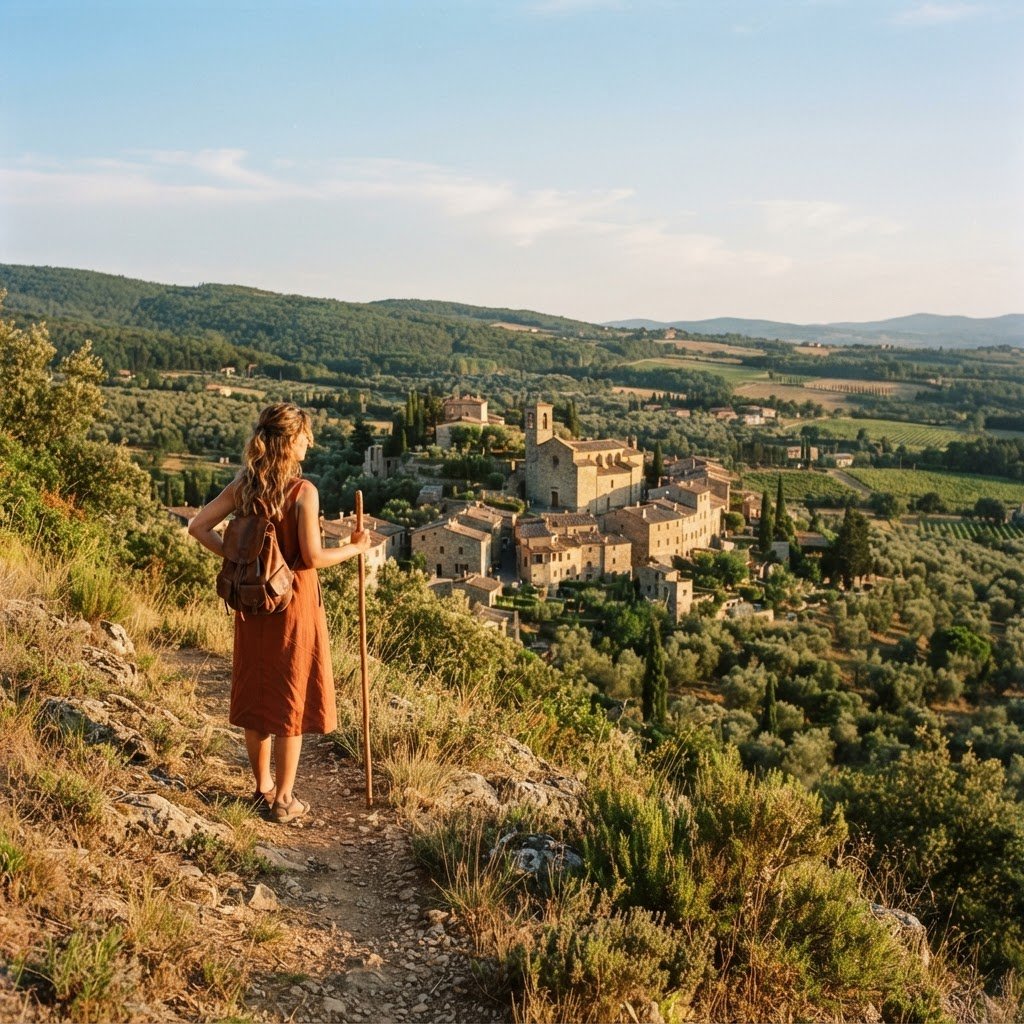
Farm stays and agricultural tourism have emerged as one of the most popular alternatives. Rather than checking into a resort, travellers are arriving at working farms, olive groves, vineyards, and rural properties where they can participate in the daily rhythms of agricultural life. Pressing olives in Tuscany, harvesting grapes in the Douro Valley, or collecting eggs on a small holding in rural France offers a kind of engagement that a beach lounger cannot match. The appeal is not nostalgia for a harder life. It is the satisfaction of being connected to the source of something tangible, of understanding where food comes from not by reading a label but by being present for the harvest.
Culinary pilgrimages have become another defining trend. These are not food tours in the sense of a guided walk through a tourist market with samples. They are deliberate journeys planned around a single ingredient, dish, or tradition. A traveller might spend a week in Emilia-Romagna following the story of balsamic vinegar, visiting the family acetaias where it is aged, tasting across producers, and learning the difference between the industrial and traditional methods. Another might travel to Japan specifically to eat at the sushi counters of Tsukiji, or to Mexico to trace the path of a single type of mole from its region of origin to the plate. The travel is inseparable from the food, and the food is inseparable from the place.
Wellness retreats focused on rest rather than activity have carved out a significant share of the market. The conventional wellness holiday, with its schedule of early morning yoga, cold plunges, and gruelling hikes, has always appealed to a certain type of traveller. But there is a growing audience for the opposite: retreats designed around stillness, sleep, gentle movement, and the restoration of the nervous system. A week with no alarms, no schedules, no obligation to be anywhere at any particular time, in a setting designed to be quiet, feels to many travellers more genuinely restorative than a holiday packed with activities.
Slow travel, the practice of staying in one place for an extended period rather than moving through multiple destinations, has matured from a niche philosophy into a practical choice. Rather than cramming five cities into ten days, travellers are renting apartments for a month, settling into a neighbourhood, shopping at the local market, and developing the kind of routine that reveals a place as it actually functions rather than as it performs for tourists. The trade-off is obvious: fewer destinations, fewer photographs for social media, fewer items on the list. The reward is a depth of experience that a fast-moving itinerary cannot provide.
Volunteer and conservation travel has grown in appeal for travellers who want their presence to contribute something beyond their own experience. Participating in a wildlife monitoring programme, helping to restore a coral reef, or working on a community project for a week or two reframes travel as participation rather than consumption. These experiences tend to be physically demanding and far from luxurious, but the satisfaction of having been useful, of having left a place slightly better than it was found, is something a poolside lounger cannot offer.
Creative retreats, where travellers spend a week learning a craft, writing, painting, or making music in a new setting, have found a devoted audience. A writing retreat in a Portuguese village, a pottery course in the Japanese countryside, or a photography workshop in the Scottish Highlands combines the pleasure of travel with the satisfaction of developing a skill. The destination becomes less important than the work being done there, and the work becomes inseparable from its setting.
Train journeys have experienced a renaissance as an alternative to the fly-and-flop model. Multi-day rail trips through landscapes that would otherwise be seen only from altitude offer a different relationship with distance and geography. The journey itself becomes the holiday, not merely the means of reaching it. Watching the landscape shift from outside the window of a sleeper train, with days and nights measured by stops and meal services rather than schedules and deadlines, offers a kind of passage between one state and another that a short-haul flight elides entirely.
Wilderness and remote experiences draw travellers who are willing to forgo comfort in exchange for solitude and scale. Kayaking through Patagonian fjords, trekking in the Mongolian steppe, or camping in the Namib Desert places the traveller in environments where the human footprint is minimal and the landscape is the dominant force. These are not holidays in the leisure sense. They are encounters with places that are indifferent to human comfort, and the appeal lies precisely in that indifference.
Homestays with artisans and craftspeople offer another lens on travel. Rather than staying in accommodation designed for tourists, travellers are living with makers, watching them work, and sometimes learning the basics of a craft themselves. A week with a ceramicist in Morocco, a weaver in Guatemala, or a knife maker in Japan provides an intimate view of a life organised around a craft, something that cannot be experienced from the outside.
Dark tourism, travel to sites associated with tragedy, conflict, or difficult history, has long existed but is being approached with greater intention. Visiting Chernobyl, the killing fields of Cambodia, or Robben Island is not about morbid curiosity in the way critics often suggest. For many travellers, these visits are a way of engaging with history that feels abstract when read in a book but viscerally immediate when standing on the ground where it happened. The experience is sombre by design, and its value lies in its refusal to let the past remain comfortably distant.
What unites all of these experiences is a shared rejection of the idea that a holiday should be a placeholder, a gap in the calendar filled with pleasant but forgettable activities. The travellers choosing them are looking for something that leaves a mark, that changes them in some small but real way, that gives them a story more specific than the one that begins with a package and ends with a sunburn. The travel industry, increasingly aware that its customers are evolving faster than its traditional products, is adapting. The most successful operators are not the ones offering another version of the same package but the ones helping travellers build the specific, personal, and sometimes uncomfortable experiences they are actually looking for.
The traditional holiday is not disappearing. There will always be a market for the reliable, the predictable, and the effortless. But alongside it, a different kind of travel has taken root, one defined less by a destination and more by a question: not where to go, but what to do when you get there, and what to bring back that is more than a photograph.




