
A perspective piece from The Listening Market.
There was a time when home was simply where you went after work. It was functional. A place to eat, sleep, and store your things. The idea of curating it — of treating the living room as a space to be designed rather than filled — felt like a luxury reserved for people with interior designers and disposable income.
That time has passed. In 2026, the home is being treated as something closer to a retreat. Not in the sense of expensive renovations or magazine-ready interiors, but in the sense of intention. People are thinking about how their space makes them feel, and they are making changes — sometimes small, sometimes significant — to ensure that feeling is calm.
The Pressure That Built the Trend
The retreat-home trend did not emerge from nowhere. It grew out of pressure. For years, the boundary between work and home eroded. Desks appeared in bedrooms. Meetings happened from couches. The bedroom that was once a sanctuary became an office, a gym, a cinema, and a dining room all in one. The home stopped feeling like a place to escape and started feeling like a place where everything happened all at once.
People reached a breaking point. Not a dramatic one — more like a slow realisation that the space they returned to every evening was not actually helping them recover from the day. It was extending it. The lighting was harsh. The surfaces were cluttered. The bed was three feet from the laptop. Something needed to change, and for many people, it did.
The Changes People Are Making
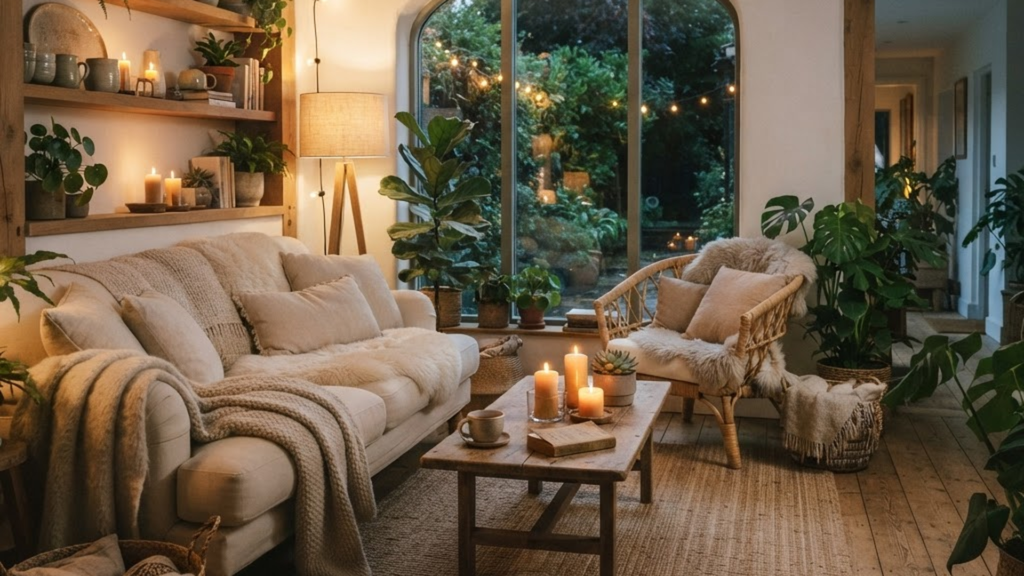
The most common change is lighting. Harsh overhead lights are being replaced with warm, layered sources — table lamps, floor lamps, candles, fairy lights strung across a bookshelf. The goal is not to see better. It is to feel better. Warm light signals the nervous system that the day is winding down, and people are learning that this matters.
Then there is texture. Soft blankets on the couch. A rug that feels good under bare feet. Linen sheets that breathe. These are not aesthetic choices as much as sensory ones. People are starting to understand that the body reads the environment through touch as much as sight, and a home that feels good to the skin is a home that feels good to the mind.
Plants have become central, and not just because they look nice. The presence of something alive and growing — something that needs care and responds to it — creates a relationship with the space. It is harder to neglect a room that has a living thing in it.
Scent is the final layer. Diffusers, incense, candles, fresh flowers. The smell of a space is the first thing the brain processes upon entering, and people are using that to their advantage. A home that smells like cedar and citrus feels different from one that smells like last night’s dinner, even if the layout is identical.
The Rituals That Make It Work
A retreat is not just a space. It is a set of rituals. People are building routines around their homes that reinforce the feeling of sanctuary. A morning practice of opening the curtains and making coffee in silence. An evening practice of dimming the lights, putting the phone away, and reading or stretching before bed. A Sunday practice of cleaning and resetting the space so Monday starts fresh.
These rituals are small, but they do something important. They separate the home from the world outside it. They mark the transition from doing to being. Without that transition, the home is just a building. With it, the home becomes a retreat.
The Deeper Reason
What is really happening here is a revaluation of the home’s purpose. For a long time, the home was measured by what it looked like to others. The dinner party. The Instagram post. The appraisal value. In 2026, people are measuring it by what it does for them. Does it help them sleep? Does it help them unwind? Does it make them feel safe?
This is a quietly profound shift. It moves the home from a status object to a wellness tool. It suggests that people are starting to believe their environment affects their wellbeing, and that they have the power to shape it. Not with money, necessarily, but with attention.
The most calming homes in 2026 are not the most expensive ones. They are the most considered ones. And that is a trend anyone can join.