A perspective piece from The Listening Market
There’s a moment many people share in conversation lately — a quiet confession, almost embarrassed in its delivery. I got rid of half my stuff, and I feel lighter. Not lighter in the way a diet promises. Lighter in the way that a room with the windows open feels different from one with them shut.
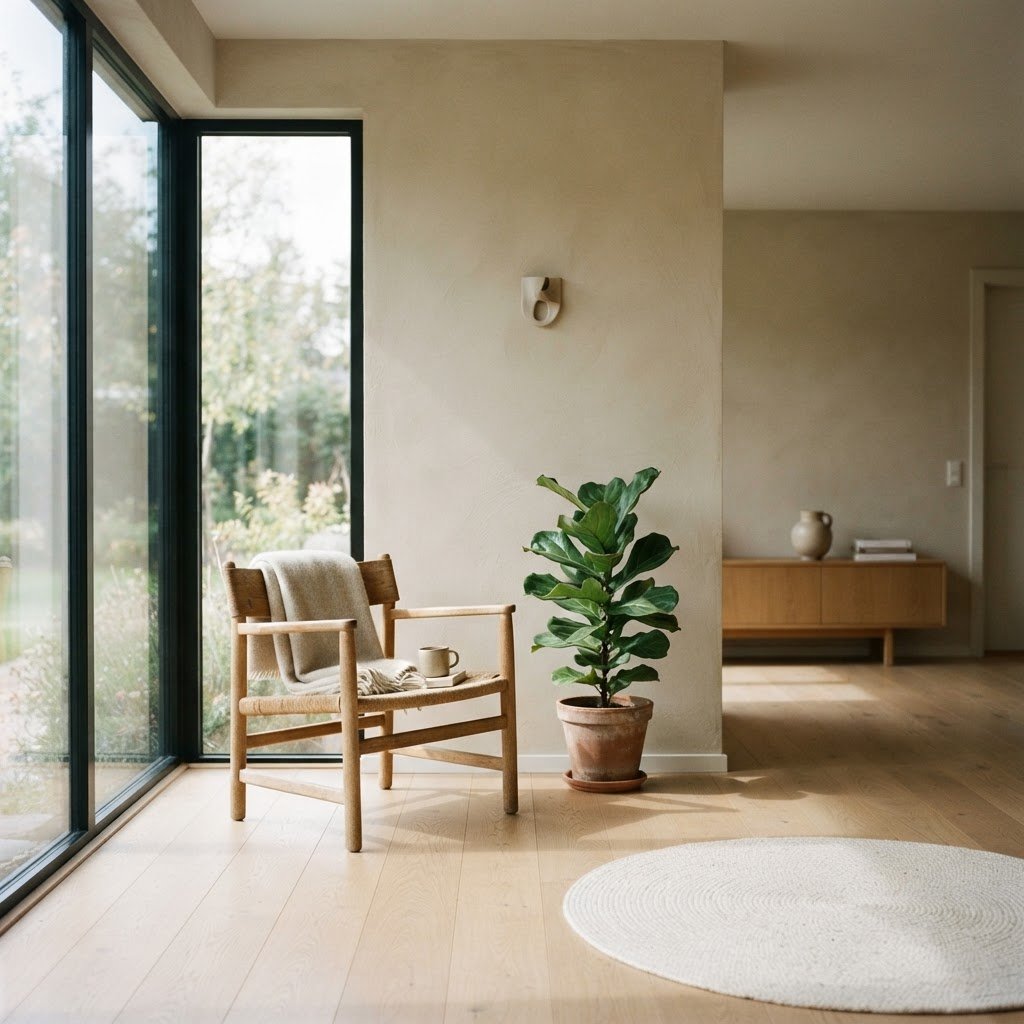
Living with less has moved past its phase as an aesthetic trend. The stark white walls and single succulent on a bare shelf — that was the Instagram version. What’s happening in 2026 is deeper and more personal. People aren’t performing minimalism. They’re just quietly choosing to own fewer things, and discovering that the absence creates space they didn’t know they were missing.
When Enough Became Too Much
The tipping point was gradual. Online shopping made acquisition frictionless. Two-day shipping became same-day delivery. Storage units multiplied. Wardrobes expanded to accommodate clothes worn once or never. And then, somewhere in the accumulation, a question started forming: If all this stuff was supposed to make life better, why doesn’t it feel like it is?
According to studies on material possession and wellbeing, the relationship between stuff and happiness plateaus quickly. After basic needs are met, additional possessions contribute diminishing returns to life satisfaction — and at a certain threshold, they actively detract from it through maintenance burden, spatial pressure, and cognitive load.
The realisation isn’t new. What’s new is how many people are acting on it, and how normal that action has become.
The Quiet Rebellion Against Clutter
Sarah, a graphic designer in Melbourne, describes it as waking up one Sunday and realising her apartment felt like a storage unit she happened to sleep in. She didn’t read a book about minimalism. She didn’t watch a documentary. She just started putting things in boxes. Some went to charity. Some went to friends. Some went in the bin.
A month later, she describes her living room as the place where she can actually think. The surface area of her coffee table is visible for the first time in years. She reads more. She sleeps better. She hasn’t bought anything non-essential in six weeks and reports no sense of deprivation.
This story isn’t remarkable because it’s unusual. It’s remarkable because it’s become common. The language people use — lighter, clearer, breathing room — repeats across conversations in a way that suggests something collective is happening.
The Economics of Owning Less
Living with less isn’t just a psychological shift. It has a financial dimension that people are starting to calculate with surprising precision. Every item owned costs something — not just at purchase, but in storage, maintenance, cleaning, insurance, and the mental bandwidth of keeping track of it. A house full of things requires a bigger house. A bigger house requires a bigger mortgage. A bigger mortgage requires more income. More income requires more hours.
The chain is invisible until someone breaks it. When people reduce what they own, they often discover they need less space. Less space means lower rent or a smaller mortgage. Lower costs mean fewer hours needed to sustain the same quality of life. The mathematics of less can be genuinely transformative, not in a dramatic way, but in the slow compounding way that actually changes lives.
Fewer Things, Better Things
The most interesting part of the living-with-less movement is that it isn’t about deprivation. It’s about replacement. People aren’t giving up possessions and living with nothing. They’re trading quantity for quality. One well-made jacket instead of five disposable ones. A single good knife instead of a block of dull ones. A curated bookshelf instead of overflowing shelves.
This aligns with what behavioural researchers have observed — that the satisfaction derived from a single high-quality possession often exceeds the combined satisfaction of multiple lower-quality ones. The joy of use beats the thrill of acquisition.
What Gets Filled In
When the clutter clears, something interesting fills the space. Not more stuff — but more of everything else. Time. Attention. Conversation. The things that were always there but couldn’t compete with the noise of accumulation.
People who’ve reduced their possessions describe a pattern. They cook more, because the kitchen is clean and accessible. They read more, because the book they want isn’t buried under three others they don’t. They invite people over more, because the state of the apartment doesn’t require an emergency clean first. The stuff was never just stuff. It was a barrier between intention and action.
The Quiet Revolution
The appeal of living with less in 2026 isn’t about ideology. It’s about experience. People try it — usually accidentally, usually out of frustration rather than philosophy — and discover it feels good. Not virtuous. Not impressive. Just good. Like putting down a bag you didn’t realise you were carrying.
And in a culture that has spent decades equating more with better, that quiet discovery might be the most radical thing happening in homes across the country.