
A perspective piece from The Listening Market
A blocked drain announces itself gradually. The water takes a little longer to disappear. A gurgling sound starts, faint enough to dismiss. Then one morning, the sink doesn’t drain at all, and what was a minor inconvenience becomes an urgent problem requiring a plumber, a bill, and a mess.
The frustrating thing about blocked drains is that they’re almost entirely preventable. The things that cause them — grease, hair, food scraps, soap scum, and foreign objects — don’t belong in drains in the first place. The problem is that prevention requires habits, and habits are harder to install than they sound. But the habits are simple, and once they’re in place, blocked drains become something that happens to other people.
The Kitchen Sink: Where Most Blockages Begin
The kitchen sink is the most common site of drain blockages, and the primary culprit is grease. When cooking fat goes down the drain, it’s liquid and warm. As it travels through the pipes and cools, it solidifies. Over time, this grease builds up on pipe walls, narrowing the passage and catching other debris until the pipe is blocked.
The solution is a simple habit: never pour grease down the drain. Instead, pour cooking fat into an empty jar or tin, let it cool and solidify, and dispose of it in the bin. This single change prevents the most common and most stubborn type of drain blockage.
Food scraps are the second major contributor. Even with a garbage disposal, certain foods should never go down the drain. According to Sydney Water, the worst offenders are coffee grounds, eggshells, pasta and rice (which expand in water), flour (which forms a paste), and starchy foods generally. These should go in the compost or bin, not the sink.
The Bathroom: Hair and Soap Scum
Bathroom drains block differently from kitchen drains. The main culprits are hair and soap scum — a combination that forms a stubborn, slow-building obstruction in shower and bath drains. Hair catches on any rough surface inside the pipe and accumulates over time, while soap scum coats the pipe walls and narrows the passage.
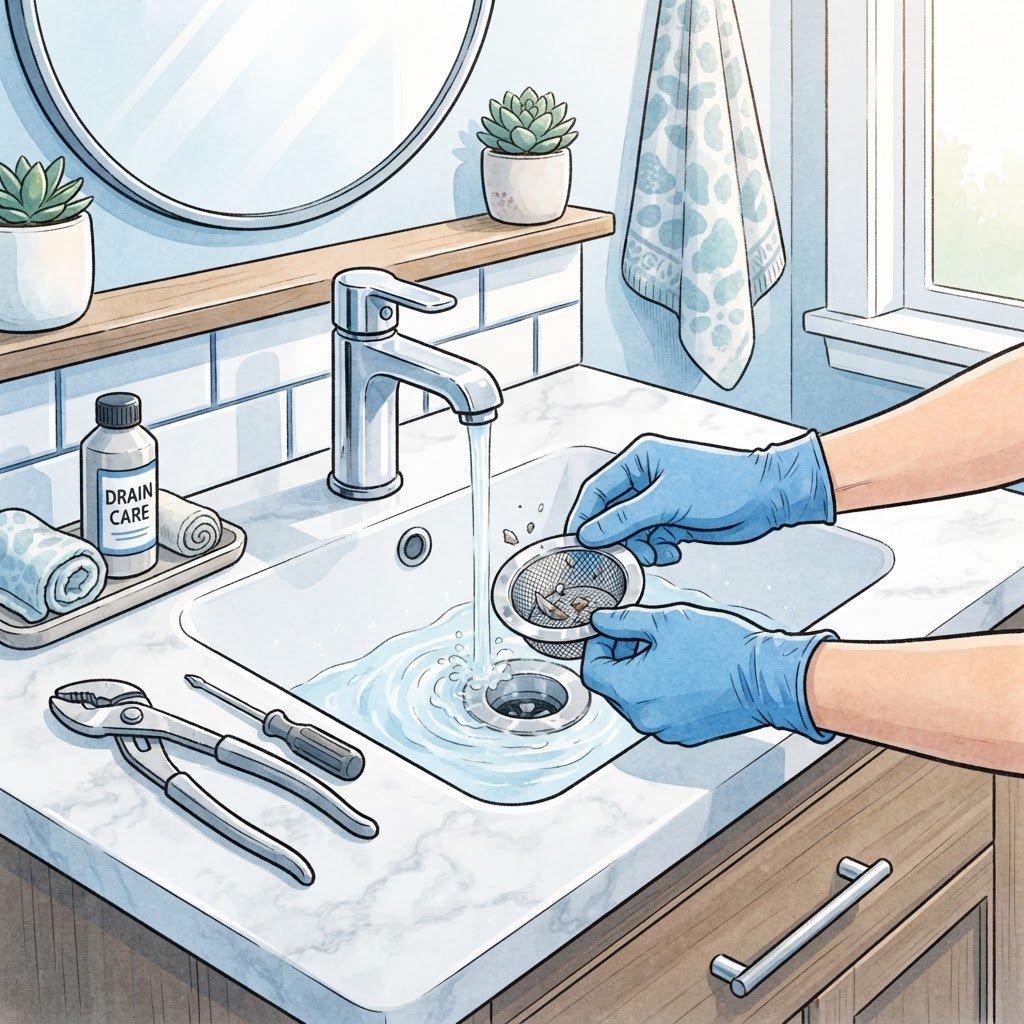
The preventive measure is a drain strainer — a simple, inexpensive mesh or silicone cover that sits over the drain and catches hair before it enters the pipe. These cost a few dollars and prevent the most common bathroom blockage. Clean the strainer after each shower; it takes five seconds and prevents months of buildup.
For soap scum, a monthly maintenance flush helps. Pour a kettle of hot (not boiling) water down the drain, followed by half a cup of baking soda and a cup of vinegar. Let it sit for fifteen minutes, then flush with more hot water. This combination breaks down soap residue and keeps pipes flowing.
The Toilet: Only Three Things Belong
Toilets are deceptively simple, and the rules are equally simple: only human waste and toilet paper go in. Everything else — wet wipes (even those labelled flushable), sanitary products, cotton buds, dental floss, tissues, paper towels — belongs in the bin.
The term flushable wipes is one of the most misleading labels in consumer products. According to Water UK and international water authorities, these wipes don’t break down in water the way toilet paper does. They remain intact, catch on pipe walls, and accumulate until they create blockages that can affect not just individual homes but entire sections of the sewer system.
The habit change is straightforward: keep a small bin next to the toilet for non-flushable items. Once the bin is there, the behaviour follows naturally.
Outdoor Drains: Leaves and Debris
Outdoor and garden drains are often forgotten until they block, usually during heavy rain when the consequences are most problematic. The primary causes are leaves, garden debris, dirt, and sometimes tree roots that have invaded underground pipes.
Prevention involves regular clearing of drain grates and surrounds, particularly during autumn when leaf fall is heaviest. Check outdoor drains monthly and remove any visible debris. For homes with mature trees nearby, consider a root barrier if roots have been a recurring issue.
The Monthly Maintenance Flush
Beyond the specific habits for each drain type, a general monthly maintenance routine keeps all drains healthy. For each drain in the house:
Pour a kettle of hot water down slowly. This dissolves grease and flushes loose debris. Follow with an enzymatic drain cleaner — these use natural enzymes to break down organic matter without the harsh chemicals that can damage pipes. Avoid chemical drain cleaners as a preventive measure; they’re designed for clearing blockages, not preventing them, and regular use can corrode pipes over time.
According to the EPA, enzymatic cleaners are safer for both plumbing and the environment, and they’re effective for ongoing maintenance when used regularly.
Know the Warning Signs
Even with good preventive habits, drains can develop slow blockages. The warning signs are consistent: water draining more slowly than usual, gurgling sounds from the drain, unpleasant odours coming from the plug hole, and water pooling around floor drains. Catching these signs early means the problem can usually be resolved with a plunger or a drain snake before a plumber is needed.
If multiple drains are slow simultaneously, the blockage may be in the main pipe rather than an individual fixture — this is a job for a professional, and delaying it can lead to more serious problems including water damage.
Prevention Is Cheaper Than Cure
A plumber’s visit for a blocked drain typically costs several hundred dollars, and severe blockages that require pipe excavation or replacement cost significantly more. The preventive habits described here — strainers, grease disposal, monthly flushing, and a bin next to the toilet — cost less than twenty dollars total and take less than five minutes per week to maintain.
The maths is simple. The habits are simple. The only thing that’s difficult is starting them — and once they’re part of the routine, blocked drains become a problem that simply doesn’t occur. The drains work quietly in the background, the way they’re supposed to, and the only time they’re noticed is when they’re not causing trouble.