
A perspective piece from The Listening Market
There is a quiet, deliberate choreography unfolding across modern kitchens at dawn. Before the blue light of smartphone screens floods bedrooms, before the first unread email signals the start of the workday, a different kind of alarm sounds. It is the sharp click of a hand grinder settling into its gears, the soft hum of an espresso machine warming its boiler, or the low sizzle of water meeting freshly ground coffee beans in a glass carafe. What was once a hasty, mechanical pitstop on the way out the door has quietly transformed into a sacred morning ritual. Kitchen counters once reserved for microwave ovens and knife blocks are now adorned with polished chrome portafilters, goose-neck kettles, ceramic drippers, and precision digital scales accurate to the tenth of a gram.
This shift is not merely a quirk of interior design or a fleeting aesthetic trend captured in short-form video clips. The rise of home cafe culture represents a profound re-examination of how people structure their daily lives, manage their mental health, and treat their bodies. In an era marked by chronic burnout, hyper-connectivity, and relentless digital acceleration, the decision to spend ten attentive minutes brewing a single cup of coffee is a small, elegant act of resistance. It is an intentional return to the physical world—a tactile, sensory grounding exercise that prioritizes process over speed, quality over convenience, and self-nourishment over passive consumption.
To understand why millions of people are turning their homes into boutique espresso bars is to understand a broader movement in contemporary health and wellness. Where traditional wellness narratives often emphasize rigid discipline, grueling workouts, or restrictive diets, home cafe culture offers something far more sustainable: a daily practice rooted in mindfulness, ingredient sovereignty, and the restorative power of personal sanctuary.
The Architecture of the Morning Ritual
For decades, the standard approach to morning caffeine was defined by speed and efficiency. Instant coffee crystals dissolved in boiling water, pod-based machines dispensing dark liquids at the push of a button, or drive-thru windows handing cardboard cups through car doors served a single function: chemical stimulation. Caffeine was treated as fuel for an engine that was expected to run endlessly. The goal was to bypass the morning entirely, accelerating the body into productivity before the mind had fully awakened.
The home cafe movement flips this paradigm on its head. By inserting deliberate complexity into a daily task, it creates what psychologists call a cognitive buffer zone—a structured period of stillness between sleep and the demands of the outer world. In this buffer zone, attention is drawn entirely into the present moment. The hands measure weight; the eyes watch the flow rate of an extraction; the nose registers the complex aromatic compounds released as hot water blooms dry grounds.
Neuroscientists have long noted the therapeutic value of low-stakes, highly tactile routines. When an individual engages in a sequence of precise physical actions—grinding, leveling, tamping, pouring—the nervous system settles into a state of focused calm. The sympathetic nervous system, responsible for the stress-induced fight-or-flight response, yields to the parasympathetic system. Cortisol levels stabilize rather than spike. Instead of entering the morning in a state of reactive urgency, the practitioner begins the day with a quiet sense of agency and mastery. The coffee itself becomes almost secondary to the restorative cadence of making it.
The Sensory Science of Slowing Down
At its core, home cafe culture is an exercise in sensory mindfulness. Modern life rarely engages all five senses simultaneously in a gentle, non-stimulating way. Digital screens demand visual and auditory attention while leaving touch, taste, and smell starved. A dedicated coffee preparation routine reverses this imbalance, offering a rich tapestry of sensory inputs that stimulate neural pathways associated with pleasure and presence.
Consider the olfactory experience alone. The aroma of roasting and brewing coffee contains over eight hundred distinct volatile compounds, including furans, pyrazines, and ketones. These aromatics travel directly to the olfactory bulb, which connects straight to the amygdala and hippocampus—the brain regions responsible for processing emotion and memory. Long before the first sip of caffeine enters the bloodstream, the simple act of smelling fresh coffee grounds triggers subtle shifts in mood, evoking feelings of comfort, safety, and alertness.
Touch plays an equally vital role. The weight of a solid brass tamper, the resistance of a hand grinder’s handle, the smooth glaze of a handcrafted stoneware cup—these physical textures anchor the mind in the immediate present. In a society where work consists largely of moving pixels across glass surfaces, interacting with substantial, beautifully crafted physical objects provides a grounding contrast. The experience offers a reminder that satisfaction can be found not in digital achievements or endless task lists, but in the immediate, tangible reality of the physical room.
From Sugar Bombs to Functional Ingredients
While the psychological benefits of home cafe culture are compelling, the physical health implications are equally striking. For millions of consumers, commercial coffee chains have long functioned less as coffee purveyors and more as liquid dessert parlors. Popular menu items frequently contain upwards of forty to sixty grams of refined sugar per serving, combined with synthetic flavor syrups, hydrogenated oils, and artificial emulsifiers. These beverages create dramatic spikes in blood glucose followed by rapid crashes, amplifying anxiety, brain fog, and fatigue throughout the day.
In contrast, the home barista movement encourages a deep curiosity regarding ingredient transparency and nutritional integrity. As individuals learn to appreciate the nuanced flavor profiles of specialty coffee beans—ranging from floral heirloom varieties from Ethiopia to chocolatey, dense beans from the high altitudes of Colombia—the need for heavy syrups and masking agents vanishes. High-quality coffee, properly extracted, possesses natural sweetness, complex acidity, and a satisfying body that requires little to no added sugar.
Furthermore, home cafe culture has become a gateway to functional nutrition. Home baristas frequently experiment with high-grade Japanese matcha, rich in L-theanine—an amino acid known to promote calm focus while smoothing out the jittery edge of caffeine. Others incorporate adaptogenic mushroom powders like lion’s mane for cognitive clarity or reishi for stress resilience. Plant-based milks made from whole oats, almonds, or macadamia nuts are selected not just for their frothability, but for their minimal ingredient lists and absence of inflammatory additives. By taking control of the pitcher and the portafilter, individuals exercise complete sovereignty over what enters their bodies every morning.
The Sanctuary of the Kitchen Island
Environmental psychology emphasizes the profound impact that physical surroundings have on human well-being. A cluttered, chaotic living space breeds mental fatigue, whereas a clean, intentionally arranged environment fosters tranquility. The rise of home cafe culture has inspired a subtle redesign of the domestic sphere, turning forgotten kitchen corners into aesthetic micro-sanctuaries.
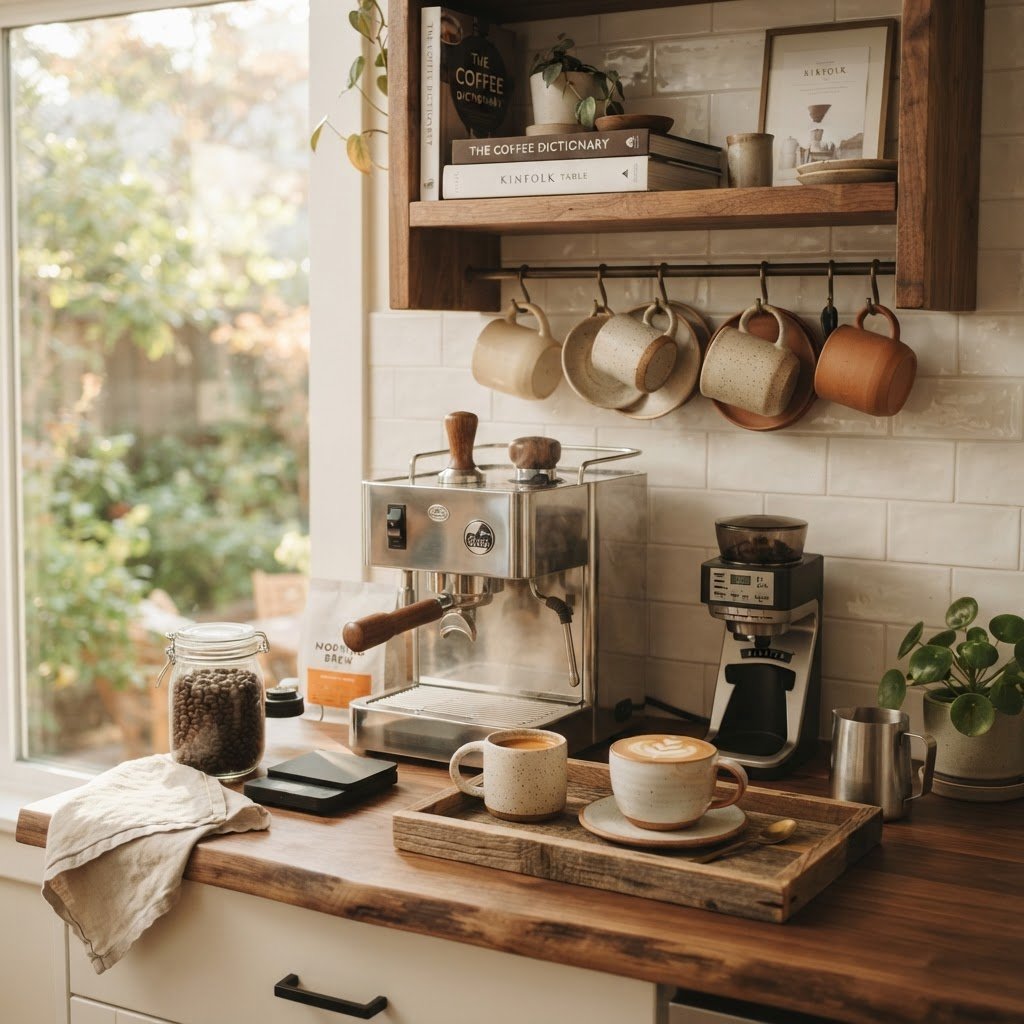
Creating a dedicated home coffee station is an act of environmental curation. It requires choosing items intentionally: a compact heat-exchange espresso machine, a timber knock-box, a collection of hand-blown glass carafes, or ceramic cups purchased from local potters. This corner becomes a visual anchor of calm within the home—a designated space where purpose is clear and distraction is excluded.
There is also an element of quiet self-worth in this spatial investment. For many years, the cultural narrative suggested that high-end espresso equipment or specialized brewing gear was an extravagant luxury. Yet when weighed against the daily financial and mental cost of commercial takeaway options, investing in one’s home environment represents a thoughtful reallocation of resources. It signals a belief that the home should be a place of restorative comfort, where daily routines are elevated to moments of quiet luxury rather than endured as chores.
Hospitality, Connection, and Quiet Delight
Although home cafe culture often begins as a solitary morning ritual, its benefits naturally extend outward into personal relationships and social health. Human connection in modern cities frequently occurs in loud, commercialized settings—crowded cafes, noisy bars, or bustling restaurants where meaningful conversation must compete with ambient noise and commercial pressure. The home cafe offers an alternative landscape for social intimacy.
Inviting a friend into one’s home for a meticulously prepared cappuccino or a pour-over coffee brewed from a rare micro-lot bean transforms hospitality into a personal gift. It communicates time, care, and attention. The host is not merely serving a beverage; they are sharing an experience that took patience and skill to create. The kitchen island replaces the commercial counter, creating a warm, unhurried space for deep conversation and genuine presence.
Even within households, the shared morning coffee routine becomes a vital relational tether. Partners who pause to share a freshly pressed coffee before separating for their respective workdays establish a moment of connection that grounds the relationship. In a world that constantly encourages people to look outward toward external validation, the home cafe draws attention inward, nurturing the relationships that matter most.
Reclaiming Time in an On-Demand World
To look at a home coffee setup and see only stainless steel, ceramic, and coffee beans is to miss the larger story. The rise of home cafe culture is fundamentally about the reclamation of time. In a culture obsessed with optimization, speed, and instant gratification, choosing a method that takes longer, requires skill, and demands complete presence is a quiet statement of human priority.
It suggests that human beings are not machines designed solely for output, needing quick infusions of caffeine to maintain productivity until the next deadline. People are sensory, emotional beings who thrive on beauty, routine, and care. When an individual stands by their kitchen counter in the soft light of morning, watching steam rise into the air as coffee brews drop by drop, they are not wasting time. They are reclaiming it.
The home cafe movement serves as a quiet reminder that wellness is rarely found in grand, infrequent gestures or expensive retreats. More often, it is cultivated quietly, day by day, in the small spaces individuals carve out before the world comes rushing in. In the simple heat of a ceramic cup held between two hands, there is a gentle, enduring truth: the way mornings are spent is, ultimately, the way a life is lived.