
A perspective piece from The Listening Market
Carpet is one of those household features that people rarely think about until something goes wrong. A spill, a stain, a lingering smell — and suddenly the floor covering that quietly tied the whole room together becomes the centre of attention, and not in a good way. The thing about carpets is that they work hard. They absorb dust, pollen, pet dander, food particles, and whatever gets tracked in on the bottom of shoes. They endure furniture being dragged across them, feet pounding the same paths day after day, and the occasional accident that no one wants to talk about. Given all that, it is remarkable how long a good carpet can last when it is cared for properly.
The goal here is not to turn anyone into a professional carpet cleaner. The goal is much simpler: to share the habits and routines that keep carpets looking good and smelling fresh for longer, reducing the frequency of professional cleans and extending the life of the carpet itself. These are not complicated techniques. Most of them cost nothing. But together, they make a measurable difference.
Start With What Comes In
The simplest way to keep a carpet clean is to stop dirt before it reaches the carpet. That sounds obvious, but it is the step most households neglect. Doormats — both outside and inside every entrance — catch a surprising amount of soil, sand, and moisture before it gets tracked into the house. The key is having enough mat surface that several footsteps land on the mat before reaching the floor, and keeping those mats clean enough to actually do their job. A doormat that is packed with dirt is just a transfer station.
A no-shoes policy inside the house is the single most effective habit for preserving carpet. Shoes carry not just visible dirt but oils, bacteria, and abrasive particles that grind into carpet fibres with every step. Many households find that once the habit is established, it becomes second nature. Providing a designated spot for shoes near the entrance — a rack, a basket, even just a consistent patch of floor — makes the policy easier to follow.
For households with pets, the entry routine matters even more. Wiping paws at the door, particularly during wet weather, prevents mud and moisture from being walked through the house. A small towel kept near the entrance makes this a quick, thirty-second habit rather than a chore.
Vacuuming With Purpose
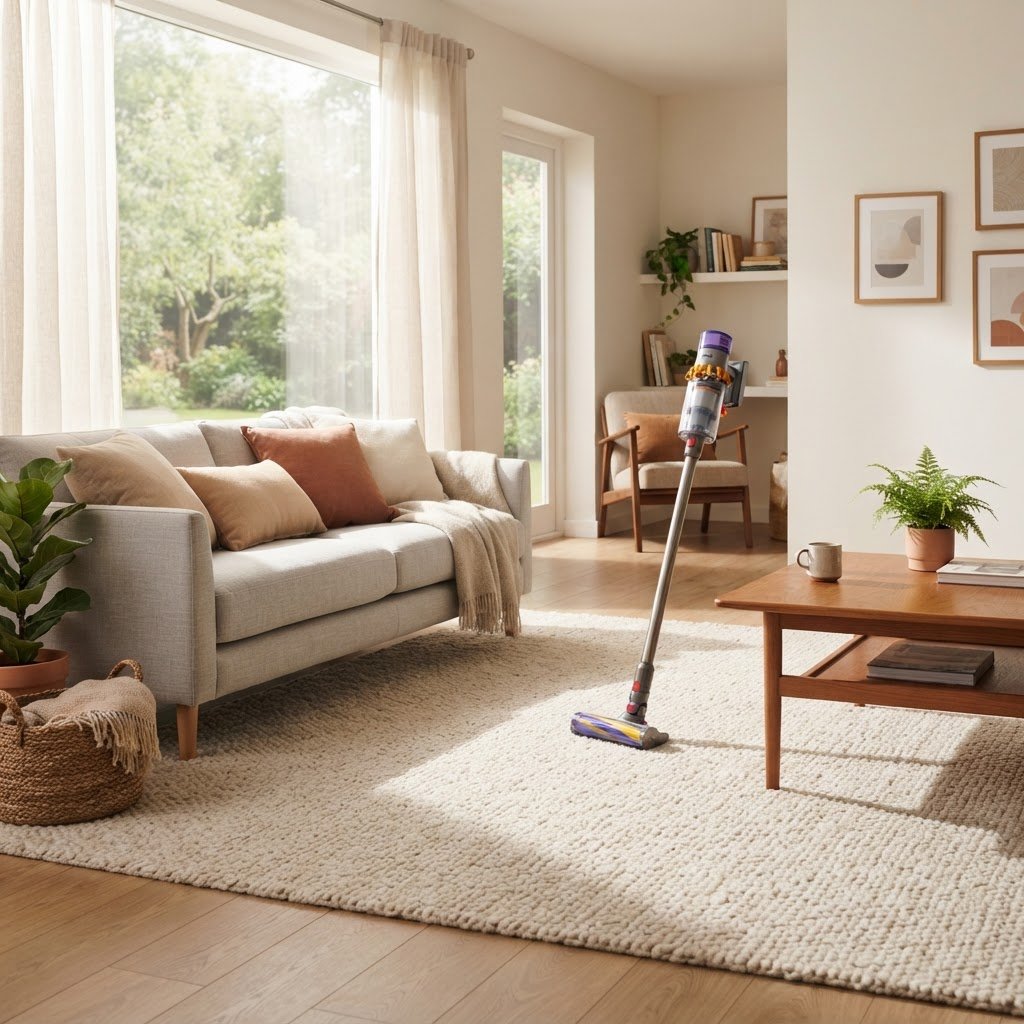
Vacuuming is the foundation of carpet care, and most people do not do it as well as they think. The issue is not usually frequency — though high-traffic areas benefit from twice-weekly vacuuming — but technique. A quick pass with the vacuum does not give the machine time to pull up embedded dirt. Slowing down, making overlapping passes, and going over high-traffic areas multiple times makes a significant difference.
The vacuum itself matters. A machine with a HEPA filter traps fine particles instead of blowing them back into the air, which matters for both carpet cleanliness and indoor air quality. Canister vacuums and uprights with rotating brushes are generally more effective on carpet than stick vacuums or robot models, though robot vacuums excel at maintaining floors between deeper cleans. Emptying the vacuum regularly — before the canister is packed full — keeps suction strong and the machine working efficiently.
One often-overlooked detail: vacuuming in different directions occasionally helps lift dirt that has settled deep into the fibres. Going north-south one week and east-west the next prevents soil from compacting into the same grooves repeatedly.
Dealing With Spills Immediately
The difference between a spill that becomes a permanent stain and one that disappears without a trace is almost always speed. The longer a liquid sits on carpet, the deeper it penetrates into the fibres and the backing, and the harder it becomes to remove. The first rule of spill management is simple: act immediately.
The correct technique is to blot, never rub. Rubbing pushes the liquid deeper into the carpet and can damage the fibres. Pressing down firmly with a clean cloth or paper towel, lifting, and repeating draws the liquid up and out. Starting from the outside of the spill and working inward also prevents it from spreading.
For most spills, plain warm water applied sparingly is enough. Drenching the area can push the liquid through to the backing and underlay, creating a larger problem. A spray bottle with a fine mist gives better control. For tougher stains — wine, coffee, tomato-based sauces — a mixture of water and a small amount of mild dish soap can be effective. Commercial carpet stain removers work too, but should be tested on an inconspicuous area first, as some can discolour certain carpet types.
The temptation to use harsh chemicals is understandable when a spill looks disastrous, but bleach and other aggressive cleaners can cause permanent damage that is worse than the original stain. Patience and gentle, repeated blotting usually produce better results than a single aggressive treatment.
Managing Traffic and Wear
Carpets wear unevenly. The paths that get walked most frequently — hallways, the route from the kitchen to the living room, the area in front of a favourite chair — show their age faster than corners and edges that rarely see foot traffic. Rotating furniture periodically changes these traffic patterns, distributing wear more evenly across the carpet. Even a small adjustment — shifting a sofa six inches, repositioning a coffee table — can redirect the most travelled paths and extend the carpet’s overall life.
Rugs and runners in high-traffic areas provide another layer of protection. A hallway runner takes the brunt of foot traffic and can be replaced far more cheaply than the carpet underneath. In dining areas, a rug under the table catches food spills that would otherwise end up ground into the carpet. These additions also add visual warmth to a room, so the practical benefit comes with an aesthetic bonus.
Furniture marks — those dents left by heavy legs sitting in the same spot for months — can be reduced by using furniture coasters or pads that distribute the weight more broadly. When dents do appear, placing an ice cube in the indentation and letting it melt slowly, then gently brushing the fibres with a coin or spoon, often lifts them back up.
Freshness Beyond Cleaning
Clean is not the same as fresh. A carpet can be free of visible dirt and still carry odours — from pets, cooking, dampness, or simply the accumulated smell of a lived-in house. Addressing these odours does not require expensive products. Baking soda is remarkably effective at absorbing smells from carpet fibres. Sprinkling a thin layer across the carpet, leaving it for an hour or overnight, and then vacuuming thoroughly pulls up both the baking soda and the odours it has absorbed.
Ventilation plays a role that is often underestimated. Opening windows regularly, even for short periods, allows fresh air to circulate through the house and prevents the stale, enclosed smell that builds up in rooms that are rarely aired. This is particularly important in rooms with carpet, as the fibres trap airborne particles that contribute to indoor odours.
For households with pets, regular grooming reduces the amount of hair and dander that ends up in the carpet. Brushing pets outside, bathing them periodically, and keeping their bedding clean all reduce the load on the carpet. Air purifiers with HEPA filters can also help, capturing airborne particles before they settle.
When to Call a Professional
Even with excellent daily habits, carpets benefit from a professional clean periodically. The general recommendation is every twelve to eighteen months for typical households, more frequently for homes with pets, young children, or heavy foot traffic. Professional cleaners have equipment that reaches deeper into the carpet than any consumer-grade tool, extracting dirt and moisture that regular vacuuming leaves behind.
Between professional cleans, the habits described here keep the carpet looking presentable and smelling clean. The combination — daily maintenance and periodic deep cleaning — is what gives a carpet its full lifespan. A quality carpet that is well cared for can last fifteen to twenty years. One that is neglected might need replacing in five.
The effort involved is modest. A few minutes of vacuuming, a doormat at the door, a cloth kept handy for spills, and the occasional sprinkle of baking soda. None of it is difficult. But the cumulative effect is a home that feels cleaner, smells fresher, and avoids the expense and disruption of premature carpet replacement. For something that covers so much of the living space, that is a worthwhile investment of attention.