
A perspective piece from The Listening Market
There was a time when the word subscription conjured a very specific image: a magazine arriving in the mail, or perhaps a newspaper on the doorstep. Then came the streaming era, and the word expanded to include libraries of digital content available for a monthly fee. Software followed, with the shift from one-time licences to cloud-based subscriptions that turned Adobe, Microsoft, and dozens of others into recurring-revenue machines. By the mid-2020s, the subscription economy had become so pervasive that a certain fatigue had set in, with people questioning whether everything really needed to be a subscription.
And yet, beneath that fatigue, something stranger has been happening. The subscription model has been creeping into industries that have nothing to do with media or software, and in some cases, nothing to do with digital technology at all. The question is no longer whether subscriptions will spread but how far they can go before the model stretches past its natural limits.
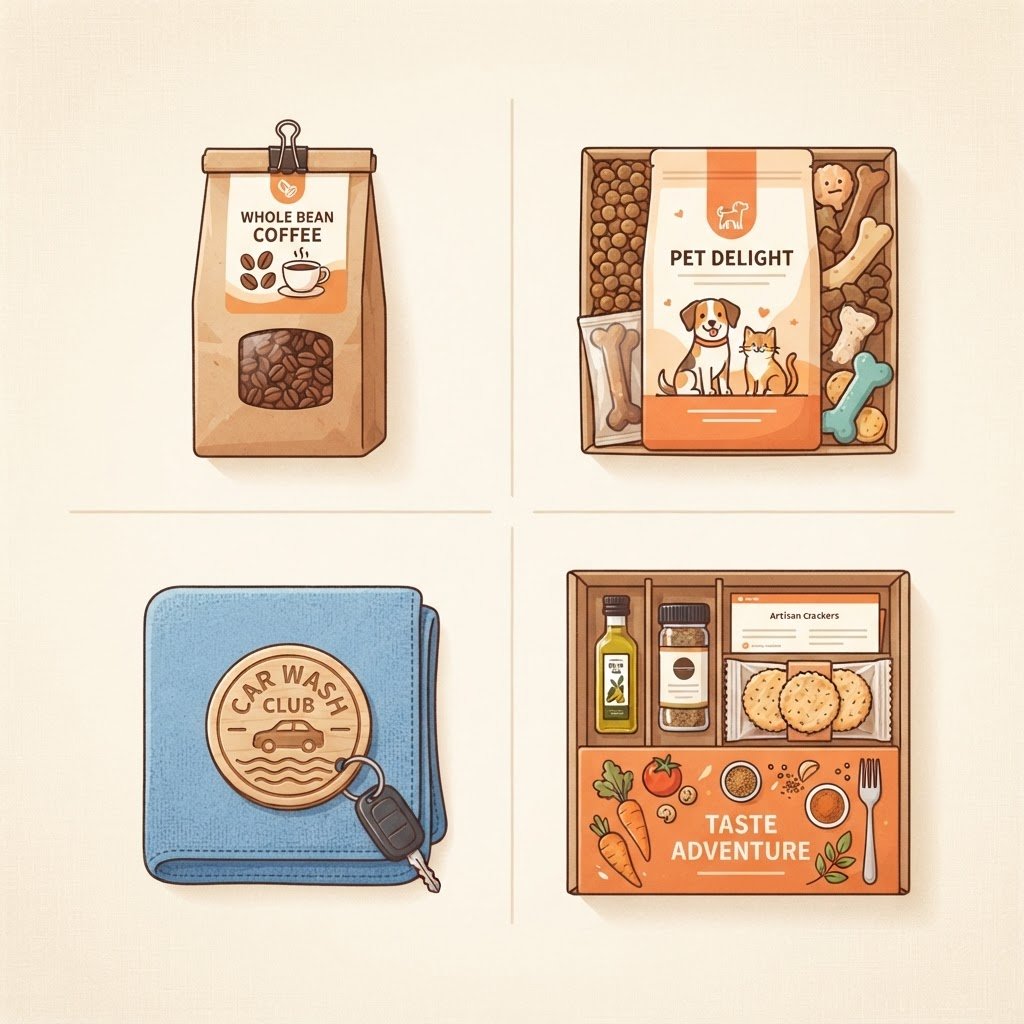
Consider the car wash. For most of its history, the car wash was a transactional service, something paid for per visit, occasionally with a discount for buying a book of tickets. In recent years, car wash chains across Australia, the United States, and Europe have shifted aggressively to subscription pricing. A monthly fee entitles the subscriber to unlimited washes, and the economics are deceptively simple: most people sign up intending to wash their car weekly but end up visiting twice a month. The subscription works because the average revenue per customer rises while the marginal cost of each additional wash is nearly zero. It is the gym model applied to vehicles, and it is quietly transforming an industry that most people never thought of as a candidate for recurring revenue.
Then there is the pet industry. Pet food subscription services have grown from a niche offering to a mainstream channel, with companies delivering tailored meals based on a dog’s breed, age, and dietary needs. The appeal is not just convenience but personalization, the sense that the subscription is providing something that a shelf-stable bag from a supermarket cannot match. The same logic has extended to pet medications, flea and tick treatments, and even toys, with subscription boxes curating monthly selections based on a pet’s size and play habits. The pet economy was already large, but subscriptions have added a layer of predictability, both for the business and the customer, that traditional retail never offered.
Coffee subscriptions have become so common that they barely register as unusual anymore, but the extension of the model into other corners of the food and beverage world is more surprising. Hot sauce subscriptions, cheese subscriptions, olive oil subscriptions, and even salt subscriptions have carved out small but loyal markets. The pattern is consistent: a product that was once bought sporadically and impulsively is reframed as something worth receiving regularly, with the subscription adding a curation element that justifies the commitment. The customer is not just buying olive oil, they are buying the expertise of someone who selects exceptional olive oil, and that expertise is what the monthly fee actually purchases.
The most unexpected territory might be physical goods that are not consumed but used. Clothing rental subscriptions, where members receive a rotating selection of garments each month, have found a niche among people who want variety without accumulation. Tool subscription services, aimed at tradespeople and serious DIY enthusiasts, deliver new or specialized tools on a rotating basis. Bicycle subscription services, which bundle a bike, maintenance, and insurance into a monthly payment, have appeared in several cities, repositioning the bicycle from a purchase to a service. In each case, the subscription replaces ownership with access, and the value proposition is that access is more flexible, more affordable upfront, and less burdensome than owning.
What drives this expansion is not just the appeal of recurring revenue for businesses, though that is undeniably powerful. Subscription revenue is more predictable than transactional revenue, which makes planning easier and valuations higher. Investors love subscriptions because they reduce uncertainty, and companies that can convert one-time buyers into subscribers see their financial profiles transform overnight. But the model only works when it also serves the customer, and the industries where subscriptions have taken hold are those where the customer genuinely benefits from regularity, curation, or reduced friction.
The friction reduction is perhaps the most underrated factor. A subscription eliminates decision fatigue. The car wash subscriber does not decide whether to wash the car this week, they simply drive in. The pet food subscriber does not compare brands at the supermarket, they trust the subscription to deliver the right thing. The coffee subscriber does not browse shelves, they wake up to beans on the doorstep. In a world saturated with choices, the subscription offers a small island of automatic good decisions, and that psychological relief is worth paying for.
Of course, the model has limits, and the subscription fatigue that emerged a few years ago was a legitimate warning sign. People do not want to subscribe to everything, and there is a threshold beyond which the accumulation of monthly fees begins to feel oppressive rather than convenient. The services that survive are the ones that deliver consistent value without requiring the customer to actively justify the expense each month. The ones that fail are the ones where the subscriber realizes, during a periodic audit of their bank statement, that they are paying for something they have not used in weeks.
The industries where subscriptions are now appearing are interesting precisely because they test the boundaries of the model. A car wash subscription makes sense because the service is repeatable and the marginal cost is low. A subscription for artisanal salt makes sense because it is a curated discovery experience. But there are categories where the subscription model feels forced, where businesses adopt it not because it serves the customer but because investors demand recurring revenue, and those tend to unravel quickly. The difference between a subscription that lasts and one that churns is whether the customer would choose it again if asked, and the best subscription businesses ask themselves that question constantly.
The quiet rise of subscriptions in unexpected places is ultimately a story about how the relationship between businesses and customers is changing. The transaction, the one-time exchange of money for a product or service, is a cold interaction. The subscription is a warmer one, an ongoing relationship that requires the business to keep earning the customer’s trust month after month. When it works, both sides benefit. When it does not, the customer leaves, and the business learns that recurring revenue is not a right but a reward forcontinued relevance.
The next time a monthly charge appears on a bank statement for something that used to be bought one at a time, it is worth thinking about what that shift represents. It is not just a pricing change. It is a rethinking of what it means to be a customer, and a business, in an economy where the most valuable relationship is not the single sale but the ongoing one.