
A perspective piece from The Listening Market
The promise of smart glasses has been floating around the technology industry for over a decade. The original Google Glass arrived in 2013 with enormous fanfare and an equally enormous stumble. Wearers were called glassholes. The device was too conspicuous, too limited, and too expensive. It was a prototype forced into the public eye before the world, or the technology, was ready. Google retreated, shelving the consumer version and pivoting quietly to enterprise. For a while, smart glasses became a cautionary tale, a shorthand for the gap between Silicon Valley’s ambitions and public willingness.
That was over a decade ago. The landscape has changed. Displays have improved, batteries have shrunk, AI has advanced, and society has normalised wearing technology on the body in ways that would have seemed strange in 2013. Wireless earbuds are ubiquitous. Smartwatches outsold traditional watches years ago. Trackers, rings, and patches monitor sleep, heart rate, and blood sugar continuously. The boundary between the body and the device has been eroding for so long that smart glasses no longer feel like a leap. They feel like the next inevitable step.
Several major technology companies are betting heavily on that thesis. Meta has released multiple iterations of its Ray-Ban smart glasses, each more capable than the last. Apple has been patenting and prototyping eyewear for years. Samsung, Xiaomi, and a wave of startups have their own versions. The question is not whether smart glasses will arrive in a meaningful way. They already have. The question is whether they will cross the threshold from niche accessory to everyday object, the way earbuds and watches did.
What Today’s Smart Glasses Can Do
The current generation of smart glasses falls into two broad categories. The first is the camera-and-audio type, exemplified by the Ray-Ban Meta. These glasses look almost identical to standard fashion eyewear but contain a small camera, microphones, and speakers. They can take photos and short videos, play audio, take calls, and integrate with an AI assistant that can answer questions, translate signs, identify objects, and provide directions. They do not have a display. The interaction is voice-driven and audio-first.
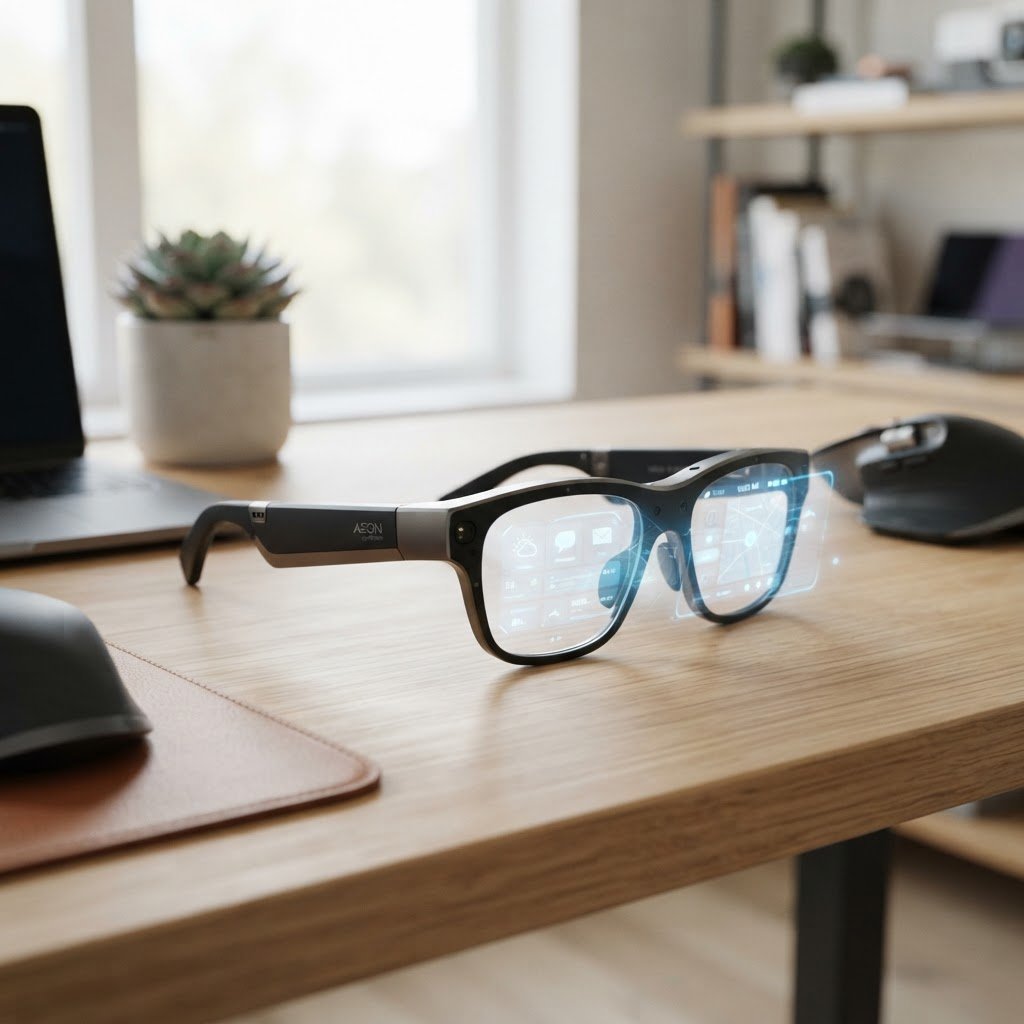
The second category is the augmented reality type. These glasses overlay digital information onto the wearer’s field of view, requiring transparent displays embedded in the lenses. The technology is genuinely difficult. The displays must be bright enough for outdoor use, transparent enough to see through, and small enough to fit inside a frame. The processing power required is significant, and the heat generated by that processing must be managed on the wearer’s face. These challenges have kept AR glasses bulky, expensive, and limited in battery life. The breakthrough products in this category are still arriving, but the prototypes and developer kits from the major players suggest the engineering problems are being solved, one by one.
The practical applications are compelling enough to justify the attention. Navigation is one. Walking through an unfamiliar city with turn-by-turn directions overlaid on the street ahead is a genuinely useful experience, hands-free and intuitive. Translation is another. Pointing at a menu in a foreign language and seeing the dishes named in English, or hearing them read aloud through the glasses’ speakers, dissolves one of the most common barriers of travel. Accessibility is perhaps the most powerful use case. For people with visual impairments, glasses that can describe what is in front of them, read signs, and identify people are not a convenience. They are a tool of independence.
The Social Acceptance Problem
The original Google Glass failed not because the technology was bad but because the social contract was broken. People did not want to be recorded by someone they were talking to. They did not want a device between them and eye contact. The glasses were too visible, too clearly a piece of surveillance equipment worn on the face.
The companies building eyewear in 2026 have learned this lesson. The Ray-Ban Meta glasses are designed to be indistinguishable from regular sunglasses at a glance. The recording light is small but present. The framing is deliberate: the glasses are marketed as a lifestyle accessory that happens to contain technology, not as a piece of technology that happens to sit on the face.
The social contract around recording has also shifted. Doorbell cameras, dashboard cameras, and the presence of a smartphone in every pocket have normalised the idea that public spaces are recorded constantly. The incremental addition of glasses does not feel as transgressive as it once did. Peer acceptance is not guaranteed, and the tension between the wearer and the non-wearer will not disappear. But the starting point is different. The conversation is not about whether recording in public is acceptable. It is about which device does the recording.
The AI Connection
The rise of smart glasses is closely linked to the rise of artificial intelligence assistants. Glasses are, in some respects, the ideal hardware for AI. They sit at eye level, the same vantage point as the wearer. They see what the wearer sees. They hear what the wearer hears. An AI assistant built into glasses can answer questions about what is in front of the wearer without requiring them to describe it. It can read the room, in a literal sense.
The first generation of AI-powered glasses assistants is already capable of answering general questions, setting reminders, translating text, and identifying objects through the camera. The next generation, already in development, will be more proactive. The glasses will suggest information before the wearer asks, flagging a restaurant rating as the wearer walks past, or reminding them of a meeting they can see approaching on their calendar as they pass a specific location. The convenience is obvious. So is the unease. An assistant that knows what its wearer is looking at knows a great deal about its wearer.
This is the tension that will define the adoption of smart glasses. The technology is capable of extraordinary utility, and extraordinary intrusion, at the same time. How the companies building these devices handle privacy, transparency, and data control will determine whether the products are embraced or rejected. The lesson of the last decade is that consumers will trade privacy for convenience, but not infinitely. The line is real. It moves, but it does not disappear.
Battery, Comfort, and the Practical Questions
The unglamorous challenges of smart glasses are the ones that will determine their success or failure for most buyers. Battery life remains a constraint. Current camera-and-audio glasses last a day of moderate use, but AR glasses that drive displays will need substantially more power. Charging solutions, from charging cases to contact-lens-style induction, are being explored, but no one has solved the problem completely.
Weight is another factor. Glasses that are too heavy will not be worn for long, and glasses that pinch or sit awkwardly will be abandoned, however clever the technology inside. The fashion industry, which has spent decades perfecting lightweight, comfortable, and attractive eyewear, has knowledge that the technology industry does not. The partnerships between Meta and Ray-Ban, and between other technology companies and eyewear brands, are acknowledgements that the first product is always the frame itself. If it does not look right, the technology inside does not matter.
Price will be the gatekeeper. The current Ray-Ban Meta glasses start at around three hundred dollars, putting them in the range of premium sunglasses. AR glasses, when they arrive at full capability, will likely cost significantly more. The path to mass adoption will require the price to fall, the way it fell for smartphones and earbuds and watches. The wearable market has shown that consumers will pay for devices that genuinely improve daily life. It has also shown that consumers will abandon devices that fail to deliver on their promise.
The Next Step or a Side Step
The history of consumer technology is littered with categories that promised to be the next big thing and were not. Three-dimensional television, smart rings, the modular phone. Smart glasses could be next. They could also be the device that finally succeeds where the smartphone left off.
The case for optimism rests on the alignment of several trends. AI has made the interaction model workable. Wearable adoption has made the social contract more flexible. Display technology has brought the AR experience within reach. The companies involved have the resources and the patience to iterate until the product is right.
The case for scepticism rests on the unresolved tensions. Privacy, social acceptance, battery life, comfort, and price are not minor issues. They are fundamental. If any one of them is mishandled, the product will fail to cross the threshold between early adopters and the mainstream.
The likelihood is that smart glasses will follow the path of the smartwatch: an initial wave of scepticism, then a second wave of refinement, then a gradual but steady integration into everyday life until the device is indistinguishable from the background. That process may take years. But the arrow is pointing in that direction. The next gadget on the face is not a question of if. It is a question of when.




