
A perspective piece from The Listening Market
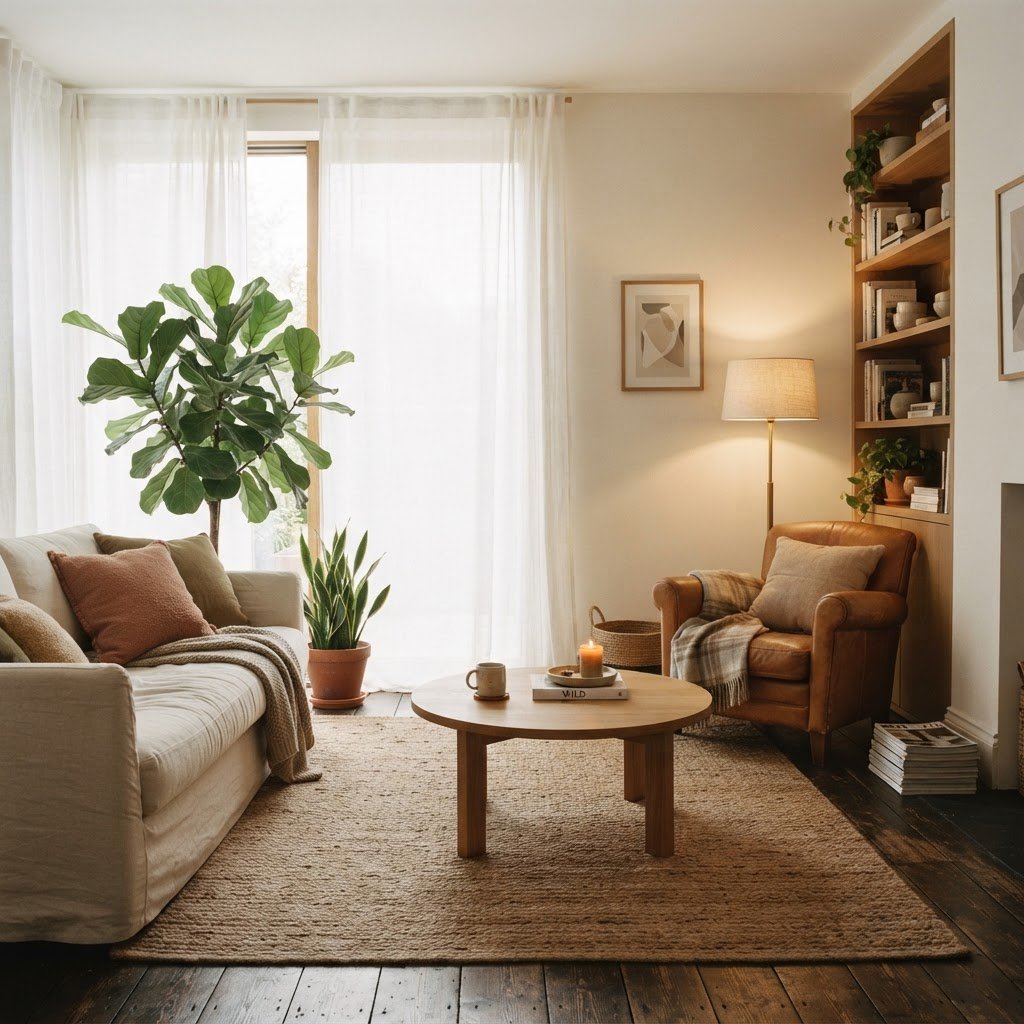
There was a time when a home was simply where someone slept, ate, and kept their belongings. The walls were functional, the furniture was chosen for utility, and the idea of curating a space for emotional wellbeing would have seemed indulgent to most. That time has passed. Across cities and suburbs, in apartments and free-standing houses, people are quietly transforming their living spaces into something that feels less like a residence and more like a retreat. Soft lighting replaces harsh overheads. Textures matter in ways they never did before. Plants multiply on windowsills and shelves. The question being answered is no longer just what a home should look like, but what it should feel like when the door closes behind you.
The shift did not happen overnight. It crept in slowly, accelerated by a period when people were forced to spend more time inside their own four walls than they ever had before. During that stretch, something became undeniably clear: the environment people live in shapes their mental state more than they realised. A cluttered kitchen contributed to a sense of overwhelm. A dark corner became a source of low-grade unease. A bedroom that doubled as an office made rest feel impossible. When the world outside felt uncertain, the space inside became the one thing people could control, and they began to take that control seriously.
What emerged was not a trend driven by interior designers or furniture brands, though both have capitalised on it. It was something more organic. People started paying attention to how their homes made them feel, and then started making changes accordingly. A blanket thrown over a reading chair. A candle that smelled like cedarwood. A small fountain trickling in the corner of a living room. These were not grand renovations. They were small, deliberate choices that turned a house into a place that offered comfort on arrival.
The concept of home as retreat draws from ideas that have long existed in hospitality and wellness design. Hotels have understood for decades that lighting, scent, texture, and sound all contribute to how a guest perceives a space. Spas built entire businesses around the principle that environment dictates mood. What changed is that these principles stopped being the exclusive domain of commercial spaces and started migrating into ordinary homes. The bathroom became a place for soaking rather than just washing. The bedroom acquired blackout curtains and linen sheets. The living room shed its formal stiffness and became something closer to a nest.
Lighting has played a central role in this transformation. The big overhead light, once the default in nearly every home, has become something people avoid. In its place, lamps have proliferated. Floor lamps in corners, table lamps on sideboards, string lights draped along bookshelves, candle clusters on coffee tables. The goal is warmth, not brightness. A room bathed in the soft amber glow of multiple low-wattage sources feels fundamentally different from one lit by a single ceiling fixture, and people have begun to intuit this without needing a designer to explain it.
Texture has become another language of comfort. Velvet cushions, chunky knit throws, linen curtains, jute rugs, ceramic vases with uneven glazes. The tactile experience of a room now matters almost as much as its visual one. Running a hand along a smooth wooden armrest or sinking bare feet into a thick wool rug creates a sensory register of ease that registers before conscious thought does. This is not about luxury in the traditional sense. Many of these materials are inexpensive. It is about intention, about choosing surfaces that feel good to touch rather than ones that simply look clean.
Plants have become the quiet centrepiece of the retreat home. They serve a practical purpose, filtering air and adding humidity, but their psychological contribution is harder to quantify and easier to feel. A room with living things in it feels alive itself. The act of watering, pruning, and tending to plants introduces a small rhythm of care into daily life, a gentle obligation that grounds people in the present moment. Monstera leaves unfurling over a bookshelf, a trailing pothos cascading from a high shelf, a fiddle leaf fig standing sentinel in a corner. These are not decorations. They are companions of a sort, quiet and undemanding, asking only for water and light.
Sound has entered the conversation too. The retreat home is not just seen and touched but heard. For some, that means a dedicated speaker playing ambient music or nature sounds. For others, it means the deliberate absence of sound, or rather, the replacement of mechanical noise with natural ones. A window cracked open to let in birdsong. A wind chime on a balcony. The soft gurgle of a small indoor water feature. The goal is an acoustic environment that soothes rather than stimulates, that allows the nervous system to downshift from the alertness required outside.
Scent is perhaps the most underrated element. Retailers have long understood that smell influences behaviour, pumping fragrances into stores to encourage linger and spending. Homes are catching up. Diffusers, incense, scented candles, and room sprays have moved beyond the holiday gift category into everyday use. The smell of a home is now something people curate, choosing fragrances that evoke calm, warmth, or freshness depending on the room and the season. Lavender in the bedroom, citrus in the kitchen, sandalwood in the living room. The olfactory landscape of a home has become another layer of design.
The retreat mentality has also reshaped how people think about the function of different rooms. The kitchen is no longer just for cooking. It is for lingering over a cup of coffee on a slow morning. The bathroom is no longer just for hygiene. It is for a long soak at the end of a difficult day. The garden or balcony, however small, is no longer just outdoor space. It is a place to sit and watch the light change. Each room is being asked to do more than its basic function, to offer an experience rather than simply accommodate a task.
This reimagining has been accompanied by a counter-movement of sorts, a conscious rejection of the maximalist, display-oriented home that dominated social media for years. The all-white aesthetic, the picture-perfect styling, the furniture chosen primarily for how it photographs. These things have not disappeared entirely, but they have been pushed aside by something more honest. People want homes that feel good to live in, not homes that look good on a feed. Comfort has reclaimed its place as the highest priority, and the aesthetic that follows from comfort happens to be warmer, softer, and more personal than anything curated for likes.
The economic dimension cannot be ignored. Not everyone can afford to renovate, and the retreat home is not about expensive renovations. It is about small, accumulative changes that compound over time. A second-hand lamp from a market. A cutting from a friend’s plant, rooted in a jar and eventually potted. A blanket bought on sale at the end of winter, ready for the next one. The barrier to entry is low, which is partly why the movement has spread so widely. Creating a retreat is not about spending money. It is about paying attention.
There is also a deeper current running beneath all of this. The modern world is loud, fast, and relentlessly demanding. Notifications, deadlines, traffic, news cycles, social obligations. The nervous system is asked to stay activated for hours on end, with few natural pauses. A home that functions as a retreat offers a counterbalance to all of that. It is the one place where the pace can drop, where the stimulation can be controlled, where the body and mind are given permission to exhale. In a culture that treats rest as something to be earned, the retreat home quietly insists that rest is a default, not a reward.
The trend shows no signs of fading. If anything, it is deepening. People who started with a single plant and a candle are now thinking about acoustic panels, air quality monitors, and circadian lighting systems. The vocabulary of wellness design is entering ordinary conversations. Words like hygge, wabi-sabi, and biophilia have become part of the domestic lexicon, borrowed from other cultures but applied with local sensibility. The home is being treated not as a container for life but as an active participant in it, shaping mood, energy, and wellbeing in ways that are felt long before they are articulated.
What makes this particular shift resonant is its accessibility. Unlike architectural movements that require means and expertise, the retreat home is democratic. Anyone can dim a light. Anyone can move a chair closer to a window. Anyone can place a small vase of flowers on a bedside table and notice the difference it makes to the feeling of waking up. The barrier is not money or skill. It is awareness, and awareness is spreading.
The homes being created through this slow, intentional process are not magazine-ready. They are messy sometimes, personal always, and genuinely lived in. But they share a quality that transcends style. They feel like places that hold you when you walk through the door. Places that make the outside world feel a little further away. Places that, in their quiet way, make daily life more bearable and occasionally more beautiful. That is what people are looking for when they make their homes feel like retreats. Not perfection. Peace.




