
A perspective piece from The Listening Market
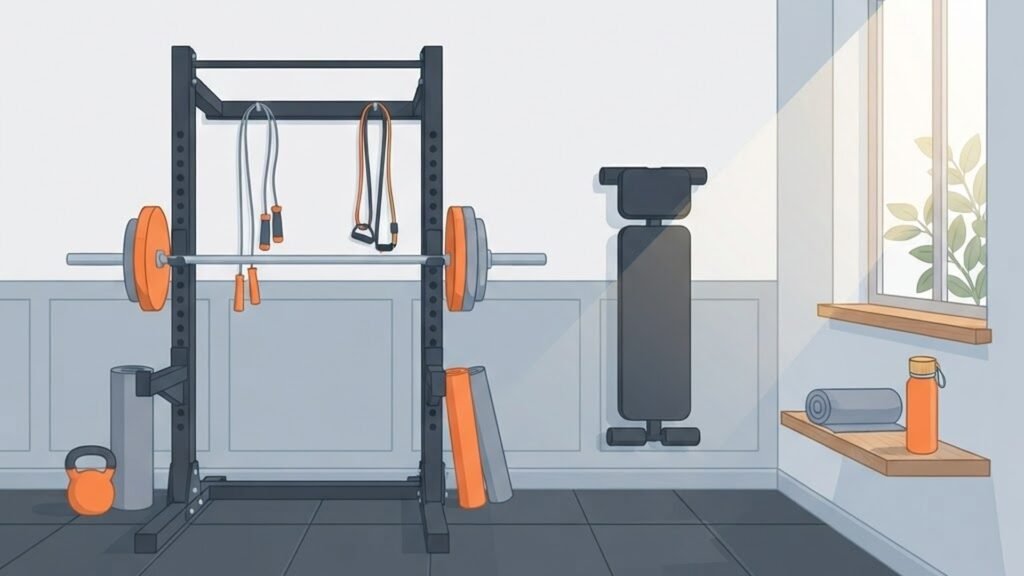
When a gym membership renewal notice landed in his inbox last January, a schoolteacher in his fifties did something he had never done before: he read it closely, added up the year’s worth of debits, thought about the fourteen visits the money had actually bought, checked the second-hand marketplace, and pressed confirm on a used squat rack before pressing anything else. His garage now smells faintly of rubber and chalk. He trains before school three mornings a week. His membership, six hundred dollars for the year, outlived itself in the purchase price of equipment he now owns outright.
The arithmetic that changed the decision
For decades, joining a gym carried a small moral weight, a statement of intent, of self-improvement begun. The industry was built on that psychological contract, and it throve on the gap between intention and attendance. What has shifted recently is that consumers have started doing the division: cost per visit. A membership that looks like fifty dollars a month looks considerably less flattering as eighty dollars per actual workout, and the figures become difficult to unsee once calculated.
Household budget pressure accelerated the reckoning. As the cost of living climbed, discretionary debits faced audits, and gym contracts sat near the top of the list of recurring charges that under-delivered. People were not abandoning exercise. They were abandoning the specific financial structure of paying a premium for a facility they used intermittently, an insight that has quietly turned one of the fitness industry’s most reliable revenue models into a liability among younger, budget-conscious consumers.
What two hundred square metres of garage can do
The rise of the home gym is partly a story of space, and mostly a story of equipment that got dramatically better and cheaper. A generation ago, home training meant a wobbly bench and a concrete-filled plastic weight set. Today, a modest outlay buys a competition-grade barbell, calibrated plates, an adjustable bench that folds flat against a wall, and a rack sturdy enough to anchor a house. The commercial gym’s equipment advantage, once decisive, has been eroded to a rounding error for most training styles.
For cardio, the treadmill has been dethroned by the fact that outdoors is free, but the indoors case has improved too: compact walking pads that slide under desks, smart rowing machines that store vertically, and stationary bikes whose machine-driven resistance is driven by apps that simulate alpine climbs. Even the luxury end has come downmarket, with refurbished high-end equipment finding second lives through resale platforms, a channel that barely existed for gym gear a decade ago.
Waiting lists and squat racks
The resale economy deserves much of the credit for the boom. The online marketplaces now heave with barely used equipment as gym-goers upgrade, downsize or relocate, and the supply has taught shoppers a durable truth about exercise equipment: depreciation is brutal, three-year-old racks sell for half their original price with almost no wear, and the buyer absorbs none of the depreciation already paid by someone else. A home gym assembled second-hand can cost less than a single year of premium membership in the capital cities.
Manufacturers noticed the shift and began designing for it, with racks built to fit under suburban ceilings, plates coated in colours chosen for living-room adjacency, and fold-away designs aimed squarely at apartment dwellers who must choose between a home gym and a dining table, and increasingly choose the gym. Storage, once the deal-breaker, has become a solved engineering problem.
Apps became the personal trainer
Perhaps the decisive development was that the home gym lost its last deficit: instruction. The knowledge necessary to train safely and effectively once lived almost exclusively inside gyms, in the heads of trainers and the etiquette of experienced lifters. That knowledge has now been packaged. Strength programmes’ follow-along videos count rest, coaching apps analyse squat depth from a camera, and community leaderboards supply the competitive warmth that gyms previously monopolised. The correct form that used to require a trainer standing by is now delivered in less time by a phone propped against a shoe rack.
The psychological barrier has fallen alongside it. Everyone’s first awkward squat in a commercial gym, performed under imagined scrutiny, pushed people toward private spaces. At home, the only audience is the mirror, and beginners consistently report that they train more often once the audience is gone. Consistency, the single variable that determines fitness outcomes more than any other, turns out to thrive on privacy.
There is a generational wrinkle in this comfort. Younger_trainers, raised on filmed instruction and acquaintance-free lifting advice, did not have to unlearn the old intimidation at all, because they never absorbed it. Their first acquaintance with a barbell was as likely to be in a parent’s garage or a driveway as in a commercial facility, and the debts of that shift are still accumulating: they buy equipment younger, train at home more often, and treat the commercial gym as an occasional venue rather than the default one. Habits formed at the garage rack tend to stay there, and the industry is only beginning to digest what that means for memberships sold as identity.
Time, the real luxury
The case for the home gym finally rests on something larger than money. The commercial gym asks for the workout plus a drive each way, a peak-hour wait for equipment, a locker-room ritual and the small tax of operating in public. Regulars routinely spend nearly as long getting to and from the gym as they spend under the bar. The home gym compresses the entire transaction to bare minutes: the garage light goes on, the session happens, the door closes.
For shift workers, parents of small children and anyone whose evenings are spoken for, that compression is not convenience but access, the difference between training and not training. A father of two describes predawn sessions completed before the household wakes, something no commercial facility’s opening hours could ever have sold him. The home gym did not merely save him money. It returned a fitness habit that scheduling had taken away.
The second-hand advantage nobody planned
An underrated driver of the shift is the sheer abundance of abandoned commercial equipment. When a gym closes, its assets reach market fast, and closures across recent years have flooded resale platforms with professional-grade machines at fractions of replacement value. Savvy home builders have furnished entire set-ups from a single closing-down sale, buying the same racks and plates that charged memberships financed, at prices that make resistance almost impossible.
The pattern has even produced a strange kind of brand stewardship: cheap machines break quietly as they age, so home buyers increasingly hunt for the simple, serviceable stuff gyms bought because it survived thousands of strangers, cast iron and steel with no electronics to fail and no proprietary parts to be discontinued. One decade-old barbell outlasts three generations of connected fitness subscription, a durability argument that increasingly reads as wisdom rather than nostalgia.
Making a habit out of a room
Behavioural research on habit formation keeps confirming something the home gym crowd discovered by accident: friction kills habits, and closeness removes it. The people still training at home a full year past the initial excitement are almost always the ones who nailed the boring variables, a door that never needs unlocking or finding and an equipment layout that never needs reassembly. Space itself has turned out to be the most reliable personal trainer anyone can hire, one that is always open and never cancelled.
What people still go out for
The honest version of this story acknowledges what homes cannot replace. Some disciplines genuinely require facilities: lanes for swimmers, courts for players, mats and partners for grapplers. Social exercisers, for whom a gym is a third place and the chat between sets is the point, are not well served by a lonely garage. And quality equipment requires upfront capital that some budgets cannot summon, meaning the home gym shift skews, for now, toward those with space and savings, a nuance often lost in the enthusiasm.
The likely equilibrium is pluralism rather than replacement. The future many people have already chosen keeps a cheap or communal gym membership for the pool, the classes and the company, and a rack at home for the ordinary Tuesday. Each venue covers the other’s weaknesses, and the industry that once relied on customers who never showed up is being rebuilt around customers who show up precisely for what homes cannot offer.
The garage light comes on
There is something quietly satisfying about the trend’s ending: a room that stored boxes and broken appliances becomes the most-used room in the house, a place where twenty focused minutes now happen daily where an hour-and-a-half round trip happened monthly. Nobody renovated anything. Nobody bought a franchise. A few hundred dollars of steel and an app moved the workout to where life actually happens, and the renewal notice, wherever next January finds it, is going to struggle to compete with a squat rack that is already paid for.




