
A perspective piece from The Listening Market
Walk through any Australian food market in the spring of 2026 and a pattern quietly announces itself. The dairy aisle has grown a shelf of drinks that promise digestion, energy, calm and focus, often in the same bottle. The deli counter sells chilli oil the way it once sold olive oil, as a pantry essential rather than a novelty. The freezer section is no longer the repository of compromise but the home of restaurant-grade dumplings, fermented concentrates and exotic fruits that would have required a passport a decade ago. None of this happened overnight. Food trends arrive slowly and then all at once, and 2026 is the year several long fermenting currents surface together on ordinary supermarket shelves.
The biggest structural change in how people eat is not an ingredient but a posture: the home kitchen has been reappointed as a place of ambition rather than obligation. After years in which takeaway apps turned cooking into an optional hobby, the pendulum has swung back with surprising force. Grocery data across 2025 showed the interesting pattern of people cooking more while eating out just as often, because the meals being made at home are no longer the weeknight-pasta counterweight to restaurant indulgence. They are the good stuff: the slow braises, the project noodles, the Sunday projects.
Functional everything
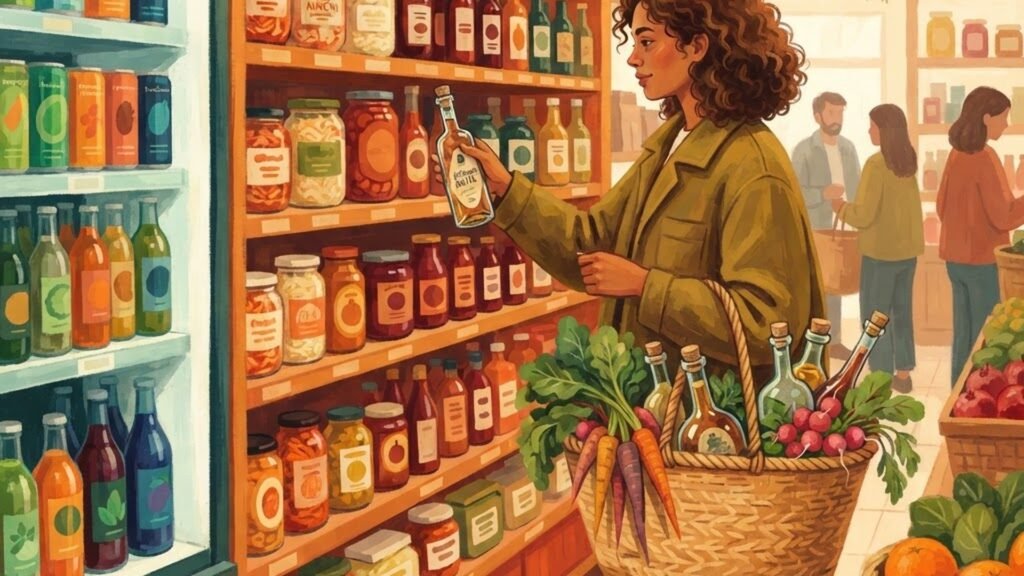
If one movement defines the year, it is the final collapse of the boundary between food and beverage on one side and supplement on the other. Functional drinks are suddenly everywhere, from sparkling waters dosed with magnesium for the evening wind-down to coffees fortified with adaptogens that would have sounded like fantasy ingredients to the average shopper five years ago. Kombucha has stopped being the eccentric guest at the party and become one of the furniture. The category’s growth has pulled Grocers into the invention of entirely new shelf logic: mood, energy, gut health, hydration, sleep.
What is genuinely new in 2026 is the subtlety. The first wave of functional products tasted like a decision, faintly medicinal, virtuous above all. The current wave tastes, first and better still, like something a person would actually like to drink. The pleasure leads and the function follows quietly, and that sequencing explains why the movement has stopped being a coastal curiosity and started being a mainstream default across age groups.
Global palates, local shelves
The most visible change on the plate itself is the continuing collapse of distance. Global street foods, once the domain of dedicated eateries and festival stalls, are now weeknight staples, assembled from supermarket components. Korean gochujang, Filipino ube, Sichuan peppercorn and Colombian style sauces all moved from specialty importers to mid-range supermarkets within a couple of years. The trend reflects more than adventurousness. Immigration patterns reshape the pantry of the entire country within a generation, and second-generation cooks now write recipes, launch condiment brands and influence grocery buyers at scale. The average home cook in 2026 is more comfortable with a jar of doubanjiang than their parents were with a lemon grass stalk.
The quiet return of honest cooking
Counterintuitively, the same year that features fortified beverages and fermentation stations is also the year of simple home cooking’s resurgence. There is a visible fatigue with complexity for its own sake. The most shared recipes of the past twelve months have not been spectacular showpieces but streamlined honest meals: a one-pan chicken and greens, a five-ingredient tomato pasta that tastes like August, a basic bread that fits around a workday. Home cooks talk about eating the same beloved dish on a weekly rotation rather than chasing novelty every night, and the cookbooks that feel fresh are noticeably shorter than their predecessors.
The home café phenomenon is the trend’s most charming expression. Armed with a modest espresso machine, a milk frother and one well-explained recipe, ordinary households are reproducing flat whites and cold brews of coffee-shop quality, and the ritual has quietly detached from thrift. It persists because the making itself turned out to be the point. The morning cappuccino at the kitchen bench, unhurried and at roughly a-fifth of the cafe price, has become a small ceremony of intention, one of the few moments of the day fully owned by its maker.
Waste becomes unfashionable
Beneath the flavours and rituals, a quieter economic ethic has hardened into a habit. Food costs have made thrift aspirational again in a way that no amount of environmental messaging achieved alone. Broccoli stems become slaw, sourdough ends become pangrattato, yesterday’s rice becomes tonight’s fried rice with an egg cracked over the top. Chefs have been teaching this economy for years, but 2026 is the year it went domestic at scale: the scrappy, use-everything cooking of grandmothers rebranded without irony as intelligence. The zero-waste impulse has been absorbed so completely that it no longer needs the label, which is generally the moment a value has actually won.
Eating as attention
Underneath all four currents runs the same water. Functional drinks are about paying attention to what a body needs. Global cooking is about paying attention to the wider world. Simple recipes are about paying attention to what actually satisfies. The war on waste is about paying attention to the value of what is already at hand. In a decade when attention has become the scarcest resource in every other domain of life, food has become one of the places people deliberately choose to spend it, and the products thriving on supermarket shelves in 2026 are the ones that respect the intent rather than just filling a trolley. The plate, it turns out, is one of the last honest records of what people care about, and the record for 2026 reads: a little healthier, a little more global, a little simpler and far more deliberate than anyone predicted.




