
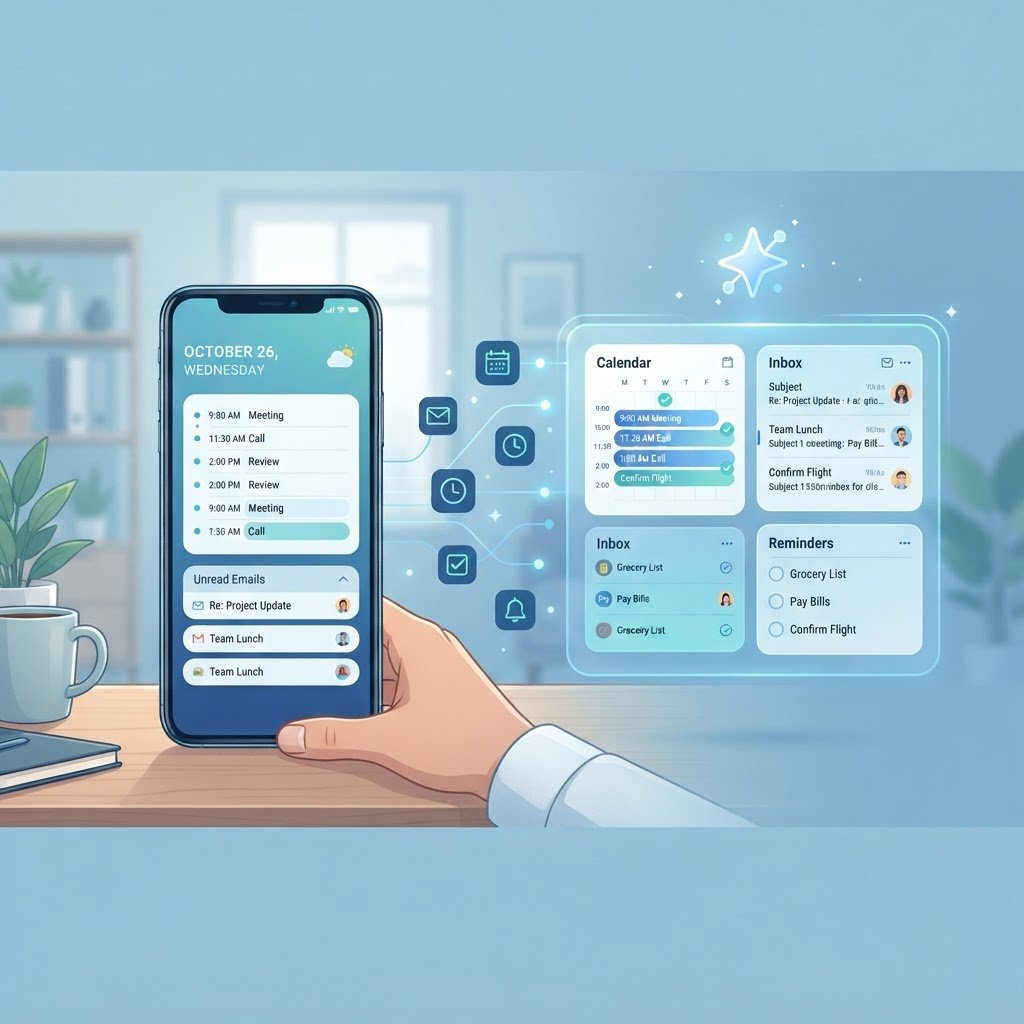
There was a time when having a smartphone felt like a novelty. People carried them in pockets with a faint sense of pride, pulling them out at dinners to settle arguments or show off photos that had been taken on the device itself. The camera quality was terrible, the apps were limited, and the battery barely lasted a day. And yet, within a few short years, the smartphone stopped being impressive. It became invisible. It became the thing that was simply there, the way electricity is there, or running water. Nobody talks about owning a smartphone anymore. It would be like talking about owning a refrigerator.
The question worth asking now is whether personal AI assistants are on the same path. Not the clunky chatbots of a few years ago that could barely hold a conversation, but the kind that can book a table, draft an email, summarise a 40-page document, remind someone about a birthday, and suggest a recipe based on what is in the fridge. The kind that knows a person’s schedule, their preferences, their quirks. The kind that, increasingly, people are starting to talk to the way they might talk to a particularly competent colleague.
The shift has been quiet. Unlike the smartphone, which arrived with a cultural bang and a line around the block, personal AI assistants have been seeping into daily life through the back door. They live inside phones, inside email clients, inside calendars. They are baked into operating systems in ways that are easy to miss. A person might not think of themselves as someone who uses an AI assistant, and yet they might happily let their phone summarise a group chat, or let their email app draft a polite decline to a meeting invitation. The assistant is there, doing its work, without ever being the headline.
What makes this transition different from the smartphone moment is the nature of the technology itself. A smartphone is a physical object. It has a screen, a camera, a battery. It can be held up and shown to someone. An AI assistant is more like a layer of intelligence that sits over the top of everything else. It does not have a shape. It does not have a brand in the way an iPhone does. It is more like a service that is woven into the fabric of the devices and applications people already use. This makes it harder to point to and say, there, that is the thing that changed everything. But it might be changing things all the same.
Consider how people interact with their devices now compared to five years ago. The dominant mode used to be tapping and swiping. Open an app, navigate a menu, type a query, scroll through results. That model still exists, of course, but it is increasingly being supplemented, and in some cases replaced, by a different mode entirely: asking. Instead of opening a weather app and checking the forecast, a person might simply ask their phone whether they need an umbrella tomorrow. Instead of opening a notes app and typing out a list, they might dictate their thoughts and let the assistant organise them. Instead of spending twenty minutes comparing flights, they might describe their constraints in a sentence and let the assistant do the sorting.
The friction of using technology drops dramatically when the interface becomes conversational. This is the core reason why personal AI assistants could become as normal as smartphones. Not because they are flashy, but because they remove effort. People do not adopt technology because it is impressive. They adopt it because it makes their lives slightly easier, and once that ease becomes familiar, going back feels like swimming in clothes.
There is a psychological threshold that any new technology has to cross before it becomes invisible. It happens when the utility outweighs the novelty, when using the thing feels less like a choice and more like a default. Smartphones crossed that threshold somewhere around the time that apps became genuinely useful for everyday tasks like banking and navigation. Personal AI assistants are approaching their own version of that moment. The utility is becoming clear. The novelty is fading. What remains is a tool that saves time, reduces cognitive load, and handles the kind of small administrative tasks that pile up and quietly drain a person’s day.
None of this means the transition is complete or without friction. There are genuine concerns that hold people back. Privacy is the most obvious one. An assistant that knows a person’s schedule, their communications, their spending habits, and their health data is an assistant that knows a great deal. The idea of all that information being processed by a third party is uncomfortable for many people, and rightly so. There is a difference between a smartphone that stores photos locally and an assistant that needs to understand the full context of a person’s life to be useful. The trust gap is real, and it has not been fully bridged.
There is also the question of reliability. Smartphones, for all their complexity, are deterministic machines. Tapping a button produces a predictable result. AI assistants are probabilistic. They might get something right nine times out of ten and then produce something confidently wrong on the tenth. That tenth time, if it involves a misinterpreted meeting time or an email sent to the wrong person, can be enough to make someone wary of relying on the tool. Trust, once broken, is hard to rebuild. The technology will need to become more reliable before it truly becomes invisible.
And yet, these concerns did not stop the smartphone. Early smartphones were buggy, insecure, and prone to crashing. People used them anyway because the convenience was worth the occasional frustration. The same pattern may well hold for AI assistants. The convenience of having something handle the small tasks, the mental overhead, the scheduling, the summarising, the drafting, might be enough to carry the technology through its awkward phase and into the mainstream.
The comparison to smartphones is not perfect in every detail, but it captures something important about how technology becomes normal. It is rarely a single moment. It is a gradual accumulation of small conveniences that, taken together, become hard to live without. The first time someone uses an AI assistant to plan a trip, it feels like a trick. The tenth time, it feels like a tool. The hundredth time, it feels like nothing at all. It is just the way things are done.
If personal AI assistants follow that arc, and there is good reason to think they will, then the question is not really whether they will become as normal as smartphones. The question is when. And the answer might be sooner than expected, because the infrastructure is already in place. The phones are in everyone’s pockets. The assistants are already on the phones. The only thing left is for people to start using them without thinking about it, and that, quietly, is already beginning to happen.
The smartphone took roughly a decade to go from luxury to necessity. The AI assistant may take less time, because it does not require anyone to buy a new device. It just requires a shift in habit, a willingness to ask instead of tap, to delegate instead of do. That shift is subtle, but it is happening, one summarised email and one automated reminder at a time. Someday soon, the idea of not having a personal AI assistant might feel the same way the idea of not having a smartphone feels today: slightly unimaginable, a little inconvenient, and quietly outdated.




