
A perspective piece from The Listening Market
Most people approach a deep clean the wrong way. They grab a spray bottle and a cloth, pick a room, and start scrubbing. Two hours later, they’re exhausted, the room looks roughly the same, and the task gets added to the list of things that feel perpetually incomplete. The problem isn’t effort. The problem is that nobody explained what comes before the cleaning.
Preparation is the most undervalued phase of deep cleaning. It’s the difference between a productive session that transforms a space and a frustrating one that merely moves dirt around. The cleaning itself takes less time when the preparation is done properly — sometimes half the time.
Declutter Before You Clean
This is the single most important step, and it’s the one almost everyone skips. Cleaning around clutter is like mopping around furniture — you’re addressing the visible surface while the real problem remains underneath. Before any cleaning product touches a surface, every room needs to be decluttered first.
This means clearing surfaces, picking up items from the floor, removing clothes from chairs, and putting away anything that isn’t in its designated place. The goal isn’t to organise — it’s to expose the surfaces that need cleaning. A countertop covered in appliances, mail, and random objects takes three times longer to clean than an empty one, and the result is always worse.
The approach should be ruthless but not perfectionist. If an item doesn’t have a home, put it in a box or basket for now. The point is to clear the field, not to solve every organisational problem in the house.
Work Top to Bottom, Room by Room
Dust falls. Water drips. Gravity is a factor in cleaning, and ignoring it means cleaning the same surface twice. The correct order in any room is always ceiling to floor — light fixtures, upper shelves, walls, furniture, baseboards, and finally floors. This way, whatever dislodges from above lands on a surface that hasn’t been cleaned yet, not one that has.
For room order, start with the hardest or most important space. For most people, that’s the kitchen or bathroom. Getting the difficult rooms done first creates momentum and prevents the common experience of running out of energy before reaching the spaces that matter most.
Gather Everything Before You Start
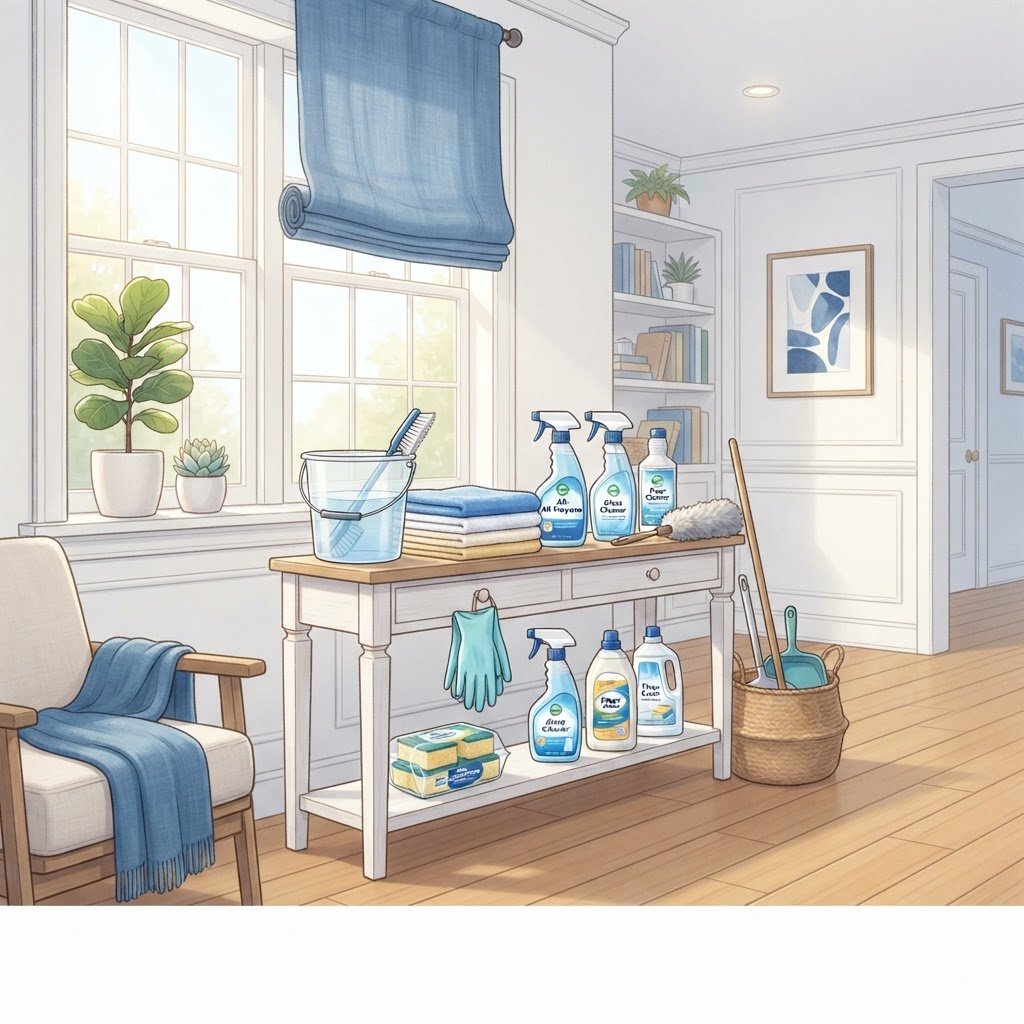
Running back and forth to find cleaning supplies is one of the main reasons cleaning takes longer than it should. Before starting, gather everything into a portable caddy or bucket: multi-surface cleaner, glass cleaner, disinfectant, microfibre cloths (several), a scrub brush, sponges, rubber gloves, a dustpan and brush, bin bags, and any specialty products for specific surfaces.
According to CDC cleaning guidelines, using the right product for the right surface isn’t just about effectiveness — it’s about safety. Mixing certain cleaning agents can produce hazardous fumes, and using the wrong product can damage surfaces permanently. Know what goes where before you begin.
Ventilate the Space
Open windows and doors before starting a deep clean. This serves two purposes: it reduces the concentration of cleaning product fumes in the air, and it helps surfaces dry faster after being cleaned. Good ventilation is particularly important when using bleach, strong disinfectants, or products in enclosed spaces like bathrooms.
If the weather doesn’t allow for open windows, turn on exhaust fans and consider wearing a mask if using strong chemical products. The goal is to clean the home without making the air in it worse to breathe.
Treat Soft Furnishings Separately
Carpets, rugs, curtains, and upholstery require a different approach from hard surfaces, and they should be planned for separately. Wash what can be washed — cushion covers, removable cushion cases, throw rugs. Vacuum what can’t be — carpets, mattresses, upholstered furniture. If steam cleaning or professional carpet cleaning is planned, book it for after the rest of the deep clean is done, so that freshly cleaned hard surfaces don’t get dirty from carpet cleaning activity.
Soft furnishings hold more dust, odour, and allergens than most people realise. Asthma UK notes that soft furnishings are a primary habitat for dust mites, which can affect air quality and respiratory health. Including them in a deep clean makes the entire home feel fresher, not just the visible surfaces.
Plan for Disposal
A deep clean generates waste — old products, expired items, broken things that have been sitting in drawers, and bags of clutter. Plan for this before starting. Have bin bags ready. Set aside a box for donations and a bag for recycling. Knowing where things are going prevents the common problem of cleaning producing a pile of stuff that just sits in a corner for another month.
The Clean That Actually Works
A deep clean done with preparation is a satisfying, efficient process that produces visible results. A deep clean done without preparation is a frustrating, exhausting exercise that produces a slightly better version of the same mess. The difference is entirely in what happens before the cleaning starts.
Declutter the space. Gather the supplies. Ventilate the rooms. Work top to bottom. Handle soft furnishings separately. Plan for disposal. Then — and only then — start cleaning. The work itself will be faster, more effective, and genuinely transformative. And the home will stay cleaner for longer, because the surfaces were actually cleaned, not just wiped around the clutter.