
A perspective piece from The Listening Market
A garden has a way of revealing the habits of its owner. The careful planting, the early mulching, the thoughtful spacing all show in the first flush of spring. By midsummer, the difference between a garden that has been designed for ease and one that has not becomes stark. Beds that seemed manageable have sprawled. Lawns that were crisp have thinned. Hedges that held a clean line have softened into something wilder. Making a garden easier to maintain is not the same as making it dull. It is about choosing the right elements, placing them well, and building in the conditions that allow the garden to largely care for itself. The goal is a space that asks less of its owner without giving up the feeling of being alive.
The mistake many people make is to associate a low-maintenance garden with gravel, concrete, and the absence of anything growing. A garden that has been stripped of life may demand little work, but it offers little in return. The better approach is to work with the conditions the site already provides rather than against them. A garden that fits its climate, its soil, and its light will need less intervention at every stage. The same plants that thrive without attention elsewhere, when placed in the right spot in the right garden, perform the same quiet trick. Designing for ease begins with understanding the place before changing it.
The Soil and the Foundation of Less Work
Everything in a garden grows from the soil, and the condition of the soil determines how much effort the garden demands over time. Poor soil produces weak plants that need constant watering, feeding, and protection. Good soil holds moisture through dry spells, supports root systems that resist disease, and grows plants that compete successfully with weeds. Improving the soil before planting, with organic matter worked into the existing earth and a layer of mulch spread over the surface, is the single most effective step toward a garden that needs less attention. The work done at the ground level pays back for years, while the work skipped at the start is made up in ongoing frustration.
Mulching and the Cover That Saves Hours
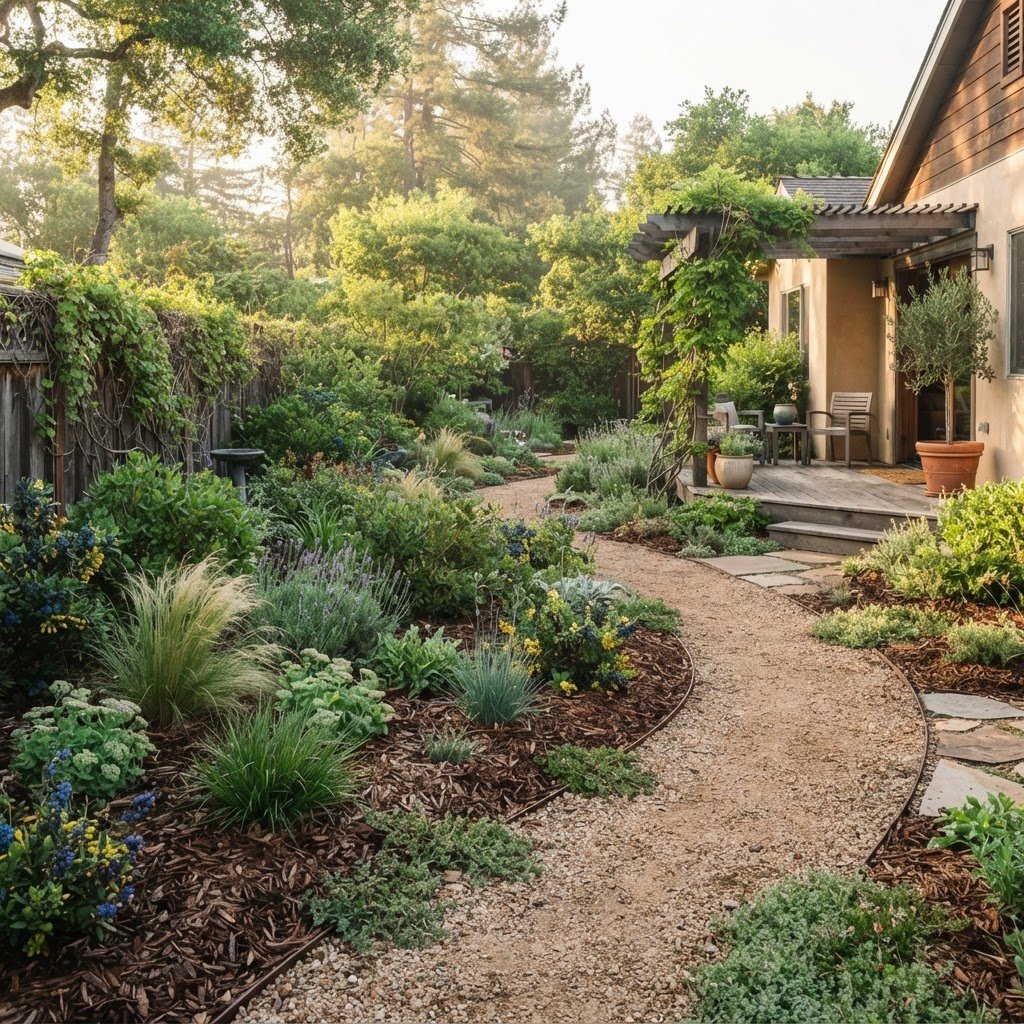
Mulch is the quiet workhorse of an easy garden. A thick layer spread over the surface of the beds suppresses weeds by blocking the light they need to germinate. It holds moisture in the soil, reducing the frequency and duration of watering through the warm months. It breaks down slowly, feeding the soil and improving its structure over time. Organic mulches, such as bark, compost, or leaf mould, add the benefit of building the soil as they decompose. Inorganic mulches, such as gravel, last longer but offer nothing back. The right mulch, applied at the right depth and refreshed each season, is what separates a garden that needs a weekend of weeding from one that needs an afternoon of tidying.
Choosing the Right Plants for the Place
The plant choices made early in a garden determine the maintenance demanded for years afterward. A plant suited to its position, in terms of light, soil, and moisture, grows strongly and needs little intervention. A plant placed in the wrong conditions will struggle, attract pests, and require constant attention without ever thriving. The most reliable approach is to choose plants native to the region or proven to perform well in its climate. These plants have evolved, or been bred, to handle the rainfall pattern, the temperature range, and the soil type of the area without extraordinary help. A garden built largely from such plants runs on its own rhythms far more than one assembled from species that need coaxing.
Grouping Plants by Their Needs
Even within a climate, different plants have different needs. Some tolerate drought and resent wet feet. Others prefer consistent moisture and fade in dry conditions. Mixing these plants randomly throughout a garden means that watering any one area satisfies some and harms others. Grouping plants by their needs, so that those with similar requirements grow together, allows the gardener to meet each group efficiently rather than compromising across the whole space. A bed of drought-tolerant plants near a sunny fence can go weeks without water. A section of moisture-loving plants near a downpipe or a low spot in the garden thrives in the conditions that already exist. This simple principle of grouping reduces the daily negotiation between plants and water.
Ground Covers and the End of Weeding
Bare soil is an invitation to weeds. Nature fills empty spaces quickly, and the weeds that arrive are almost always more vigorous than the plants deliberately chosen. Ground covers, the low plants that spread to fill the spaces between larger ones, close that gap and suppress the weeds from the start. A well-chosen ground cover forms a living mulch that shades the soil, holds moisture, and reduces the ongoing work of weeding to occasional pulling rather than a constant campaign. The range of options, from creeping thyme in sunny spots to native violets in shaded areas, means there is a ground cover for almost any condition. The result is a fuller, more layered garden that asks less of its owner.
Lawns and the Honest Cost of the Patch
The lawn is often the most demanding part of a garden. Mowing, edging, feeding, aerating, and watering a patch of grass consumes more time and water than almost any other element of the outdoor space. Reducing the size of the lawn, replacing part of it with garden beds, ground covers, or paved areas, dramatically cuts the weekly work. The remaining lawn, if it is to be kept, benefits from a grass type suited to the climate and the level of use. A slow-growing, drought-tolerant variety needs less mowing and less water than a finer lawn grass kept lush through constant irrigation. The honest assessment of how much lawn is actually used, and how much exists out of habit, opens the door to a garden that better matches the way the household lives in it.
The Garden That Feeds Itself
A garden designed for ease works with the natural cycles rather than interrupting them. Fallen leaves, instead of being raked and discarded, can be left in beds as mulch that breaks down into the soil. Kitchen scraps, composted and returned to the garden, close the loop and reduce the need for purchased inputs. A garden that recycles its own material needs less from outside and gradually builds its own fertility. The compost bin is not an ornamental feature, but it is one of the most useful elements of a low-maintenance approach. Over a season, it transforms what would have been waste into the material that keeps the soil and the plants thriving.
Hedges and Structural Elements That Hold Their Shape
The structural elements of a garden, the hedges, the paths, and the boundaries, anchor the space and reduce the visual unruliness that makes a garden feel like work. A hedge that grows at a moderate rate, suited to the space it fills, needs less clipping than a fast-growing screen that constantly reaches for the fence. A hedge kept slightly wider at the base allows light to reach the lower leaves and prevents the thinning that turns a screen into a staff of bare stems. Paths laid with stable materials, such as gravel set into the ground or solid paving, reduce the edging and weeding that soft borders demand. The structural choices are made once and quietly hold the garden’s shape for years.
Watering Less and Smarter
Watering is the task that most defines the summer garden, and the way it is done determines whether it is a chore or an occasional effort. Deep, infrequent watering encourages roots to grow downward, making the plants more resilient through dry spells. Frequent, shallow watering keeps the roots near the surface, where they dry quickly and demand more water. A drip irrigation system, hidden under the mulch, delivers water to the root zone without wetting the leaves and without the hose being dragged around the garden. A timer on the system automates the routine for the days it is needed. The combination of good soil, mulch, and smart watering creates a garden that survives the dry periods without the constant attention that a less considered approach demands.
The Garden That Works With Its Owner
The most well-designed low-maintenance garden still needs some attention. The difference is that the attention is predictable, bounded, and far less frequent. An afternoon every few weeks, rather than constant daily effort, keeps the garden in good order. The seasonal rhythm of pruning, mulching, and dividing is part of the pleasure rather than a burden, because the work fits the life of the person doing it. A garden designed around the realities of soil, climate, and available time becomes a space that gives back rather than one that takes. It remains alive, changes through the seasons, and offers the satisfaction of growth without the exhaustion of constant upkeep. That balance is what makes a genuinely easy garden possible.
Focus Keyword: make your garden easier to maintain
Meta Description: A practical guide to making your garden easier to maintain, covering soil, mulch, plant choice, ground covers, lawns, watering, and seasonal care.
SEO Title: How to Make Your Garden Easier to Maintain | The Listening Market




