
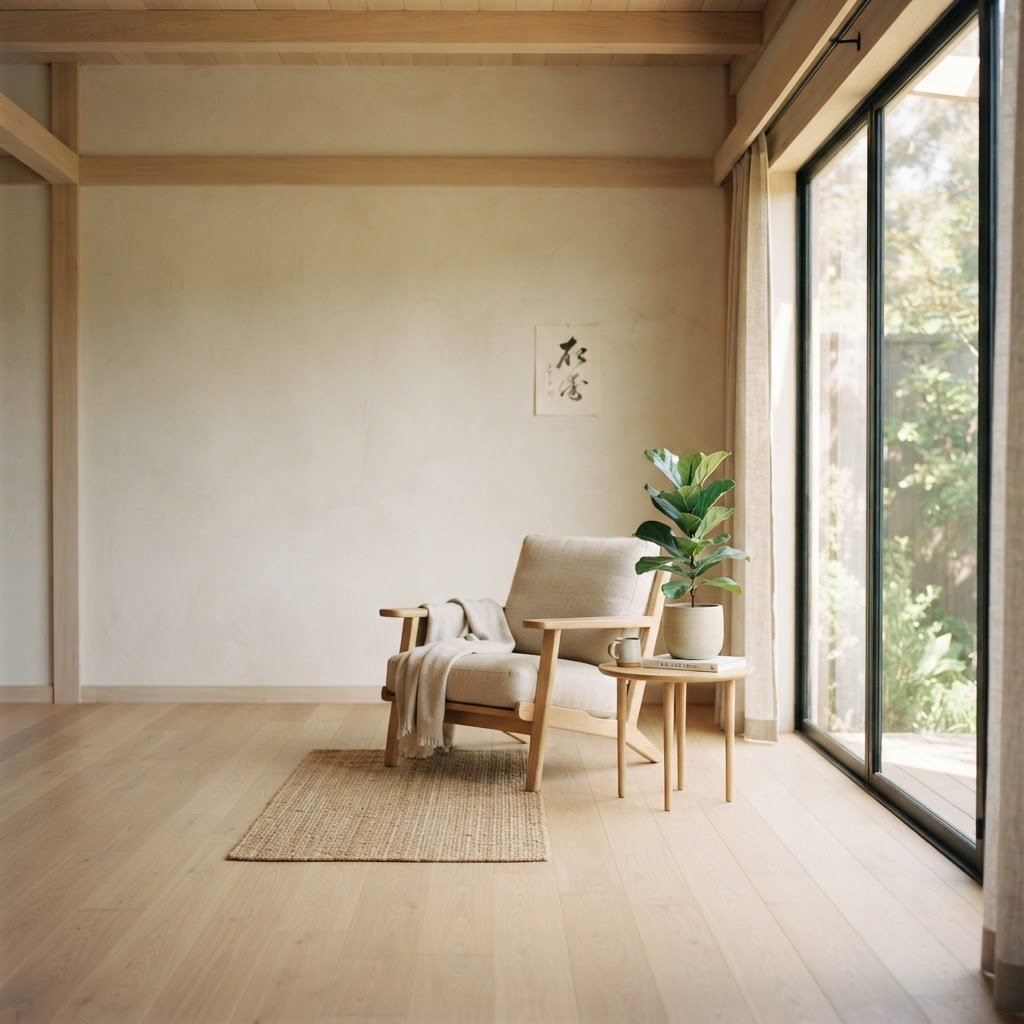
A perspective piece from The Listening Market
There is a growing pull toward having fewer things. It’s not a decluttering fad, and it’s not the sanitized, all-white aesthetic that filled social media a few years ago. Something quieter is happening. People are reassessing what they keep around them, and the logic of accumulating is starting to feel old.
The shift is subtle but increasingly common. A young family in a Melbourne suburb donated half their garage contents after two days of honest sorting. A retired couple in Brisbane swapped a storage unit full of unused furniture for a smaller home and a calmer morning. A freelancer in Sydney cancelled three subscription gadget boxes and redirected the money into experiences that actually left a mark.
None of this was driven by hardship. It was driven by the growing recognition that stuff has a cost even after you pay for it.
The most useful way to think about this is not minimalism. Minimalism as a label has become too tidy, too männlich. The more common reality is people wading into the slow, imperfect process of keeping less and noticing that life gets easier rather than emptier. What many are discovering is that when you remove the clutter, you create the conditions for new energy and new ideas.
That is the appeal. Not the image of the empty shelf. The reality of a mind with less friction.
The Weight That Stuff Quietly Holds
Most people underestimate how much energy their possessions consume. A house with three spare gadget boxes, two drawers of expired cables and a wardrobe full of aspirational purchases is not a house with more options; it’s a house with less usable space and more background stress. Each box sitting unopened in a cupboard is a tiny conversation you haven’t had with yourself.
Research into environmental psychology has long pointed toward this. A cluttered home tends to correlate with higher cortisol levels, lower subjective wellbeing and a measurable reduction in the ability to focus. The household becomes a permanent subtle distraction; something you sense even when you don’t see it directly.
The physical consequences are just as real. Maintaining, moving, protecting and finding homes for too many things is a tax paid in time and energy. Anyone who has moved house five times in ten years knows this deeply: you are paying for the privilege of owning too much.
Removing that weight can create real change. It’s worth paying attention to.
The Honest Pullbacks
A common pattern emerged through hundreds of anecdotes and psychology studies over the last several years. The pull toward less is not a luxury position, although having the option to choose does require some minimum level of stability.
People from many different income brackets describe the same basic sensation: they are tired of hunting for things in their own homes, tired of tidying objects they don’t use, tired of the low-level guilt around the items they bought and never touched again.
The classic demographic for this trend is not single young minimalists in pristine apartments. It’s thirty-something parents with young children. It’s people whose responsibilities have grown faster than their homes. And it’s older adults for whom a smaller space – with fewer moving parts – simply makes sense.
In some cases, the pull is environmental, driven by a wish to produce less waste. In others, it is financial, a reaction to years of accumulation that never paid back its emotional cost. In many, it is simply the quiet recognition that more has stopped meaning better.
The trend feeds through into shopping habits. The successful retailers of the moment are not the ones that create urgency through volume. They’re the ones that make fewer things, well, and present them with restraint. This is a meaningful shift from the impulse-buy economy of the last decade.
Why Less Is Today a Positive Rather Than a Deprivation
A crucial shift is happening. Historically, owning things was a straightforward marker of success. Status came through abundance. This is still broadly true in many segments, but it’s less dominant than it was.
What replaces it is a subtler sort of status. Owning fewer, better-chosen, more considered things is becoming a quiet signal of taste and self-control. It’s harder to achieve than buying everything in sight, and people seem to know it implicitly.
Aversion to mass production is part of this. AI-generated abundance is part of this, too. The hyper-availability of content and images is already starting to make human-made and hand-selected items more valuable, and the same logic is extending to physical possessions.
The deepest version of this story is about a kind of housekeeping of the mind. Each object around you acts, in some small way, as an anchor. Some anchors are worth keeping – they hold memories, support daily rituals, serve the life you actually live. Many are just adrift. The appeal of living with less is not the appeal of emptiness; it is the appeal of choosing what keeps you, rather than being kept by what you own.
That distinction matters. It separates the people who genuinely find the shift empowering from those who experience it as deprivation. The aim is not to live with a strict quota or to count belongings. The aim is to stop adding what doesn’t serve and to let go of what has already stopped.
The Economic Pull Beneath the Cultural One
Cost of living has been an obvious amplifier of this trend. Housing in many Australian cities has become expensive relative to incomes, and the size of new homes has shrunk accordingly. Smaller homes make accumulation literally harder, and force a kind of honesty about what you own.
There is an indirect environmental angle, too. Waste awareness has risen significantly, and each thing a household throws out is a small reminder of the original waste of buying it. People who once accepted that a council clean-up was just part of life now feel a low-level reluctance about filling the nature strip with half-broken items they barely used.
The pull toward less is beginning to cross generational lines as well. Older people downsizing often find themselves passing heirlooms to children who don’t want them. The younger generation’s polite rejection is not a personal slight, it’s a wider signal: the house and its objects no longer hold the generational weight they once did.
What’s Actually Changing in People’s Homes
One of the clearest patterns is the gradual replacement of quantity with quality. A single chef’s knife that holds an edge beats a block of six mediocre ones. A well-made wool blanket beats four fleece throws that pill and fray. A few pieces of cookware that last decades beat a cupboard full of single-purpose gadgets, most still in their boxes.
People who lean into this also tend to describe another shift: they have more leisure time they can account for. When a home is easier to tidy, tidy it becomes. When items have homes rather than piles, putting things away is not a chore but a micro-habit. Analysts of household time-use survey data from earlier this decade found that tidying and organizing takes up a surprising slice of the average household’s available leisure time per week. Shrinking this portion returns that time for sleep, relationships, side projects and rest.
There is a feedback loop, too. People who start by removing a single category – kitchen gadgets,或者是 garments – often describe a behavioural shift that spills beyond it. Less storage shopping, fewer impulse buys, more pausing before adding. This is the real shape of the trend; it isn’t Block-level declutter cascades, it’s a quieter re-education of one’s own buying instincts.
What This Is Not
It’s important to note the limits of this pulling-back. Most people are not living in extreme frugality or joining monasteries. Consumer spending continues; in fact, it continues to grow where people feel the purchase is worthwhile. The trend is not to stop spending.
What’s changing is the threshold at which an item is perceived as worth owning. That threshold is rising slowly, and that rise is happening across many consumer segments at once.
Living with less, in this sense, is not about stricter rules. It’s about living with what returns interest. A book that gets re-read. A chair you would sit in again tomorrow. A garment you actually repair rather than replace. A tool that serves you multiple seasons.
The mode of ownership shifts in this kind of household: the relationship between person and possession becomes longer, considered, reciprocal. Buying for a life you actually live, rather than a life you imagine.
Where This Trend Goes Next
The pull toward less has the potential to embed into more aspects of daily life over the next few years. Home construction is slowly trending smaller. Conscious wardrobes, capsule wardrobes and considered clothing purchases are reaching beyond fashion-aware consumers. The second-hand and repair markets continue to grow across furniture, appliances and technology.
Most interesting is how the messaging around all of this has shifted. A decade ago, living with less tended to be positioned as either extreme minimalism (and therefore unattainable or peculiar) or as a deprivation linked to austerity. The dominant message now is not “give up the things you love.” It is, instead, “notice the things that aren’t serving you and let them go on.”
In that framing, the appeal of less isn’t a retreat from modern life. It is a return to it. A fresh way to engage with the room you wake up in, the spaces you move through, the choices you make on a typical Tuesday morning.
Possessions, in this new chapter, are quietly asked to earn their keep. And increasingly, many of them do not.
That’s the growing appeal of living with less stuff. Not the aesthetic of emptiness, but the relief that arrives when your surroundings stop quietly talking over your life.
The Listening Market explores trends shaping how people live, work and spend. This piece is part of an ongoing series on the everyday decisions redefining modern domestic life.




