
A perspective piece from The Listening Market
On a Tuesday evening in a community hall in Adelaide, a dozen adults between the ages of twenty-five and sixty are sitting in a circle playing the recorder. None of them are particularly good. The teacher, a retired music instructor, stops them every few bars to correct a fingering. Nobody checks a phone. For ninety minutes, the room holds nothing but breathy renditions of Renaissance folk tunes and the sound of people concentrating on something that cannot be monetised, optimised, or posted.
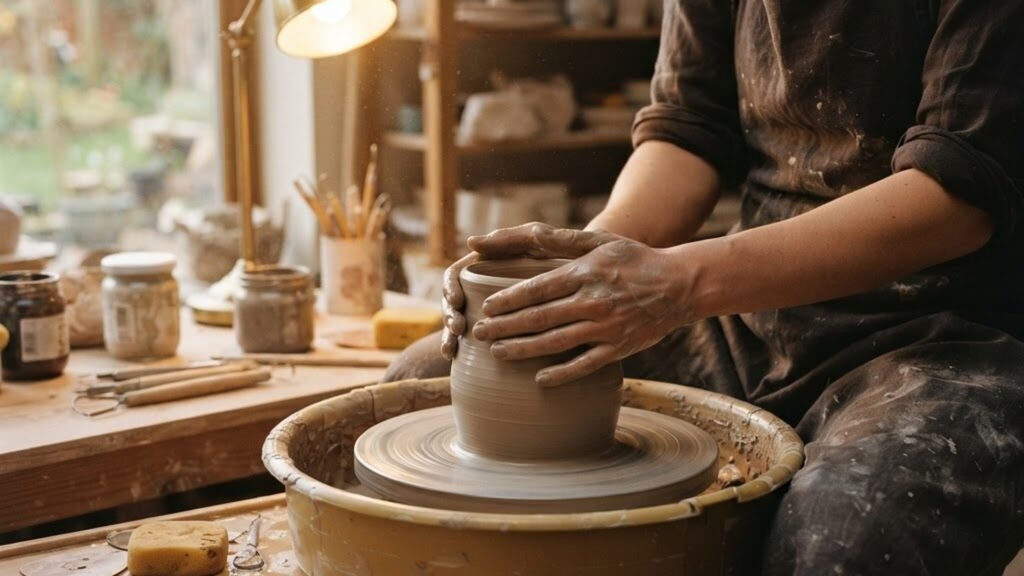
Scenes like this one are quietly multiplying. Pottery studios report waiting lists that stretch for months. Chess clubs, life-drawing classes, community gardens, and amateur choirs are filling with people who, a decade ago, would have spent the same evening scrolling. After two decades in which hobbies migrated onto screens, tracked by apps and filtered through feeds, a meaningful share of adults are choosing hobbies with the screen built in nowhere at all. The return of the offline hobby is one of the more telling cultural reversals of the decade.
How hobbies ended up online in the first place
The migration happened so gradually that few noticed it as a loss. Photography became twenty thousand images on a phone rather than an afternoon in a darkroom. Reading became an e-reader that counted words and streaks. Running became a watch that split a jog into pace zones and notifications. Even cooking, the most physical of hobbies, arrived on screens as sped-up videos, algorithmically suggested and endlessly compared.
Each migration had its reasons. Digital tools are convenient, cheap, and endlessly patient. They promised an answer to the modern problem of not having enough time: the app would track the run so the mind could wander, the feed would curate the inspiration so no moment was spent on the wrong recipe. But somewhere along the way, a subtle swap occurred. Most hobbies once meant doing a thing. Increasingly, they meant doing a thing while a system watched, judged, ranked, and suggested the next thing. The hobby became a metric, and the metric became the point.
For a while, the arrangement felt fine because everyone was inside it together. What broke first, at the level of individual feeling, was the ability to be genuinely absorbed. The state that psychologists call flow, the deep, self-forgetting absorption that hobbies traditionally delivered, turns out to be fragile in the presence of a device engineered to interrupt. People began noticing that their leisure felt curiously exhausting, that an evening of hobby-apps left the mind as tired as an afternoon of meetings, with none of the fulfilment.
What an offline hobby actually offers
The appeal of the offline hobby is best understood by what it removes rather than what it adds. Remove the metrics, and skill becomes visible only in the hands: the pot that survives the kiln, the chord change that finally lands clean, the pass that finds its runner. Remove the audience, and the bad early attempts belong to no one but the person making them. Remove the feed, and there is nothing to compare this evening’s clumsy progress against except last week’s own clumsy progress.
Physically, offline hobbies engage hands and materials that most working days never touch. A generation of knowledge workers whose jobs consist of typing and talking has discovered an unexpected appetite for clay, timber, wool, soil, and ink. Neuroscientists studying skilled hand use have long argued that the brain treats the hand as a primary site of learning and reward; centuries of craft tradition arrived at the same conclusion without instruments. To make a thing badly, with hands, and then less badly, week on week, is a form of progress the body can feel in a way no dashboard replicates.
Socially, offline hobbies have become one of the few remaining places adults make new friends. Commentators spent years noting the decline of third places, the venues that are neither home nor work where community forms. Hobby groups have stepped into the gap. The weekly class carries exactly the ingredients research associates with durable friendship: repeated unplanned contact, shared purpose, low stakes, and a rhythm that continues whether or not anyone is feeling sociable that week. Nobody at the recorder circle is there to network. Which is precisely why the connections it forms tend to hold.
The amateur ideal returns
There is a second, subtler current beneath the trend: the rehabilitation of being bad at things. The internet’s insistence that every pursuit be publicly legible turned many people off hobbies they would have happily stunk at in private. A culture of documented mastery discouraged beginners, because every attempt was implicitly staged against professionals.
Offline hobby spaces run on the opposite assumption. The amateur, in the original sense of the word, is a lover of the thing rather than a professional at it. Nobody in the community garden is auditioning for anything. This freedom from performance is what allows people to begin, and beginning is the whole secret of having hobbies. The return of the amateur is, in a quiet way, a rebellion against the idea that a person’s leisure should also be a personal brand.
Anxiety has a way of rearranging the response
Cultural shifts this broad rarely have a single trigger, but the mounting conversation about attention, sleep, and the general feeling of being perpetually online has given the offline hobby a persuasive frame. The digital detox, as a concept, has a flaw: abstinence framed as deprivation tends to end in relapse. The offline hobby offers a better design. Rather than removing something, it fills the hours with a rival good, a pleasure that competes with the phone on novelty and absorption instead of willpower.
The evidence, in the small empirical pockets studying leisure, consistently places engaged, hands-on, socially shared leisure among the most restorative activities measured. But most people do not need the studies. They know how they feel after three hours of clay compared with three hours of a feed. The trend is not aspirational. It is experiential.
The economics of getting off the feed
There is discreet money in the shift, which is how it can be known that it is real rather than merely discussed. Ceramics studios have become one of the fastest-growing categories of small creative business, and hardware stores report rising sales of hand tools alongside the usual power gear. Independent yarn shops, a category many expected not to survive the twenty-teens, have stabilised around customers who treat knitting as meditation with a product attached. Board game cafés, flocking together in mid-sized cities, sell a commodity that feels almost premodern: an unhurried table among strangers for the price of a coffee.
The spending pattern tells its own story. These are not cheap hobbies, and their practitioners are not romantic paupers. They are time-poor professionals deliberately buying friction: paying a studio for clay they could order cheaper, a class for structure they could improvise, a communal table for company they could skip. Friction used to be what convenience businesses removed. A meaningful customer base now treats friction, in the form of difficulty, slowness, and the presence of other humans, as the product itself. The market has rarely been so unambiguous about what people miss.
Learning to be where the body is
Docents of the revival, teachers of craft classes especially, describe a predictable first-evening scene. New students fidget for the first twenty minutes, hands wandering toward pockets where the phone used to wait. The restlessness peaks around the moment the material demands something: the clay collapses, the chord buzzes, the seam does not sit straight. Then something shifts. The hands engage, the breathing slows, and by the end of the session the same student is startled by how late it is. Interviews with hobby newcomers return again and again to the same phrase: for the first time in years, hours passed without scrolling. Not hours without the phone in the room. Hours without the pull.
That distinction has carried over into how people schedule the rest of their weeks. Hobby regulars describe a protective instinct around the class or the club night that they rarely extend to anything else. The Tuesday recorder circle outranks the work call that could have been an email. The Saturday morning allotment is defended against social engagements with the vigour once reserved for holidays. When leisure finally requires the body’s presence, people begin to guard it like the scarce, lifegiving thing it always was.
Not a rejection of technology, a rebalancing
It would be too neat to call this a backlash. Most of the pottery enthusiasts still carry phones; the hiking clubs still have WhatsApp threads; the chess club streams tournaments to juniors who learn openings on apps before they ever touch a wooden set. The picture is not a world rejecting its tools but one renegotiating where the tools sit. The phone is welcome to handle the logistics of the hobby, the messaging, the maps, the booking. What it is no longer welcome to do is be the hobby.
That settlement, technology in the margins, hands and rooms at the centre, may be the durable form of the shift. It suggests the future of leisure is not a retreat to some imagined pre-digital purity, and it is certainly not the completion of the migration of everything onto screens. It is a grown-up division of labour between what machines are good at and what hands, rooms, and other people are good at.
The recorder circle will never trend. Nobody in it is improving for an audience, and the sound, honestly, is not worth recording. That, it turns out, is the entire appeal. Somewhere between the kiln, the allotment, and the badly executed chord change, a growing number of people have found the one thing the phone could never deliver: hours that belong entirely to the living of them.




