
A perspective piece from The Listening Market
There is a familiar irony that unfolds at the conclusion of many modern vacations. A traveler returns home after a fortnight of dawn-to-dusk sightseeing, navigating crowded airport terminals, hiking rugged mountain trails, and keeping pace with a meticulously scheduled itinerary, only to collapse onto a sofa and utter a well-worn phrase: needing a holiday to recover from the holiday. What was originally intended as a restorative reprieve from daily pressure frequently transforms into a secondary marathon of physical endurance, sensory overload, and logistical effort.
For decades, travel culture operated on an implicit assumption that leisure must be earned through non-stop activity. A successful trip was traditionally measured by accumulation—stamps in a passport, miles logged on foot, historical monuments cataloged, and iconic vistas photographed before sunrise. Yet, as workplace burnout reaches unprecedented levels and constant connectivity erodes the boundaries of personal life, a quiet recalibration is taking place across the travel landscape. Travelers are increasingly rejecting the tyranny of the packed travel itinerary. In its place, a powerful movement is taking root: the popularity of wellness holidays rest not adventure as the primary motivation for taking time off.
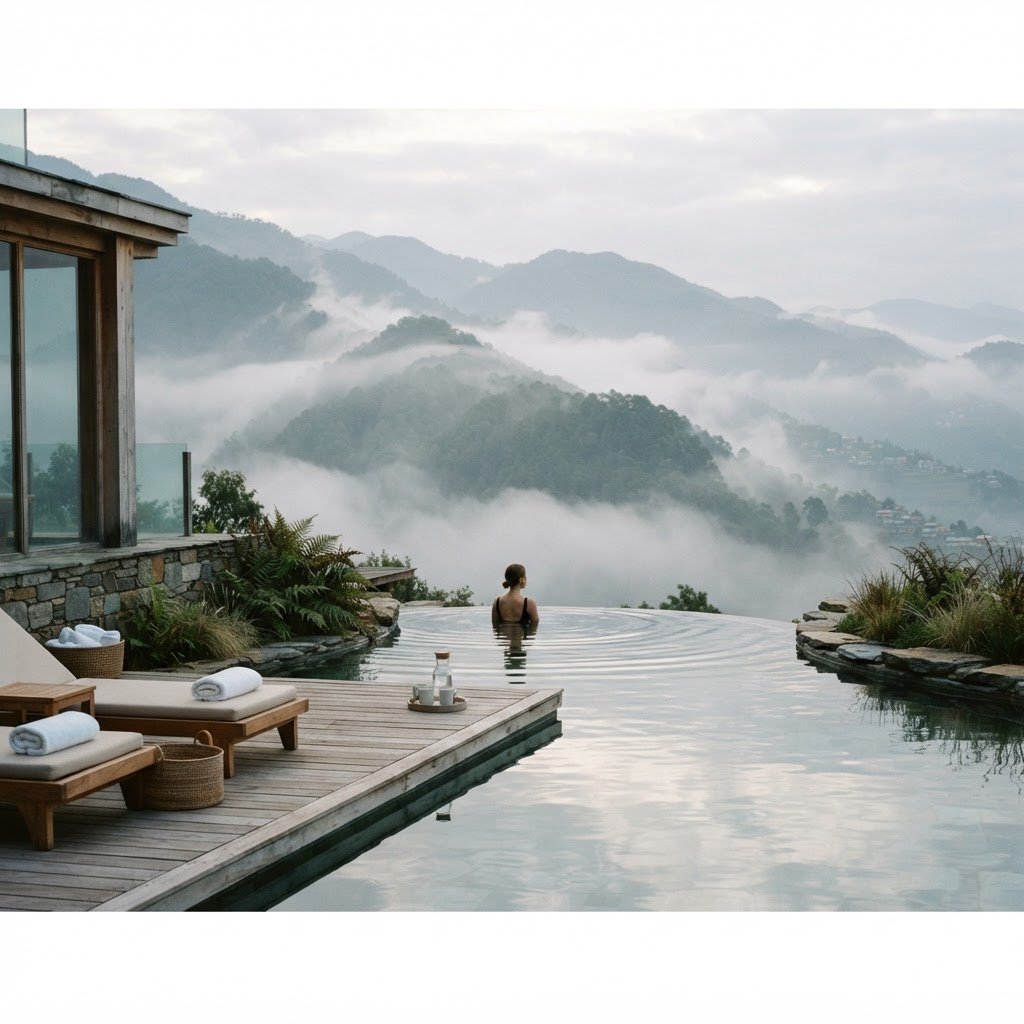
This evolving approach to getaway travel does not ask individuals to climb peaks, learn deep-sea diving, or participate in sunrise fitness bootcamps. Instead, it invites them to stop moving entirely. From sleep-focused retreats in misty alpine valleys to silent sanctuaries hidden within coastal pine forests, the modern luxury getaway is increasingly defined not by what one accomplishes, but by the relentless noise one is finally permitted to drop.
The Paradox of the Action-Packed Vacation
To understand why rest-centered travel has captured the contemporary imagination, one must examine what traditional vacations have become. In a society dominated by productivity metrics and digital documentation, the habits of the workplace have insidiously invaded the realm of leisure. Vacations are frequently approached with the same optimization mindset applied to corporate projects: efficiency, maximum yield, and exhaustive scheduling.
Physiologically, this high-octane approach often yields diminishing returns. When a body already exhausted by months of chronic workplace stress is plunged into high-intensity travel—crossing time zones, navigating unfamiliar urban transit, and managing constant decision-making—the autonomic nervous system remains locked in a state of heightened alertness. Cortisol levels remain elevated, sleep rhythms are disrupted by late-night dining and early morning alarms, and the expected psychological reset never materializes.
Scientific research highlights the limitations of high-stress leisure. Studies published in the Journal of Happiness Research on vacation recovery demonstrate that traditional, fast-paced trips often provide only a brief boost in mood that rapidly dissipates upon returning home. If a break lacks genuine opportunities for psychological detachment and physical downtime, the restorative benefits vanish almost immediately. The realization that fast-paced travel fails to repair deep-seated exhaustion is driving a preference for wellness holidays rest not adventure where stillness forms the entire core of the experience.
From Passport Stamps to Nervous System Reset
The cultural shift toward wellness holidays designed around rest not adventure represents a fundamental evolution in human expectations regarding time off. Historically, the phrase wellness retreat conjured visions of strict detox regimes, calorie-controlled diets, or demanding morning yoga schedules. While active health retreats maintain a specialized audience, the fastest-growing segment of wellness travel centers firmly on recovery, circadian alignment, and deep nervous system restoration.
According to research from the Global Wellness Institute, the global wellness tourism market reached $894 billion and continues to outpace overall tourism growth. Within this expanding industry, sleep tourism and rest-focused sanctuaries are leading the surge. Hotels, rural hideaways, and dedicated wellness centers are re-engineering their entire guest offering around the science of sleep and restfulness.
In these dedicated sanctuaries, traditional excursion desks are replaced by sleep consultants and wellness practitioners. Amenities no longer center on bustling nightlife or packed day tours, but on soundproofed suites, circadian lighting systems, temperature-regulated mattresses, acoustic sound bath therapy, and pillow menus tailored to individual ergonomic needs. The objective is straightforward: creating an environment explicitly engineered to calm an overstimulated nervous system and enable deep, restorative sleep.
The Biology of True Recovery
Skeptics of rest-focused holidays occasionally mistake the concept for simple laziness or an expensive excuse to stay in bed. However, neuroscientists and sleep specialists emphasize that genuine recovery requires far more than passive lounging while staring at a handheld screen. Authentic neurological restoration demands a deliberate, sustained reduction in sensory inputs and cognitive demands.
When the human body enters a state of deep, undisturbed rest, the brain’s glymphatic system actively clears away metabolic waste accumulated during waking hours. Extended periods of quiet wakefulness and slow-wave sleep lower baseline heart rates, reduce systemic inflammation, and allow muscle tissue to repair. In contrast, scrolling through social media or consuming constant digital information maintains high sensory stimulation, actively blocking neurological recovery.
This biological reality explains why structured rest retreats are proving far more effective at counteracting burnout than ordinary holidays. By removing daily decision-making—eliminating choices regarding where to eat, what to see, or how to navigate transport—wellness holidays rest not adventure relieve the prefrontal cortex of its constant executive workload. The mind is granted rare permission to settle into a natural rhythm that contemporary daily life rarely allows.
The Architecture of Rest Sanctuaries
The physical environments hosting these rest-focused getaways are intentionally designed to mirror their restorative philosophy. Contemporary wellness architecture increasingly prioritizes biophilic design, acoustic isolation, and understated minimalism, recognizing that environmental cues directly influence physical and mental states.
Rather than sprawling resort complexes with loud communal spaces, rest sanctuaries favor small-scale footprints tucked deep into natural environments. Structures utilize warm timber, raw stone, and earth-toned textiles that blend seamlessly into surrounding landscapes. Expansive glass windows frame soothing views of mist drifting through mountain forests, calm coastal waters, or rolling meadows, encouraging soft fascination—a psychological state where visual attention is engaged effortlessly without causing cognitive fatigue.
Indoor spaces prioritize tranquility and sensory quiet. Wall assemblies incorporate specialized acoustic insulation to block external noise, lighting systems automatically transition to warm, amber wavelengths in the evening to stimulate natural melatonin production, and digital displays are intentionally omitted or hidden behind timber paneling. Culinary offerings reflect this gentle ethos: instead of restrictive dieting, meals emphasize warm, seasonal, nutrient-rich ingredients designed to nourish digestion without causing metabolic stress.
Digital Solitude and the Art of Doing Nothing
Perhaps the most challenging yet essential component of wellness holidays designed around rest not adventure is the deliberate detachment from digital technology. In a hyper-connected world where professional obligations and personal notifications follow individuals across continents, physical distance alone no longer guarantees mental space.
Many rest retreats now incorporate structured digital solitude protocols. Upon arrival, guests are offered the opportunity to place smartphones and electronic devices into secure storage for the duration of their stay. In place of continuous digital feeds, suites are stocked with physical literature, journaling tools, and comfortable seating arranged around open fireplaces or tranquil garden courtyards.
While the initial hours of digital detachment can trigger mild restlessness in minds accustomed to frequent dopamine stimulation, a profound calm typically takes hold within twenty-four to forty-eight hours. Resting heart rates stabilize, mental chatter subsides, and a sense of temporal spaciousness emerges. Without the urge to record, curate, or share moments with an online audience, individuals experience their surroundings directly through sight, sound, and touch.
The Shift in Travel Intentions Across Generations
The appetite for rest-centric travel is particularly pronounced among working professionals navigating demanding career landscapes. Industry surveys from major travel platforms show that a vast majority of younger travelers now cite mental health, stress reduction, and sleep improvement as their primary goals when booking time off. The long-standing trend of collecting physical travel achievements is giving way to a desire for internal equilibrium.
This generational shift is reshaping hospitality offerings worldwide. Establishments that previously emphasized high-energy activities, vibrant nightlife, or extensive sightseeing tours are integrating quiet zones, meditation gardens, guided breathwork sessions, and hydrotherapy circuits. Travel is no longer viewed as an escape from daily reality, but as an essential practice of physical maintenance and mental preservation.
Furthermore, remote work flexibilities have altered how people perceive travel time. Because work tasks can often follow individuals anywhere, the distinction between being at home and being away has blurred. Consequently, when people choose to take true time off, the demand for absolute stillness becomes even more paramount. Choosing wellness holidays rest not adventure provides a clear, unequivocal boundary between constant productivity and complete rest.
Redefining the Future of Luxury Travel
The rise of rest-driven travel reflects a broader evolution in how society defines luxury. In previous eras, luxury was synonymous with excess, opulence, and exclusive access to high-energy social hubs. Today, for a population contending with chronic overstimulation, cognitive fatigue, and persistent exhaustion, the ultimate luxury has shifted toward something far simpler: time, silence, uninterrupted sleep, and total freedom from obligation.
As wellness holidays designed around rest not adventure transition from a emerging trend into a core pillar of global hospitality, they offer a timely antidote to a world obsessed with constant movement. They remind travelers that the primary purpose of a vacation is not to conquer new territories or assemble impressive travel stories, but to return home restored, grounded, and emotionally resilient.
When external noise is quieted and the pressure to perform is removed, the human body naturally recovers its strength. In choosing stillness over relentless adventure, modern travelers are discovering that the most rewarding journey is often the one that stays completely still.