
A perspective piece from The Listening Market
Every year, the beauty industry decides what everyone should be putting on their face. Usually it’s something complicated. Something with a name you can’t pronounce, a price tag that makes you wince, and a ten-step routine that requires a calendar to manage. But in 2026, the product everyone’s reaching for is the opposite of all that.
It’s a spray. It has one ingredient. It’s cheap. And your body already makes it.
Hypochlorous acid spray went from “never heard of it” to “sold out at every drugstore” in what felt like weeks. And the strange part is, there’s no marketing wizardry behind it. No celebrity endorsement that launched it. No viral scandal that put it on the map. People just tried it, liked it, and told other people. That’s it.
What Hypochlorous Acid Spray Actually Is
Hypochlorous acid — HOCl, if you want to sound like a chemist — is a molecule your white blood cells produce naturally. It’s part of your immune system’s first line of defense. When your body fights infection, it uses hypochlorous acid to kill bacteria and reduce inflammation. Your body has been making it your entire life.
So why put it in a spray? According to the Cleveland Clinic, hypochlorous acid kills germs without being harsh on your skin, can help keep skin clear, and supports wound healing. In other words, it does what a lot of complicated skincare products try to do — but gently, and with a molecule your skin already recognizes.
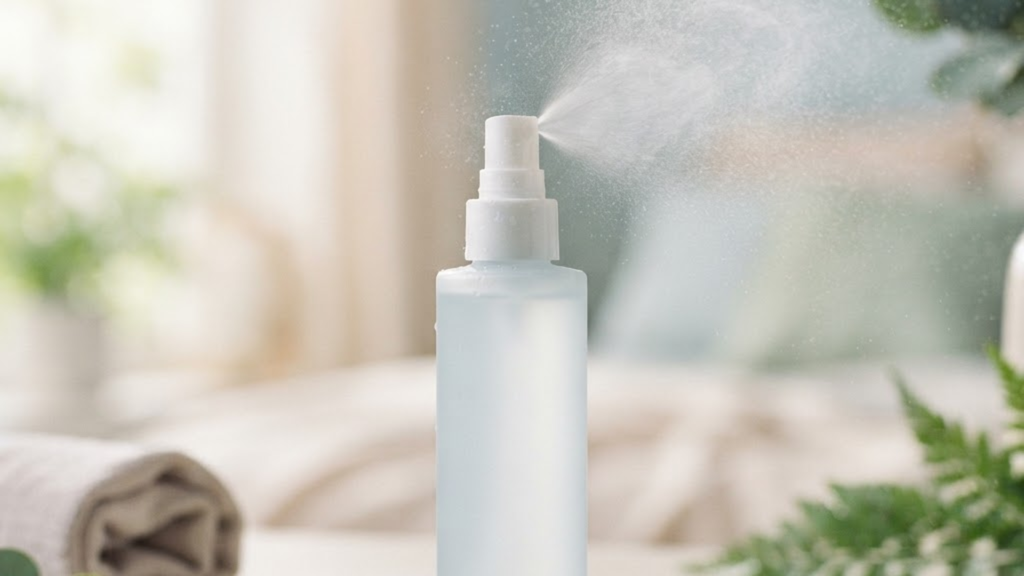
The spray format makes it almost ridiculously easy to use. A few mists on your face. That’s it. No rubbing, no waiting, no layering. You can use it over makeup. You can use it midday. You can use it after the gym. The simplicity is almost suspicious in an industry built on complexity.
Why It Took Off in 2026
The skincare conversation has shifted. A few years ago, the trend was aggressive — strong acids, high-concentration retinoids, multi-step routines that basically required a chemistry degree. More was more. Stronger was better.
Then something changed. People started noticing their skin was getting worse, not better. The barrier was damaged. The routines were too much. The conversation pivoted — hard — toward “skin barrier repair.” Gentle over aggressive. Support over attack.
Hypochlorous acid spray landed right in the middle of that shift. It’s the anti-active. It doesn’t exfoliate, doesn’t peel, doesn’t stimulate cell turnover. It just calms things down. Kills the bad stuff, soothes the irritation, and gets out of the way. For people whose skin had been through years of aggressive treatments, that’s exactly what they needed.
The price didn’t hurt either. While most trending skincare ingredients come with luxury price tags, hypochlorous acid spray is widely available at drugstore prices. When something works and doesn’t cost a fortune, word travels fast.
Does It Actually Work?
Here’s where it gets interesting. Hypochlorous acid isn’t a trendy ingredient that someone invented in a lab last year. It’s been used in wound care and medical settings for a long time. The science behind it isn’t speculative — it’s established.
That said, it’s not magic. It won’t replace your entire routine. It won’t reverse years of sun damage. If you’re dealing with serious skin conditions, a spray alone isn’t the answer. But as a daily supportive step — especially for acne-prone, sensitive, or irritated skin — it seems to genuinely earn its place.
What makes it different from most trendy ingredients is the gap between expectation and reality. Most hyped skincare ingredients promise transformation. Hypochlorous acid spray just promises to help your skin do what it’s already trying to do. That gap — between promise and reality — is exactly why people trust it. It does what it says. Nothing more, nothing less.
The Bigger Shift Behind the Trend
The rise of hypochlorous acid spray says something bigger about where skincare is heading. The era of the ten-step routine seems to be fading. People are tired of complicated regimens, ingredient layering rules, and the anxiety of getting it wrong. They want products that work with their skin, not against it.
That connects to a broader wellness shift — the same one driving conversations about sleep, stress, and the idea that health isn’t about doing more, but about doing less, better. Gentle, supportive, science-backed. That’s the direction skincare seems to be moving.
If the pattern holds, expect more “barrier-first” products to gain traction through the rest of 2026. Hypochlorous acid spray might be the current favorite, but it’s the underlying philosophy — work with your skin, not against it — that’s really driving things.
Who Should Try It and Who Can Skip It
For people with sensitive or reactive skin who can’t tolerate retinoids or exfoliating acids, hypochlorous acid spray is worth trying. For anyone dealing with frequent breakouts who wants something antibacterial but gentle, it makes sense. For people who want a simple midday refresh without messing up their makeup, it works.
But if your current routine is working, there’s no reason to add more. If you’re expecting it to solve complex skin issues on its own, you’ll be disappointed. And if your skin is very dry, a lightweight spray won’t give you the moisture you need.
The appeal isn’t that it’s a miracle. The appeal is that it’s simple, gentle, and honest about what it does. In a category that runs on hype, that’s almost radical.
For more on how wellness trends are shifting, check out our perspective on how science is rethinking the future.
This piece reflects the perspective of The Listening Market — not medical advice or clinical analysis. If you’re dealing with persistent skin concerns, please consult a qualified dermatologist.