A perspective piece from The Listening Market
Something has shifted in the way people spend their money, and it is not the shift that economists were predicting a decade ago. The conversation around consumer behaviour used to be dominated by concerns about overconsumption, about closets full of unworn clothes and garages too full to hold a car. And while those concerns have not disappeared, a different kind of story has been quietly unfolding alongside them. More people are choosing to spend on experiences rather than things, and the reasons go deeper than a trend.
The shift is visible in the data, but it is even more visible in the everyday choices people make. A birthday that might once have been marked by a new watch or a piece of jewellery is now celebrated with a weekend away or a cooking class with friends. A tax refund that might have gone toward a television is being redirected toward concert tickets or a long-deferred trip. The purchase is not being eliminated. It is being reclassified, moved from the category of objects to the category of moments.
One explanation that gets offered frequently is the social media effect. The argument is that experiences are more shareable than possessions, and that the desire to post a striking photo of a sunset hike or a beautifully plated dinner is what drives the spending. There is some truth to this. The visual culture of the internet has made experiences more visible and more aspirational than they have ever been. But reducing the shift to its most visible expression misses the more interesting part of the story.
Research on spending and happiness has been pointing in this direction for years. Studies have consistently found that experiential purchases produce more lasting satisfaction than material purchases, and the reasons are not mysterious. A thing, once acquired, quickly becomes part of the background. The new phone is exciting for a week and then it is just a phone. The new couch is lovely for a month and then it is just the couch. Experiences, by contrast, tend to appreciate rather than depreciate in the mind. The memory of a trip does not fade in the way that the novelty of an object does. If anything, it improves with time, edited by memory into something warmer and more meaningful than it may even have been in the moment.
There is also the matter of identity. Things can communicate who a person is, but experiences actually shape who a person becomes. A weekend spent learning to make pasta from scratch does something to the person who does it. It adds a skill, a memory, a small but real sense of competence. A new handbag, however beautiful, does not change the person who carries it in the same way. And in a culture where people are increasingly interested in living deliberately, in being the author of their own story rather than a character in someone else’s narrative, this distinction matters.
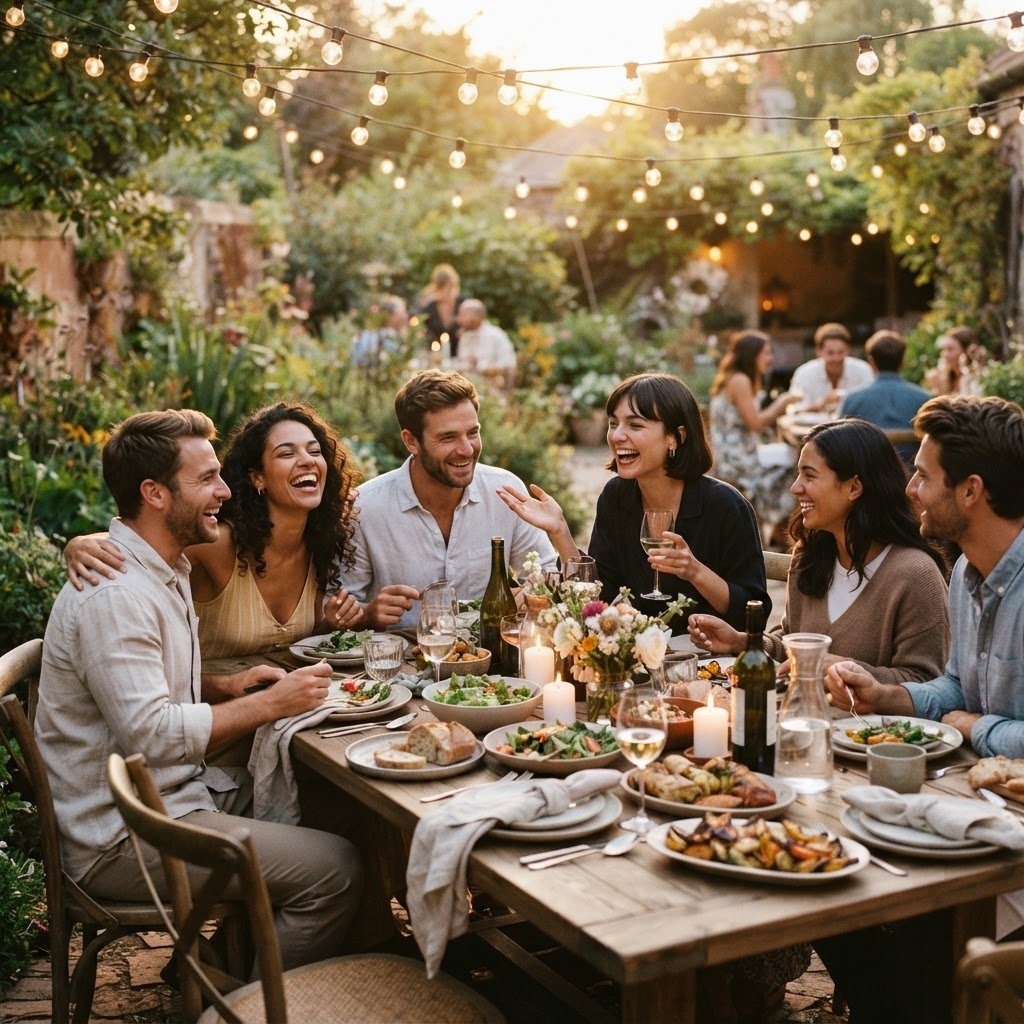
The experience economy, as it has come to be called, is not just about luxury travel or expensive dinners. It extends into the fabric of daily life. People are choosing to spend Saturday at a farmer’s market rather than at a shopping centre. They are joining running clubs instead of buying gym equipment that gathers dust. They are inviting friends over for a potluck rather than meeting at a restaurant where the food is better but the connection is thinner. The common thread is not the absence of spending. It is the redirection of spending toward things that create connection, memory, and a sense of being fully present in one’s own life.
It is worth noting that this shift is not uniformly accessible. The ability to choose experiences over things presupposes a certain level of financial security. For people living close to the margin, the choice is not between a trip and a watch but between rent and groceries. The experience economy, as it is typically described, is a phenomenon of the middle class and above. Acknowledging this is important, because it prevents the conversation from becoming self-congratulatory. But within the demographic where the choice is available, the shift is real and accelerating.
There is also a generational dimension that adds nuance to the picture. Younger consumers, who came of age during a period of economic instability and environmental anxiety, have arrived at adulthood with a different relationship to ownership than their parents had. Many watched their parents accumulate possessions and then downsize, watched houses full of things become burdens rather than assets, and drew their own conclusions. The appeal of owning less is not just aesthetic. It is practical, environmental, and in some cases deeply personal. Experiences, which do not require storage space or maintenance or insurance, fit this sensibility in a way that things do not.
The environmental calculus is not trivial. Every physical object carries a footprint, from the materials used to make it to the energy required to ship it to the waste produced when it is eventually discarded. People who are thinking about their impact on the planet are increasingly factoring this into their spending decisions. An experience, by its nature, tends to leave a lighter mark. A concert ticket does not end up in a landfill. A hiking trip does not require packaging. This is not to say that experiences are without environmental cost, particularly those involving air travel, but the comparison with physical consumption is generally favourable, and for people who are trying to align their spending with their values, this matters.
There is also something to be said for the way experiences resist the diminishing returns that plague material consumption. The second expensive handbag does not deliver the same satisfaction as the first. The third pair of premium headphones is not as exciting as the second. But the tenth trip to a new country can be as thrilling as the first, because each experience is genuinely different. The novelty does not wear off in the same way, because the experience is not a variation on a theme but a new composition entirely. For people who find that things lose their shine quickly, experiences offer a form of consumption that does not suffer from the same kind of fatigue.
The role of technology in this shift is more complicated than it might appear. On one hand, digital experiences, from streaming to gaming to virtual reality, compete directly with physical ones for a share of attention and spending. On the other hand, technology has made physical experiences easier to find, book, and share than ever before. The platforms that help people discover a hidden trail, book a table at a new restaurant, or find a last-minute deal on a weekend away have lowered the friction of experience-seeking to near zero. The result is that the path of least resistance, for many people, now leads toward doing something rather than buying something.
The social dimension of experiences is another factor that deserves attention. Things can be enjoyed alone, and often are. But experiences are frequently shared, and the sharing is part of what makes them memorable. A meal eaten with friends is not just a meal. It is a conversation, a set of inside jokes, a moment of connection that becomes a small piece of shared history. Research on happiness consistently finds that the quality of relationships is one of the strongest predictors of life satisfaction, and experiences, by their nature, tend to strengthen relationships in a way that possessions do not. The person who spends on a group cooking class is not just buying an evening of entertainment. They are investing in the social fabric of their life.
There is a paradox at the heart of all of this. The experience economy is often framed as a rejection of consumerism, but it is also, of course, a form of consumption. The concert ticket, the cooking class, the weekend away, all of these cost money and all of them are, in a sense, products. The distinction that matters is not between spending and not spending but between spending that adds to a life and spending that merely fills a space. More people seem to be making that distinction, and more businesses seem to be reorganising themselves around it.
What remains to be seen is whether this shift is a permanent realignment or a response to specific conditions that will eventually pass. The optimists see a culture that has learned something important about what actually makes life feel rich. The sceptics see a phase that will end when the next wave of desirable products arrives. The truth is probably somewhere in between, shaped by forces that are still in motion. But for now, the direction is clear. People are reaching for moments instead of objects, and the reasons they give, when asked, are not about what they bought. They are about how they felt.