
A perspective piece from The Listening Market
Something has shifted in the way people fill their homes, their wardrobes, and their daily routines, and it is not the minimalist aesthetic that dominated the last decade. The change is more substantive than a design preference. Across a wide range of demographics, from young professionals furnishing their first apartments to established families reconsidering years of accumulated stuff, a growing number of people are making a deliberate choice to buy fewer things but better things. The pattern is not about deprivation or asceticism. It is about a quiet revaluation of what quality means and why it matters, not just as a consumer preference but as a way of living that feels more intentional, more satisfying, and increasingly more practical.
The roots of this shift are tangled and worth untangling. For a long stretch, the dominant consumer culture was built on volume. Fast fashion made it possible to refresh an entire wardrobe for the price of a restaurant meal. Flat-pack furniture made it feasible to furnish a room for less than a week’s groceries. Subscription boxes delivered new products to the door every month, ensuring a constant stream of novelty without the need to think too hard about any of it. The system was efficient, affordable, and deeply embedded in the rhythm of modern life. But it also produced a particular kind of dissatisfaction, the feeling of having a lot of things but valuing none of them particularly highly.
The cracks in that system began to show in several places at once. Environmental awareness grew, not just as an abstract concern but as a practical reality of overflowing wardrobes, storage units packed with unused purchases, and the visible waste of packaging that arrived with every online order. The math of cheap goods started to look different when the full cost, including the disposal, the clutter, and the replacement cycle, was factored in. A shirt that cost fifteen dollars and lasted ten washes was not actually cheaper than one that cost sixty dollars and lasted five years. The arithmetic was simple, but it had been obscured by a system designed to make each individual purchase feel frictionless and small.
At the same time, a different kind of information became available. The internet, which initially accelerated the culture of volume by making cheap goods instantly purchasable, began to provide the tools for a counter-movement. Reviews, durability tests, and long-term ownership reports became widely accessible. People could see, in granular detail, which products lasted and which fell apart. The opacity that once protected poor quality was stripped away. A marketplace that had been built on the assumption that consumers would not notice the difference began to face consumers who noticed everything.
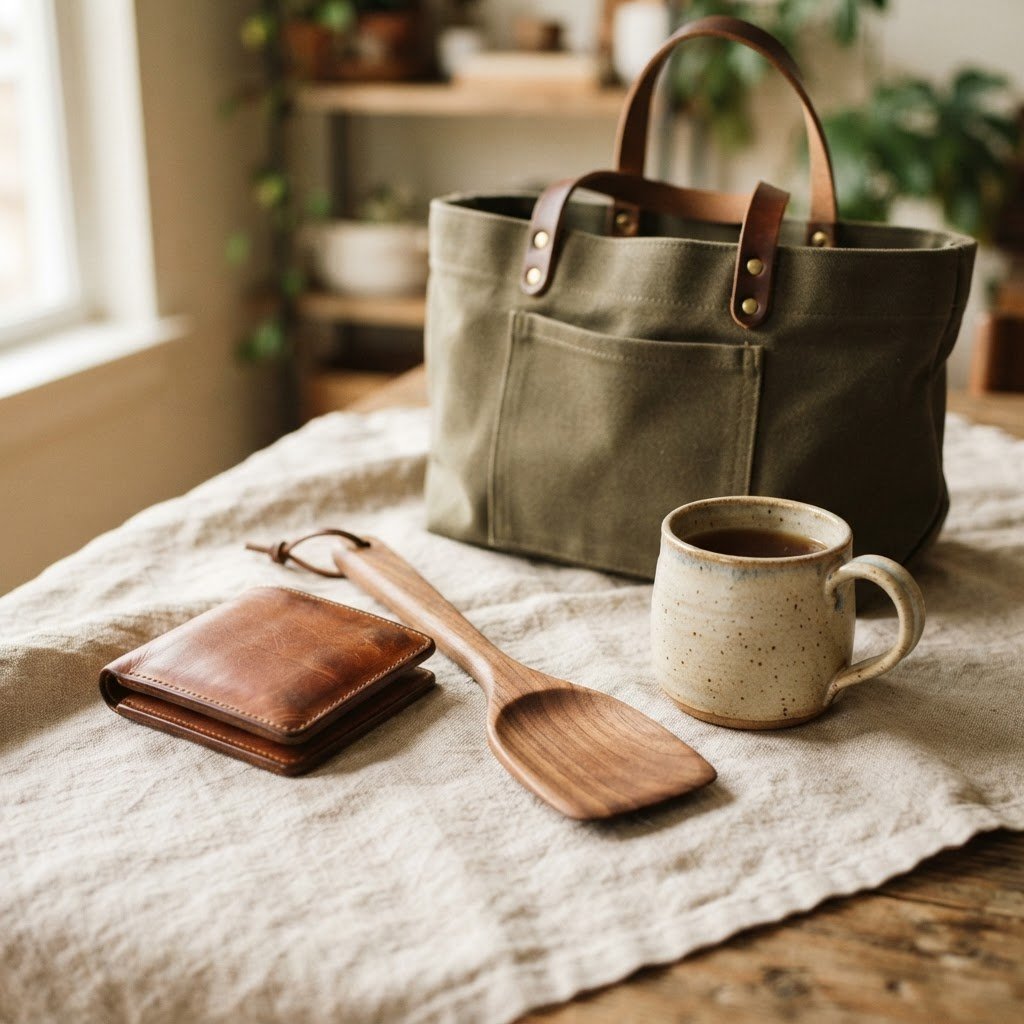
The emotional dimension of this shift is harder to quantify but arguably more important. There is a particular pleasure in owning something well-made that does not exist in the same way with disposable goods. A good knife that holds its edge, a jacket that ages beautifully, a chair that still feels solid after a decade of daily use, these objects develop a relationship with their owner. They acquire a history. The scratch on the leather, the slight fade of the fabric, the worn-in handle, these are not flaws but evidence of use, markers of a shared life between person and object. The culture of volume, with its constant cycle of acquisition and disposal, left no room for that kind of relationship. Each item was temporary by design, and the temporary nature of the relationship was part of what made the whole system feel hollow.
What is emerging in its place is a consumer culture that is more deliberate, not necessarily more expensive. The goal is not to buy luxury for its own sake but to buy with a level of consideration that the volume-driven system discouraged. People are researching before purchasing. They are waiting longer between acquisitions. They are buying second-hand when the quality of older construction exceeds what is available new at the same price point. They are repairing instead of replacing, a practice that has been enabled by a resurgence of repair culture, from visible mending to community repair workshops to online tutorials that make fixing things feel accessible rather than intimidating.
The fashion industry has been one of the most visible arenas for this shift. The conversation around fast fashion has moved from a niche environmental concern to a mainstream cultural awareness. The appeal of a smaller wardrobe made of better pieces, the idea of a capsule collection not as a minimalist aesthetic but as a practical strategy, has resonated with people who are tired of the anxiety of having too many options and the guilt of discarding items barely worn. The rise of second-hand platforms has made quality clothing accessible at prices that compete with fast fashion, removing the economic barrier that once made buying better feel like a luxury reserved for the wealthy.
In the home, the shift manifests differently but follows the same logic. People are buying fewer pieces of furniture but investing in ones that will last. The trend toward solid wood, well-constructed joinery, and materials that age gracefully is visible across market segments. The appeal is not purely aesthetic. It is practical. Furniture that lasts does not need to be replaced, which saves money over time. It does not end up in landfill, which addresses the environmental concern. And it creates a home that feels settled rather than temporary, a space that accumulates meaning rather than turning over with every trend cycle.
The food landscape tells a parallel story. After years of ultra-processed convenience, there is a growing interest in fewer, better ingredients. The farmer’s market movement, once seen as a bourgeois affectation, has broadened its appeal. The logic is similar: a smaller quantity of well-produced food, eaten with more attention, is more satisfying than a larger quantity of indifferent food consumed absent-mindedly. The quality-over-quantity principle applies as much to what goes into the body as to what furnishes the home.
There is a financial counterargument that needs addressing. Buying fewer, better things only saves money if the discipline of buying fewer actually holds. The trap is familiar: the person who buys one expensive item, feels virtuous about the quality, and then continues buying at the same overall volume, just at a higher price point. The genuine shift requires both sides of the equation, the quality and the restraint. But for the people who have made both adjustments, the financial outcome is often positive. Less money spent on things that are quickly discarded means more money available for things that matter, whether that is experiences, savings, or simply the peace of mind of not constantly acquiring.
The cultural moment that supports this shift is significant. The AI era has introduced a new variable into the value equation. When digital content, automated services, and mass-produced goods become infinitely reproducible at near-zero cost, the value of the handcrafted, the durable, and the unique begins to rise. Not because of nostalgia, but because scarcity has shifted. The scarce resource is no longer access to goods; it is access to quality, to intention, to the feeling that something was made with care by someone who cared. In a world awash with automated everything, the act of choosing one well-made thing over ten indifferent ones becomes a form of meaning-making.
What this trend ultimately represents is not a rejection of consumption but a maturation of it. The volume era was driven by the excitement of abundance, the thrill of being able to have more than previous generations could imagine. That excitement was real and understandable. But abundance, once achieved, reveals its own limitations. More things do not produce more satisfaction beyond a certain point, and the point is lower than most people expect. The shift toward quality over quantity is the consumer culture of a society that has learned this lesson, not through lecture but through experience, and is quietly adjusting its habits to align with what actually feels good rather than what was supposed to feel good.




