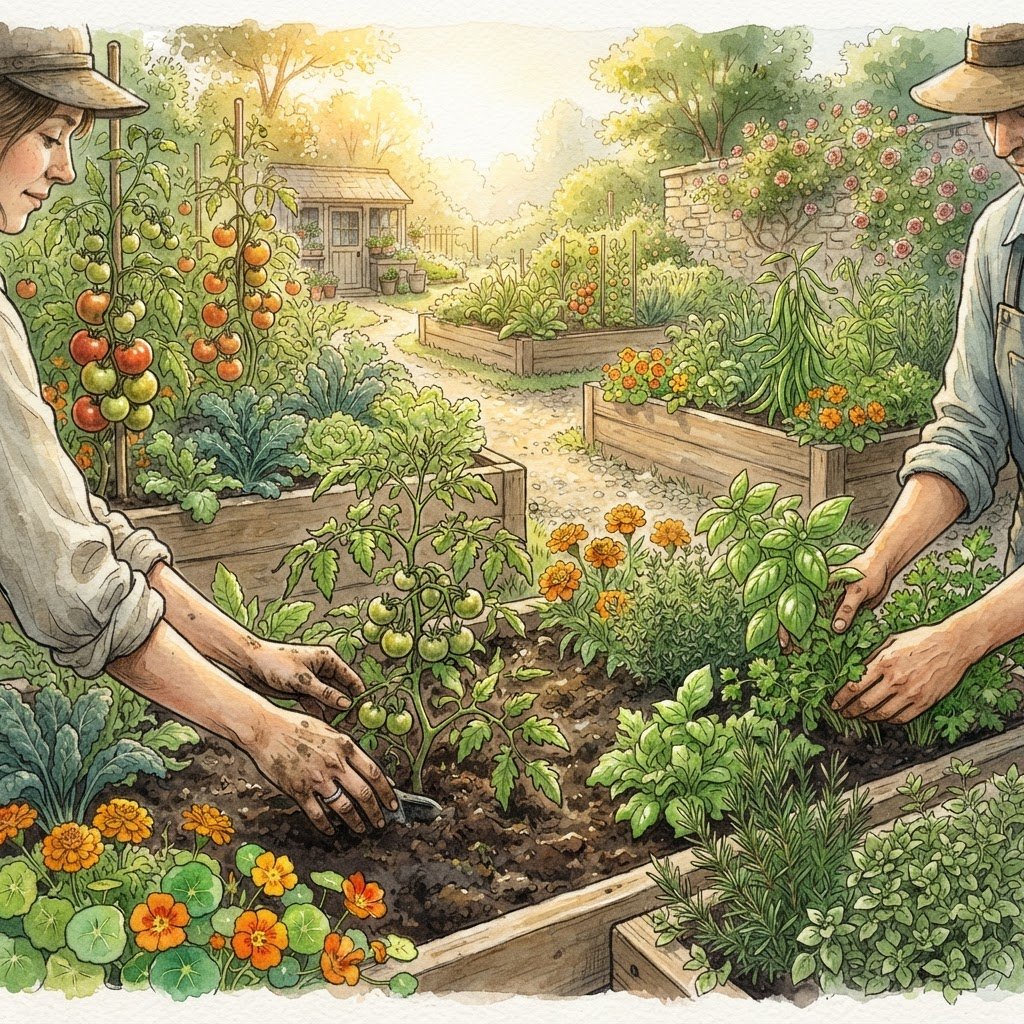
A quiet revolution has been taking place, not in conference rooms or on factory floors, but in backyards, on balconies, and in small patches of earth beside apartment blocks. People who have never grown anything in their lives are buying packets of seeds, watching YouTube videos about compost, and stepping outside in the early morning to check whether a tomato plant has grown overnight. Gardening, once the domain of retirees and weekend hobbyists with large properties, has become something that a much wider and younger range of people are doing, often for the first time, and often with a degree of enthusiasm that surprises even themselves.
The reasons for this shift are varied, and they weave together in ways that say something important about the moment we are living through. Gardening has always been a practical activity, but the wave of new gardeners is not driven by practicality alone. They are not growing food because they cannot afford to buy it. They are not planting flowers because they need to impress the neighbours. They are gardening because, in a world that feels increasingly fast, abstract, and out of their control, putting something in the ground and watching it grow is one of the most grounding things a person can do.
The connection to the digital age is not accidental. People spend their days looking at screens, processing information, and engaging with things that have no physical form. Work happens in browsers and apps. Social life happens in messages and feeds. Entertainment arrives through streaming services that remember where a person left off. None of it requires moving from a chair, and none of it produces anything tangible. Gardening is the opposite of this. It requires physical effort, it happens outdoors, and the result is something real. A seed becomes a sprout, a sprout becomes a plant, and a plant produces something that can be eaten, smelled, or looked at with quiet satisfaction. In a culture that has become almost entirely intangible, the appeal of producing something real and alive is powerful.
There is a mental health dimension to this that should not be overlooked. The evidence is not hard to find. People report feeling calmer after spending time in a garden. The act of weeding, watering, and tending to plants has a meditative quality that is difficult to replicate in other activities. It demands a certain kind of attention that is gentle rather than frantic. A person cannot rush a plant. It grows at its own pace, and the gardener learns to adjust their expectations accordingly. This adjustment, from the urgency of digital life to the patience of natural growth, is one of the most valuable things gardening offers. It teaches a different relationship with time.
The pandemic played a role, as it did in so many shifts in behaviour. During the months of lockdown, people who had never considered gardening found themselves at home with time on their hands and a need for something to do. Some of them started growing herbs on a windowsill. Others dug up part of a lawn and planted vegetables. For many, it was the first time they had ever put their hands in soil, and the experience was more compelling than they expected. When the lockdowns ended, not everyone kept going. But enough did that the culture of gardening shifted. It became normal for a person in their thirties or forties to talk about their tomato plants the way they might once have talked about a television show.
The accessibility of gardening knowledge has also changed the landscape. A generation ago, learning to garden meant relying on a parent, a neighbour, or a book that might be difficult to find. Now, there is an endless supply of guidance available online. Videos walk through every step of the process, from starting seeds indoors to managing pests. Forums and social media groups allow beginners to ask questions and share their progress. The barrier to entry has never been lower. A person can start a garden with a few pots, a bag of soil, and a packet of seeds that costs less than a cup of coffee. The intimidation factor, which once kept people from trying, has largely dissolved.
What surprises many first-time gardeners is how quickly the activity becomes more than a hobby. There is something about the cycle of planting, tending, and harvesting that creates a loop of satisfaction. Each small success, the first seedling that emerges, the first flower that opens, the first vegetable that ripens, reinforces the desire to keep going. And each failure, the plant that did not make it, the crop that was eaten by something, the season that did not cooperate, teaches something and makes the next attempt more informed. Gardening is one of the few activities where a person can be a perpetual beginner and still derive enormous satisfaction from the process.
There is also a growing awareness of where food comes from and what is involved in producing it. For a generation that has grown up with supermarkets and food delivery, the experience of pulling a carrot from the ground or picking a tomato from a vine is revelatory. Not because the carrot tastes better, though it often does, but because it makes the connection between the earth and the plate real in a way that a plastic-wrapped vegetable on a shelf never can. This awareness does not necessarily turn people into self-sufficient farmers, but it does change their relationship with food. They begin to understand seasonality, to appreciate the labour involved, and to think differently about what they buy and how they use it.
Community gardens have played a role in making gardening accessible to people who do not have their own outdoor space. These shared plots, which exist in many cities and towns, offer a patch of ground to anyone willing to tend it. They also offer something else: a place to meet other gardeners, to share knowledge, to trade seeds and seedlings, and to be part of something collective. The social isolation that has become a feature of modern life is partly addressed by the simple act of growing things alongside other people. The community garden is one of the few remaining spaces where strangers of different ages and backgrounds interact with a shared purpose.
The appeal of gardening is not about escaping the modern world. Most of the people picking up a trowel for the first time are not trying to live off the grid or reject technology. They are trying to add something to their lives that the modern world, for all its advantages, has made harder to find. A connection to the physical world. A reason to step outside. A sense of agency over something small and alive. A pace that is set by nature rather than by a notification.
Gardening offers all of this, and it does so without asking for much in return. A little time, a little attention, a willingness to get dirt under the fingernails. For a growing number of people, that trade feels more than fair. It feels like something they did not know they were missing.