A perspective piece from The Listening Market
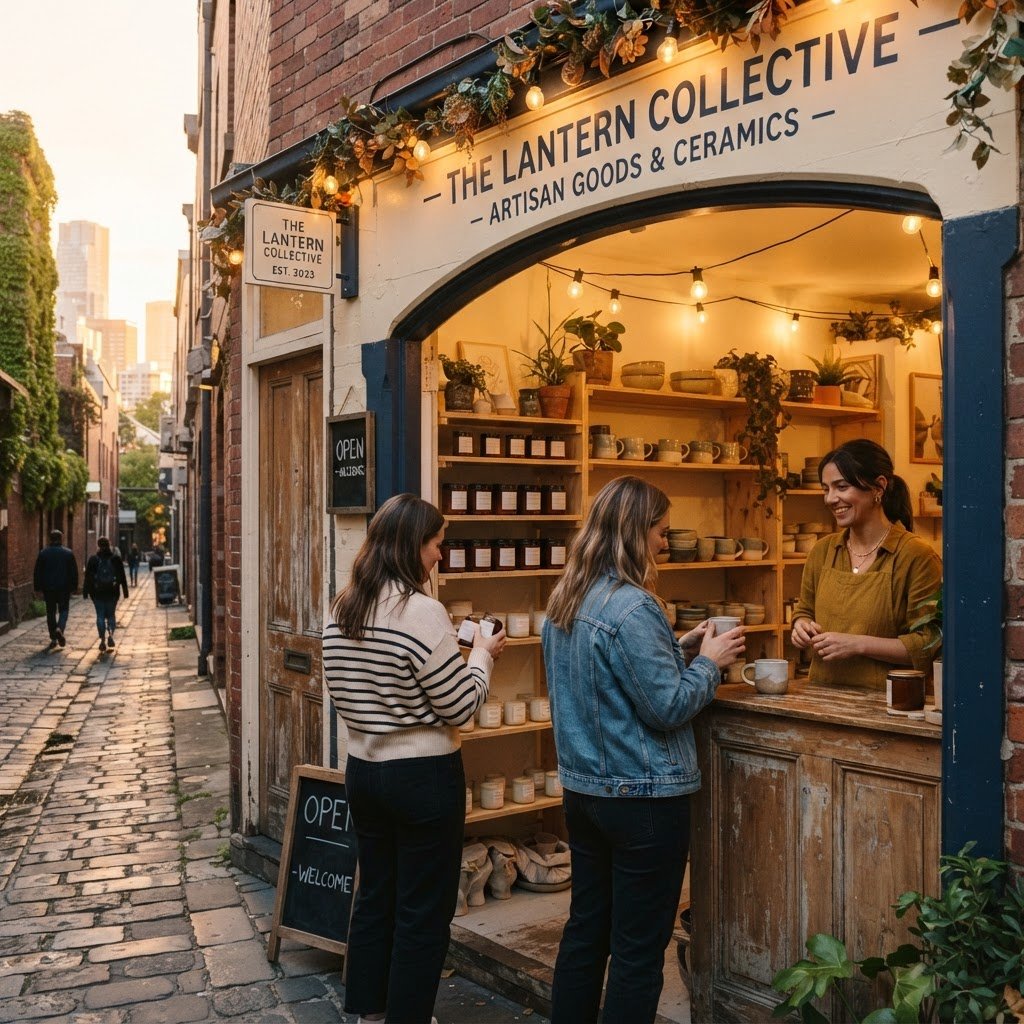
On a Saturday morning in a laneway that spent most of the year half-empty, a small shop appears behind a hand-painted facade. Inside, a candle maker who built her entire business on a phone screen is watching strangers pick up her products one by one. A woman holds the sea-salt candle to her nose, puts it back, then returns to it twice before buying. A man asks, with genuine puzzlement, why the fig variant costs more. Six weeks later the shop vanishes as quickly as it arrived, leaving behind a season of profit, a list of new subscribers and one piece of commercial intelligence no dashboard could ever have produced: sea salt outsells fig five to one, and the reason matters more than the tally.
That cycle — appear, test, learn, disappear — is becoming the defining ritual of a particular kind of modern brand, and empty storefronts are the stages on which it is performed.
The old gatekeeping of retail
For most of the past half-century, physical retail operated like a members-only club with an entrance fee few could justify. A lease meant years, not weeks. A fit-out meant an invoice with as many digits as a small brand’s annual revenue. A location decision was a bet placed once, on instinct, with the business riding on the outcome. The shopfront was the reward at the end of a long business journey, not a tool for figuring the business out. Under that structure, only brands that already knew their customer could afford to meet them in person — which was another way of saying physical retail only welcomed proven businesses.
The pop-up shop dissolves that gate. Short leases of weeks or months, market-stall licences for a single weekend, shared spaces carved out of someone else’s shop, and increasingly, vacancy-filling deals offered by landlords who would rather earn partial rent on an empty floor than pay to light it for nobody. What was once a tenure is now an experiment with an exit built in.
Why 2026 turned out to be the moment
Timing has played its part. Retail vacancies rose through several difficult years for high streets and shopping centres alike, leaving landlords with an inventory of empty windows and a new appetite for flexibility they once would have refused. Councils, watching their main streets hollow out, simplified the permits and threw their weight behind short-term activation. The machinery of temporary retail is now oiled in a way it simply was not a decade ago.
Meanwhile the internet produced a paradox of its own making. A generation of small brands discovered that they could build an audience of thousands on social platforms without ever once standing in the same room as a customer. Then those same platforms matured, advertising costs climbed, and the feed — once a free shopfront — became expensive rented ground. Suddenly a physical shop, even a tiny and temporary one, was not a vanity project but a media channel: a place where customers could take photographs, meet the maker and generate the kind of authentic content no advertising budget can buy. For many of these brands, the audience already existed. The pop-up simply gave it somewhere to show up.
What the format teaches that a screen cannot
The pop-up’s greatest export is not revenue but learning. A website tells a brand that a product was purchased; it rarely explains why. A shop floor shows the hesitation, the return to the shelf, the price that makes someone flinch, the packaging people photograph without buying. Every hour of trading is a live focus group the brand did not have to pay for beyond the rent itself.
Geography becomes testable too. Whether a suburb is right, whether a city’s customers differ, whether a market stall crowd bears any resemblance to a boutique crowd — a question that once demanded a five-year lease now costs a weekend permit. And an expiry date, curiously, is good for business: scarcity turns a visit into an event. Customers who might bookmark an online store and forget it will travel for something that will not be there next month. The launch becomes newsworthy precisely because it is fleeting.
The landlords are learning too
None of this works one-sided, and the savviest landlords have noticed. A pop-up tenant pays something where vacancy pays nothing, lifts the energy of a tired arcade, drags foot traffic past neighbouring doors that pay full rent, and occasionally reveals the long-term tenant the landlord had been hoping would walk in. Some shopping centres have gone further, programming their vacant suites like a gallery programmes exhibitions — rotating local brands through on short cycles so that the centre itself becomes somewhere shoppers return to for surprise. That inversion — vacancy as an attraction rather than a symptom — may be one of the quietly clever ideas this decade of retail has produced.
The honest limits
A dose of realism belongs in the story. A short lease still carries real costs: staffing every trading hour, insuring the space, dressing it, powering it, and giving up weekends for weeks on end. A hollow pop-up — an empty room, printed posters and a bored table — converts nobody and earns the unforgiving verdict of an audience that came for an experience. There is also the base rate of retail to respect: most products in most categories fail, and a pop-up merely reveals failure early rather than preventing it. The brands that extract the full value treat the shop as a laboratory first and a cash register second, capturing email addresses, asking questions and writing down the objections they hear.
Retail’s renewal, wearing a temporary facade
It is tempting to read the pop-up boom as a symptom of decline — shops so unsure of their future that even their buildings stopped pretending permanence. The richer interpretation runs in the opposite direction. A high street of rotating experiments is closer to the markets and fairs those streets grew from centuries ago than the franchise- identical decades that preceded them. Shopping is returning to something older and warmer: discovery, theatre, and the particular pleasure of buying something from the person who made it.
The lesson from that candle-scented laneway mornings is not really about candles. It is about the value of meeting customers in person while the stakes are still small — of renting the answer to a question instead of betting the business on a guess. A testing ground was exactly what small brands were always missing. Now the empty shop next door is volunteering to be one.