A perspective piece from The Listening Market
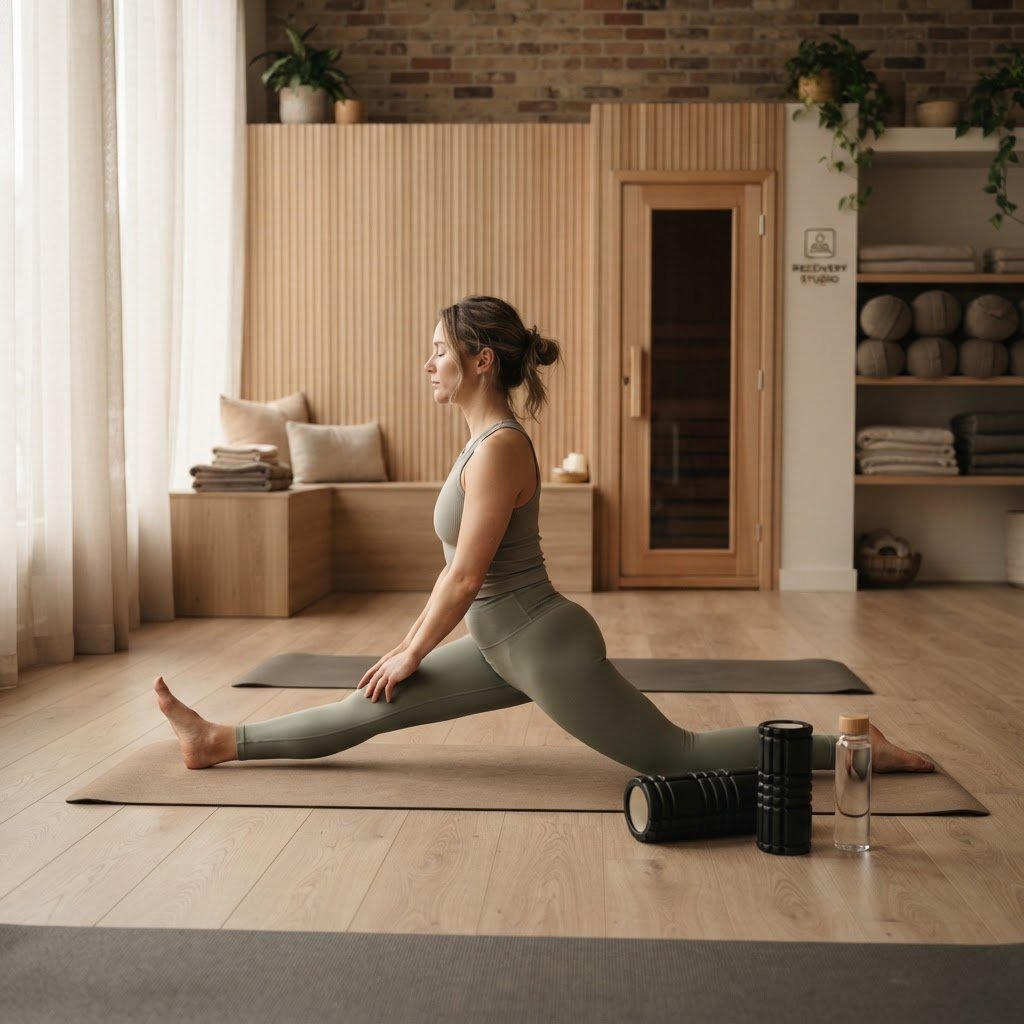
At six in the evening in a gym that used to be proud of its screaming sound system, a different scene is unfolding in the back room. Foam rollers, a sauna that opened last spring, low light and a timetable item that would have been unthinkable five years ago: an hour dedicated to doing almost nothing, guided, scheduled and sold out. In the front room, a woman who once wore her soreness like a trophy is refusing an invitation to add a fifth session this week. Her training app has flagged her readiness in amber, and for the first time in her fitness life she is treating that flag not as an obstacle but as instruction. She will go home, sleep, and run faster on the weekend. The strange thing is that she is right, and gyms everywhere are quietly reorganising themselves around people who have learned it.
For most of modern gym culture, rest was what happened when dedication failed. Soreness was proof, the inability to walk downstairs after leg day a humble-brag, rest days for people without willpower. Training plans stacked high-intensity sessions against pride, and badge-of-honour culture treated fatigue as a moral state rather than a physiological signal. A whole industry sold intensity, because intensity photographs well and can be invoiced by the session. Rest, being invisible, had no marketing department.
The science was never actually in dispute
Beneath the culture, the physiology was always clear. Training does not make the body stronger; training damages it, and the body rebuilds stronger in the hours and days afterwards. The stimulus is only half of the equation, and the other half — sleep, protein, light movement, time and calm — is where the adaptation actually happens. Elite coaches have scheduled easy weeks and rest days for decades, calling it a principle well understood in professional sport while remaining invisible to everyone else. Deload weeks and periodisation were the province of people with coaches. The ordinary gym-goer trained like the highlight reels: hard, proud and random.
The visible half of an invisible practice
The break with that tradition is showing up in the built environment of fitness, which is where culture becomes undeniable. Stretching studios, once a niche concept greeted with scepticism, are opening in shopping strips. Mobility classes coexist on timetables once reserved for beast-mode spin. Saunas and bathhouses are being folded into ordinary gym floor plans rather than quarantined in luxury spas. Massage guns, once professional team equipment, live in bedside drawers. Recovery has acquired the most reliable proof of mainstream status available to any fitness practice: dedicated retail space.
Wearables gave rest its scoreboard
Technology’s role should not be understated. For decades, the hardest thing about rest was that progress was invisible — no heavier bar, no faster split, nothing to record. Wearables changed the picture with recovery scores, heart-rate variability and sleep stages that turned each morning into a measurement. Rest became something with a number attached, and fitness culture, being a culture of numbers, finally had a way to respect it.
Readiness scores have started appearing inside training apps, and the more sophisticated coaches now program recovery with the seriousness they once reserved for volume. Walking — plain, undramatic walking in the evening — is prescribed with the confidence once reserved for intervals, as low-intensity days migrated from endurance sport into everyday routines. The same spirit moved breathwork and sauna rituals from niche communities into mainstream timetables.
Ordinary people benefit most of all
Here is the twist that barely gets discussed: recovery matters more, not less, for people with jobs, children and full calendars. Professional athletes rest because their careers depend on adaptation; the rest of the population needs rest because their bodies are simultaneously managing deadlines, disrupted sleep and responsibilities no training plan accounts for. The middle-aged runner rebuilding after a decade away regains fitness slower than at twenty, and injury costs more in lost momentum. A skipped recovery week does not merely slow progress; it tends to end it, in a knee twinge that becomes a year off.
The simplest recovery tools also happen to be the least commercial, which is worth noticing in a decade of gadget devotion. Sleep still leads the list by a margin no device has closed. Protein, hydration and a daily walk follow. The expensive layer — the boots, the guns, the contrast therapy memberships — sits at the top of a hierarchy that was always free at its foundations.
The fine line between practising and disciplining recovery
Not every note in the new culture is a healthy one. There is a version of recovery culture that simply drags rest into the same perfectionism that wrecked training in the first place — the readiness score checked with dread, the ninety-minute wind-down ritual performed nightly, the nervous guilt of carrying a tired body to work on a rest-incomplete week. Once rest acquires a scoreboard, it can acquire a performance anxiety of its own, which is a strange way to ruin the most restorative part of the week.
Ambition is not the purpose of recovery; margin is. Recovery’s entire point is to lower the stakes and give the body space, not to optimise stillness itself. The most durable practice stays simpler than the industry would like: a genuine rest day scheduled like any appointment, a bedtime treated as part of training, a walk that asks nothing of anyone.
A quieter definition of strength
The recovery boom will have arrived properly not when every gym has a sauna, but when skipping a session for sleep stops feeling like weakness. Fitness culture is in the middle of swapping an argument with the mirror for a working relationship with the body: one where intensity is applied strategically and rest is embraced as training, not as the failure of it.
The back room of that gym, with its dimmed lights, sold-out rest classes and foam rollers, is not a retreat from the culture of hard work that defined fitness. It is the half of the sport that was always missing. As more people train less proudly and recover more proudly, the wall between those two rooms continues to come down — quietly, the way recovery itself insists everything should be done.