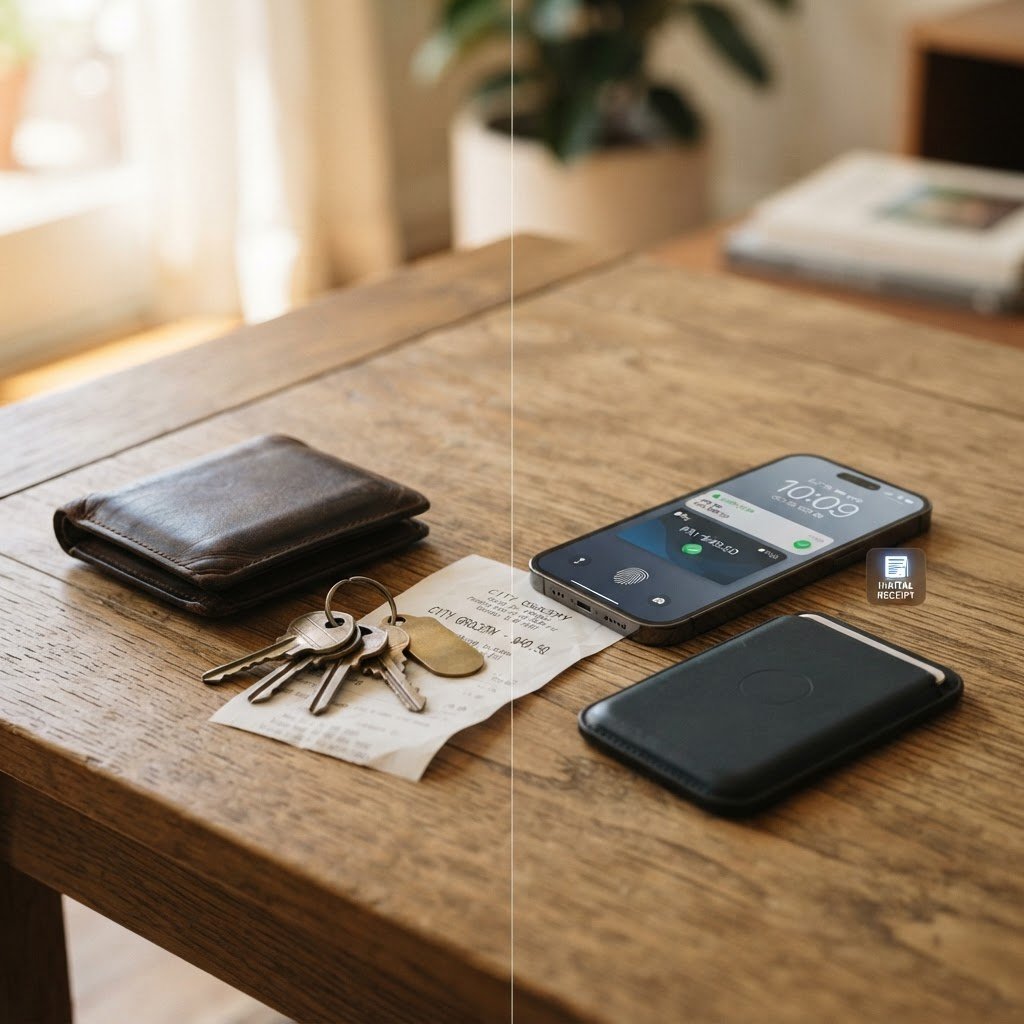
A perspective piece from The Listening Market
Ten years is not a long time. It is the distance between a flip phone and a smartphone, between dial-up and broadband, between renting DVDs and streaming everything. A decade can quietly rewrite the texture of daily life in ways that only become obvious in hindsight. Looking ahead to the next ten years, there are everyday objects and routines so embedded in the present moment that imagining their disappearance feels almost absurd. And yet, that is exactly how these changes tend to arrive, not with a dramatic announcement but through a slow, almost imperceptible fade.
The pace of technological and cultural change has accelerated to the point where forecasting even a decade ahead feels less like speculation and more like informed extrapolation. Trends that are already visible today, in their early, rough, experimental forms, will mature into something unrecognisable. Here is a look at the everyday things that could look fundamentally different within ten years.
## The Keys in the Pocket
The house key has been a constant for centuries. A small piece of metal, cut to a specific pattern, carried on a ring. It is a technology so simple and so reliable that it has barely changed in living memory. But its days, at least in their current form, are numbered.
Biometric entry systems are already common in new apartment buildings and commercial spaces. Fingerprint readers, facial recognition cameras, and smartphone-based digital keys are replacing the physical lock and key with alarming speed. Within a decade, the idea of locking oneself out of the house may become a story older generations tell with a kind of nostalgic bewilderment. The key as a physical object, jangling in a pocket or left under a doormat, is heading toward obsolescence.
This is not merely a matter of convenience. Digital entry systems offer security advantages that physical keys cannot match. Lost keys can be deactivated instantly. Access can be granted and revoked remotely. Every entry can be logged. The trade-off, of course, is the surrender of a certain kind of simplicity, the kind that comes from a mechanism that works even when the power is out.
## The Wallet
The leather wallet, stuffed with cards, receipts, and a few notes of cash, is already becoming a relic for many people. Contactless payments, mobile wallets, and the gradual acceptance of digital currency have eroded the need to carry physical payment methods. In ten years, the wallet may well be a collector’s item.
What is replacing it is not simply a digital version of the same thing. The entire concept of how payment works is shifting. Embedded payment systems, where transactions happen through biometric authentication at the point of sale without any device being removed from a pocket or bag, are already being tested. The act of paying for something could become so seamless that it barely registers as an action at all.
This raises questions that go beyond convenience. The invisibility of payment, the sense that money has become entirely abstract, has implications for spending habits and financial awareness. A wallet, for all its bulk, served as a tangible reminder of how much money was being carried and spent. Its disappearance may change the psychological relationship people have with their own finances.
## The Supermarket Aisle
The weekly grocery shop, with its trolley, its queues, and its fluorescent-lit aisles, is already under pressure. Online grocery delivery expanded rapidly and has not contracted. But the next decade may bring something more fundamental than a shift in where food is purchased. It may change the very nature of how people acquire what they eat.
Automated replenishment, driven by smart home systems that track consumption and place orders automatically, is already available in limited forms. As these systems become more sophisticated, the weekly shop could be replaced by a continuous, largely invisible supply chain. The fridge that notices the milk is running low and orders more before anyone is aware of the shortage is not science fiction. It is an early-stage product today.
The implications extend to the supermarkets themselves. If a significant portion of shopping becomes automated, the role of the physical store shifts from a place of transaction to something more like a showroom or a speciality destination. The aisles of packaged goods, browsed out of necessity, may give way to curated spaces focused on fresh produce, prepared meals, and experiences that cannot be replicated online.
## The Remote Control
The television remote, a device so ubiquitous that it has its own lost-down-the-back-of-the-sofa genre of household comedy, is on borrowed time. Voice control, gesture recognition, and smartphone integration are already common. The next step is the elimination of any dedicated control device at all.
Smart home systems that respond to natural language commands are becoming standard in new builds. The remote control, with its dozens of buttons, most of which are never used, is a artefact of an era when televisions were standalone devices rather than networked hubs. In ten years, controlling the entertainment in a room may be as simple as speaking, with the system understanding context, preferences, and even who in the household is giving the instruction.
## The Paper Receipt
The crumpled receipt at the bottom of a bag, fading within weeks, is already being phased out by many retailers. Digital receipts, sent by email or stored in an app, are cleaner, more durable, and easier to manage for accounting and returns. Within a decade, the paper receipt may exist only in a few holdout contexts, much like the paper ticket.
This is a small change, but small changes accumulate. The removal of the paper receipt from daily life is part of a broader dematerialisation, the slow replacement of physical artefacts with digital records. Each receipt that does not get printed is one less piece of paper produced, transported, and discarded. The environmental case, while modest per receipt, becomes significant at scale.
## The Parking Meter
The coin-operated parking meter, already a rarity in many cities, will likely be entirely gone within a decade. App-based parking payments, number plate recognition, and automated billing have made the physical meter redundant. The kerbside parking experience, once defined by the frantic search for correct change, is becoming frictionless.
What is more interesting is what this means for urban planning. When every parking session is digitally recorded, cities gain an extraordinary volume of data about how, when, and where people park. This data is already being used to redesign kerbside spaces, to manage demand through dynamic pricing, and to repurpose parking areas for other uses, from bike lanes to parklets to electric vehicle charging.
## The Password
Passwords have been the bane of digital life for decades. Too many to remember, too complex to type, and too insecure to trust, they represent a security model that has been stretched far beyond its design limits. The technology industry has been working on alternatives for years, and the shift is now gaining real momentum.
Passkeys, which use biometric authentication and device-based cryptography to replace typed passwords, are being adopted by major platforms at an accelerating pace. Within ten years, the act of typing a password may feel as archaic as using a rotary phone. The password manager, that necessary evil of modern digital life, could be headed the same way.
## The Physical Menu
The QR code menu, hastily adopted during lockdowns and never fully abandoned, has changed the restaurant experience in ways that are still settling. But the printed menu is not simply being replaced by a digital version of the same thing. The menu itself is becoming dynamic, capable of updating in real time to reflect availability, pricing, and even personalised recommendations based on dietary preferences.
In ten years, the static printed menu may exist primarily in fine-dining establishments, where it serves as a deliberate signal of tradition and craft. Everywhere else, the menu will be a living document, shaped by data, supply chains, and the preferences of the individual diner.
## The Commute
Perhaps the most significant everyday change is the one that is already underway. The daily commute, that fixed block of time carved out for travelling to and from a place of work, has been fundamentally disrupted. Remote and hybrid work arrangements have made the office one option among many rather than a daily obligation.
In ten years, the commute may not disappear, but it will likely look profoundly different. Fewer people will travel five days a week. The journeys that do happen will be more purposeful, planned around specific collaborative needs rather than habitual presence. The infrastructure built around rush hour, from train timetables to coffee shop opening hours, will need to adapt to a more evenly distributed pattern of movement throughout the day.
## The Change That Is Already Here
The striking thing about all of these changes is that none of them are sudden. Each is already visible in some form, somewhere, in the world today. The next decade is less about the arrival of entirely new technologies and more about the maturation and normalisation of things that are already in motion. The key, the wallet, the remote, the password, these are not being violently ripped from daily life. They are fading, one by one, replaced by something that is, in most cases, more convenient and less visible.
By the time 2036 arrives, the everyday landscape of 2026 will look charmingly dated. Not because it was primitive, but because the small frictions of daily life, the queues, the coins, the crumpled receipts, the forgotten passwords, will have been smoothed away so thoroughly that remembering them will require an effort of will. The future, as it so often does, is already in the room. It is just waiting to be taken for granted.