
A perspective piece from The Listening Market
There was a time when artificial intelligence felt like something that belonged in a laboratory or a blockbuster film. It was the subject of conferences, the punchline of jokes about robots taking over the world, and the promise of a future that always seemed to be twenty years away. That future is no longer ahead. It arrived quietly, the way most meaningful changes do, and it has been settling into the routines of ordinary life without much ceremony.
The conversation around AI has shifted. It is no longer about whether it will change things. It already has. The more interesting question is how, and the answer is rarely dramatic. AI in 2026 is less about spectacle and more about small, accumulated shifts that collectively redefine what a day looks like. The alarm that adjusts based on sleep patterns. The email drafted in seconds. The route recalculated before the traffic even becomes visible. These are not revolutions. They are adjustments, and they add up.
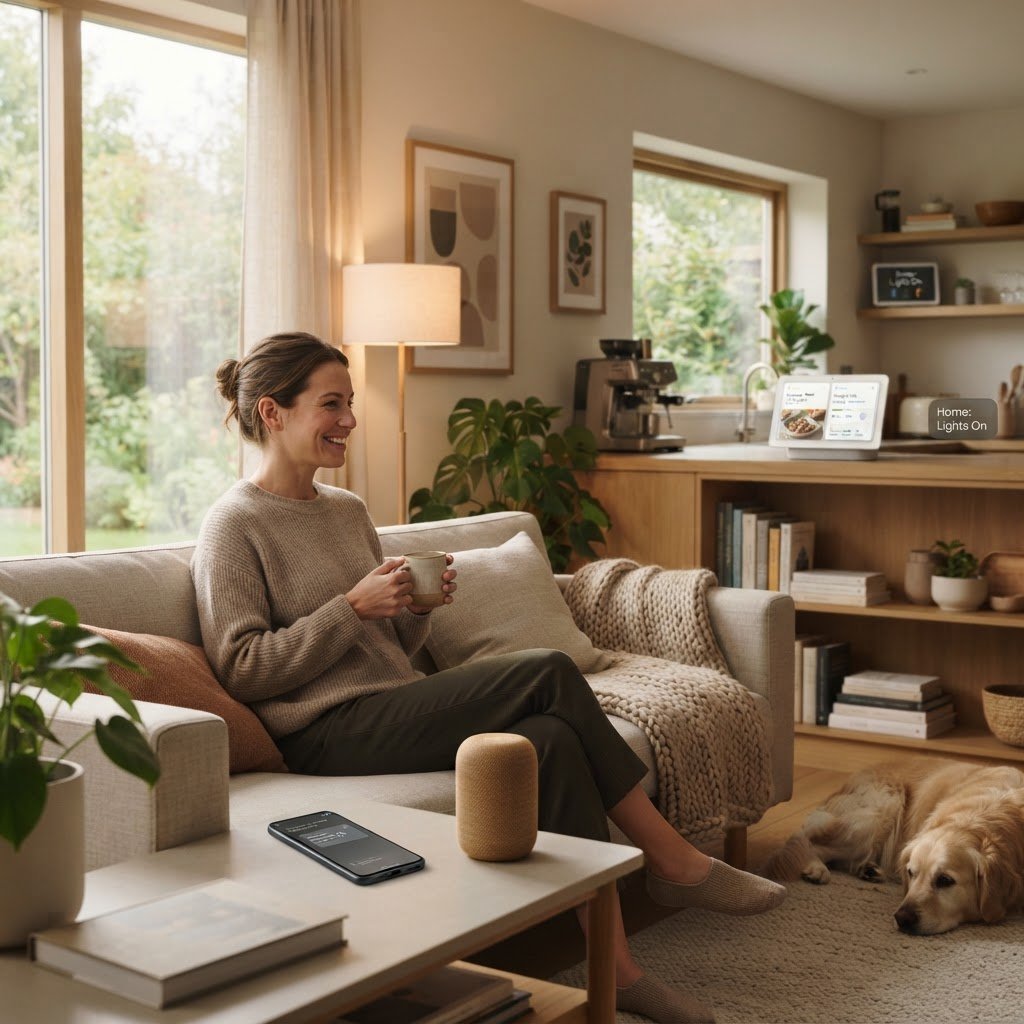
Smart homes have moved past novelty. Where once a voice-activated light felt like a parlour trick, now the entire domestic environment runs on a quiet layer of intelligence that learns preferences over time. Heating systems anticipate when someone will walk through the door. Refrigerators suggest recipes based on what is inside them, and in some cases, place orders for ingredients that are running low. The home has become a participant in daily life rather than a passive container for it, and while the technology behind this is extraordinary, the experience of it feels almost mundane. That is the point. The best AI disappears into the background.
Personal assistants have undergone a similar transformation. The early versions were functional but limited, good at setting timers and answering trivia questions but not much else. The assistants of 2026 are different. They manage calendars with an understanding of context, draft messages that actually sound like the person sending them, and handle the kind of administrative friction that used to eat into the first hour of every workday. For people running small businesses or juggling freelance work, this has been particularly meaningful. The assistant does not replace thinking, but it removes the obstacles that stand between having an idea and acting on it.
Health and wellness have been another area of quiet change. Wearable devices no longer simply count steps. They analyse sleep quality, detect patterns in heart rate variability, and offer insights that were once only available through a clinical visit. AI-driven apps provide guided meditation tailored to stress levels measured in real time, and nutrition platforms build meal plans around specific health goals rather than generic templates. The relationship between people and their own health data has shifted from passive tracking to active conversation, and that shift has made wellness feel less like a project and more like a dialogue.
The way people shop has changed too. Recommendation engines have become sophisticated enough to feel like a personal shopper rather than an algorithm. They learn not just what someone bought but why, and they adjust for context in ways that are surprisingly nuanced. A gift suggestion for a parent is different from a gift suggestion for a colleague, and the systems driving these suggestions understand the difference. This has made online shopping more efficient but also more personal, which is an unusual combination for something driven entirely by data.
In the workplace, AI has taken on the role of a collaborator rather than a competitor. The fear of jobs being replaced has not disappeared, but it has been complicated by the reality of how the technology is actually being used. Most people are not being replaced by AI. They are being augmented by it. Research that used to take three hours is done in twenty minutes. Reports are drafted, reviewed, and refined in a fraction of the time. The work that remains is the work that requires judgement, creativity, and human relationships, and for many people, that has been a welcome shift.
Education has been quietly reshaped as well. Tutoring platforms powered by AI adapt to individual learning speeds, offering explanations in multiple formats until a concept clicks. Language learning apps have become conversational partners, capable of holding realistic dialogues that adjust to proficiency levels in real time. The implications for self-directed learning are significant, and for people who have always wanted to learn something but never had the time or access, the barriers have never been lower.
Transportation has seen changes that are more visible but no less integrated into daily rhythm. Navigation apps predict delays before they happen, ride-sharing algorithms optimise routes in real time, and public transit systems use AI to adjust schedules based on demand patterns. For commuters, the experience is less about noticing the technology and more about noticing that the commute feels smoother. The frustration of unexpected delays has not vanished, but it has diminished.
Financial management has become more accessible through AI-driven tools that categorise spending automatically, flag unusual charges, and offer savings suggestions based on individual patterns. For people who found budgeting tedious or intimidating, these tools have made financial awareness something that happens in the background rather than something that requires a spreadsheet and a Sunday afternoon. The result is not necessarily more wealth, but more clarity, and clarity is often the first step toward better decisions.
Creative work has been perhaps the most surprising area of change. AI tools now assist with writing, design, music composition, and video editing, and while the debate about artistic authenticity continues, the practical reality is that more people are creating than ever before. A small business owner who could not afford a designer can now produce professional marketing materials. A hobbyist musician can arrange a full score without formal training. The tools do not make someone an artist, but they remove the technical barriers that kept many people from trying.
Finally, the way people communicate has shifted in ways both subtle and significant. Real-time translation has made conversations across language barriers feel natural rather than halting. Email sorting has reduced the cognitive load of inbox management. And perhaps most notably, AI has begun to help people write better, not by writing for them but by suggesting clearer phrasings, catching tone mismatches, and offering alternatives that the writer might not have considered. Communication has always been about connection, and these tools have made it easier to focus on the message rather than the mechanics.
What makes all of this remarkable is not any single change. It is the accumulation. AI in 2026 is not a single dramatic transformation but a thousand small ones, each barely noticeable on its own, together reshaping the texture of daily life. The technology has matured to the point where it no longer demands attention. It simply works, quietly, in the background, and that quietness may be the most significant change of all.




