
A perspective piece from The Listening Market
There’s a particular frustration that comes with watching a carpet age. When it’s new, it’s soft, uniform, and somehow makes the whole room feel intentional. Two years later, it has traffic patterns visible from across the room, a faint smell that opens windows can’t quite fix, and stains in places that don’t make sense — how did coffee get there?
The common response is to ignore the carpet until it becomes unbearable, then pay for a professional clean that restores it temporarily before the cycle begins again. But the people whose carpets look good after five years aren’t doing anything extraordinary. They’re doing ordinary things consistently, and the consistency is what makes the difference.
Vacuum Like You Mean It
Most people vacuum incorrectly, and this is the foundation of every carpet problem that follows. The issue isn’t the vacuum — it’s the technique. A quick pass over visible areas once a week removes surface dust but leaves the deeper dirt that grinds into fibres and causes premature wear.
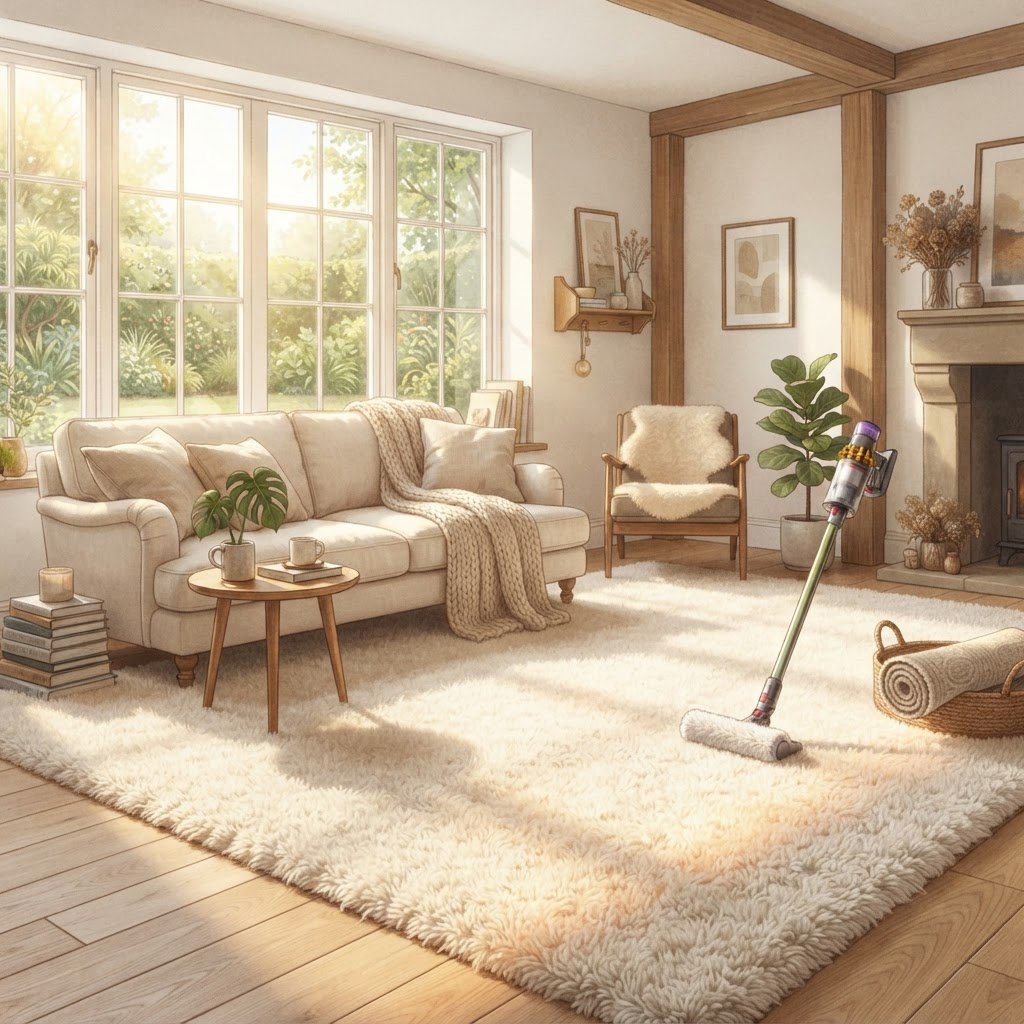
The correct approach is slow, overlapping passes — the vacuum needs time to pull dirt from deep in the pile. High-traffic areas should be vacuumed two to three times per week, and the entire carpeted area should be done weekly. Empty the vacuum canister or change the bag when it’s three-quarters full, because a full vacuum loses suction and stops doing its job.
According to the Carpet and Rug Institute, proper vacuuming can extend carpet life by years and significantly improve indoor air quality by removing allergens trapped in fibres.
The Shoe Rule That Changes Everything
If there’s one change that has outsized impact on carpet longevity, it’s removing shoes at the door. Shoes track in dirt, oil, moisture, and substances from every surface they’ve walked on that day. This material gets ground into carpet fibres with every step, creating the grey traffic patterns that no amount of vacuuming fully removes.
Implementing a shoes-off policy doesn’t require a sign or a speech. It requires a mat at the door and a visible place to put shoes. When the infrastructure is there, the behaviour follows naturally. Most guests will follow the lead of the household without being asked.
Address Spills Immediately, Not Eventually
The difference between a spill that disappears and a spill that becomes a permanent stain is almost always timing. Carpet fibres absorb liquids quickly, and once a substance dries into the fibre, it becomes dramatically harder to remove.
The correct response to any spill is immediate: blot with a clean, dry cloth to absorb as much liquid as possible. Don’t rub — rubbing pushes the substance deeper into the fibre and damages the pile. Once the excess liquid is absorbed, use a carpet-safe cleaner and continue blotting until the area is clean.
Keep a basic stain removal kit accessible: clean white cloths, a spray bottle with water, and a carpet cleaner appropriate for the carpet type. The kit being nearby is what makes immediate response possible.
Rotate Furniture and Rugs
Carpets wear in patterns — the paths where people walk, the areas under furniture where weight compresses the pile, and the sections exposed to sunlight that fades the colour. Over time, these patterns become permanent and visible.
Rotating furniture periodically changes the traffic patterns and weight distribution. Area rugs should be rotated every few months to distribute wear evenly. Even a slight repositioning of a sofa or chair can shift where people walk, preventing the formation of a single worn track.
Professional Cleaning Once a Year
Regular maintenance keeps carpets looking good, but once a year, a deeper clean is necessary to remove the accumulated dirt, oils, and allergens that vacuuming can’t reach. Professional hot water extraction — what most people call steam cleaning — pulls contaminants from deep in the pile and restores the carpet’s texture and colour.
The Institute of Inspection, Cleaning and Restoration Certification (IICRC) recommends professional cleaning every 12 to 18 months for most residential carpets, with more frequent cleaning for homes with pets, children, or high traffic. The investment is modest compared to the cost of carpet replacement.
Manage Pets Proactively
Pets are tough on carpets. They shed, they have accidents, and they bring in whatever they’ve walked through outside. Managing pet impact on carpets requires three things: regular grooming to reduce shedding, immediate cleaning of accidents using an enzymatic cleaner that breaks down odour-causing compounds, and a designated area near the door where paws can be wiped before the pet enters the main living space.
Enzymatic cleaners are essential for pet accidents because they break down the proteins that cause lingering odour. Standard cleaners may remove the visible mark but leave the scent, which attracts the pet back to the same spot.
The Carpet That Lasts
Keeping carpets fresh isn’t about a single dramatic intervention. It’s about a set of small habits performed consistently — vacuuming properly, removing shoes, responding to spills immediately, rotating furniture, and investing in an annual professional clean. None of these actions is difficult. The challenge is doing them regularly enough that they become automatic rather than occasional.
The reward is a carpet that looks good for years longer than expected, a home that smells clean, and the quiet satisfaction of knowing that the floor underfoot is actually clean — not just the appearance of clean. That distinction matters, and it’s the difference between maintaining a carpet and replacing one.