
A perspective piece from The Listening Market
There was a time when hobbies were simply what people did. Knitting, woodwork, painting, gardening, playing an instrument, building model planes. These were not lifestyle choices or wellness strategies. They were just the ordinary ways people spent their free hours, the things that filled evenings and weekends before there was a screen to fill them instead.
Then the screens came, and for a long time, the hobbies faded. Not disappeared, exactly, but retreated. Why spend three hours learning to knit when the same three hours could be spent scrolling through an endless feed of content designed to hold attention with surgical precision? The phone offered constant stimulation with none of the effort. Hobbies required patience, practice, and the willingness to be bad at something before getting good. Screens required nothing but a thumb.
What is interesting is that the pendulum appears to be swinging back. Across many parts of the world, there is a quiet but unmistakable revival of offline hobbies. Pottery classes have waiting lists. Yarn shops are reporting booming sales. Community gardens have growing memberships. Board game cafes are opening in city centres. People are picking up instruments they abandoned years ago, buying sketchbooks, joining knitting circles, and spending Sunday afternoons doing things with their hands that have nothing to do with a feed.
The reasons for this shift are layered, but screen fatigue is clearly part of it. After years of being tethered to devices, many people have developed a kind of digital exhaustion that no amount of screen-time limits or app blockers seems to fix. The constant notifications, the infinite scroll, the low-grade anxiety of being always available. It has left people craving something tangible, something that exists in the physical world and produces a result they can hold.
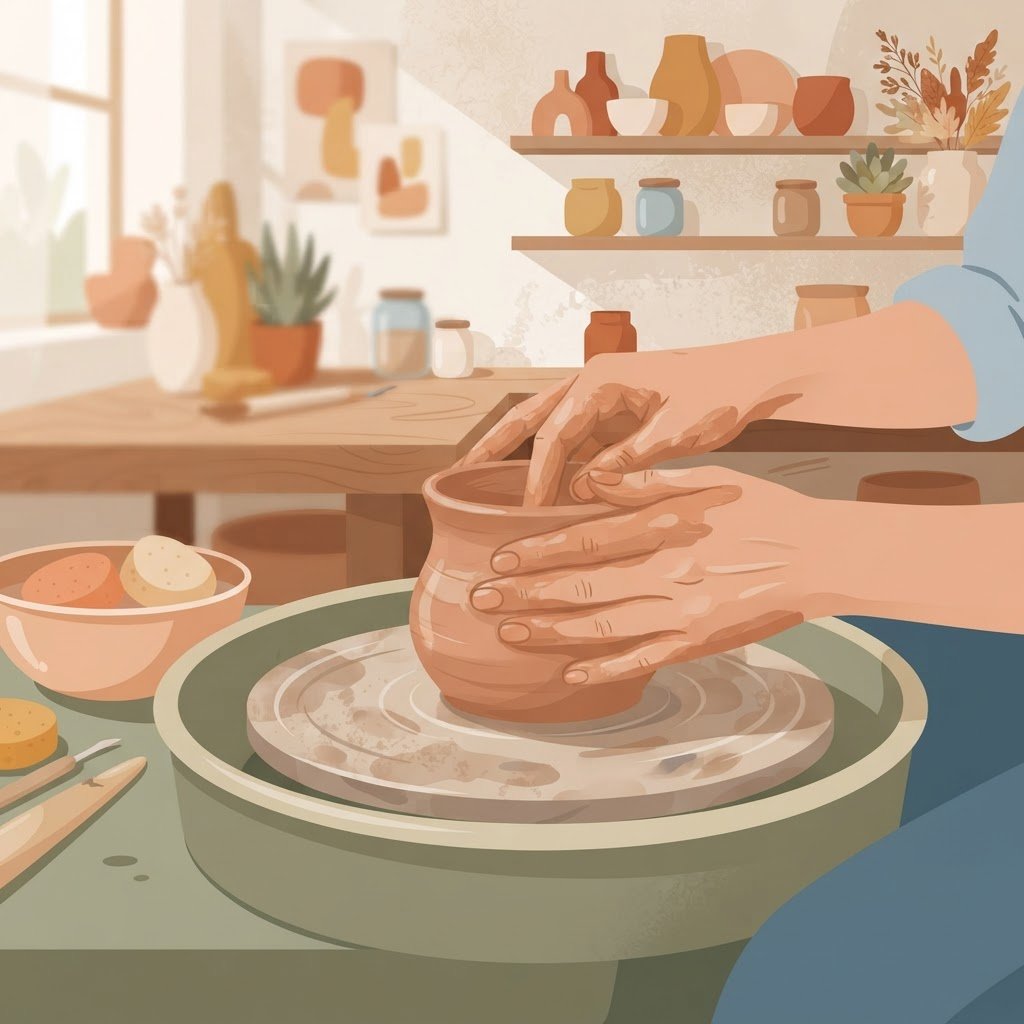
There is a particular satisfaction in making something by hand that a screen cannot replicate. When someone spends two hours throwing a clay pot, they have a clay pot at the end. It may be lopsided and slightly ugly, but it is real. It exists in a way that two hours of scrolling never produces anything. This is not a profound insight, but it is a deeply felt one. The tangible output matters because it provides a sense of accomplishment that digital consumption systematically denies.
The psychological literature on this is revealing. Activities that involve what researchers call “flow” — a state of deep absorption in a challenging but manageable task — are strongly associated with wellbeing. Hobbies are one of the most reliable ways to enter a flow state. The conditions are almost perfectly designed for it. A clear goal, immediate feedback, a balance between difficulty and skill, and a loss of self-consciousness. Scrolling a phone, by contrast, produces something closer to the opposite of flow. It is passive, fragmented, and offers no challenge to master.
The social dimension matters too. Many offline hobbies are inherently communal. Knitting circles, choir groups, community gardens, pottery studios, board game nights. These are spaces where people gather in person, share a common activity, and build the kind of casual, low-stakes relationships that have been eroding in many communities. The loneliness epidemic that has been documented in country after country is not solely caused by technology, but technology has accelerated it by replacing shared physical activities with individual digital ones. The return of hobbies is, in part, a return of shared physical space.
What is notable about the current revival is that it does not look exactly like the past. The new hobbyists are not simply recreating the pastimes of their grandparents. They are bringing their own sensibilities, and in many cases, their own aesthetics. The pottery being made in trendy studios is photographed and shared online. The knitting patterns are discussed in forums and sold as digital downloads. The hobbies are offline in practice but not entirely disconnected from the digital world. The internet has become a place to find communities, share work, and learn techniques, even as the actual doing happens in the physical world. This hybrid model is arguably healthier than either extreme.
There is also an economic angle. The hobby revival has created small but meaningful business opportunities. Independent yarn producers, ceramic supply companies, specialty tool makers, and local craft shops are seeing renewed demand. Online marketplaces for handmade goods have grown substantially. The creator economy, often associated with digital content, also includes a thriving layer of people selling physical craft goods. What was once dismissed as a niche interest has become a viable income stream for some and a meaningful side pursuit for many.
The accessibility of hobbies has improved as well. Online tutorials, affordable starter kits, and community workshops have lowered the barrier to entry dramatically. A decade ago, learning to throw pottery required finding a local class, which might not exist or might be fully booked. Now, a beginner can watch detailed tutorials, order a beginner’s wheel and clay online, and start practising at their kitchen table. The same is true for countless other crafts. The knowledge that was once gatekept by geography and class is now widely available.
Not everyone who picks up a hobby sticks with it, of course. The initial enthusiasm fades, the supplies gather dust, and the phone reasserts its dominance. But even the attempt seems to leave something behind. People who try a hobby and abandon it often come back to it later, or try a different one, having tasted the satisfaction that comes from making something real. The habit of reaching for a screen weakens, if only slightly, each time someone reaches for a ball of yarn instead.
The return of offline hobbies is not a revolution. It is a quiet, personal rebellion against the idea that all free time should be spent consuming content. It is a reminder that humans have always needed to make things, to use their hands, to be in the same room as other people working on something together. The screens are not going away, and nobody is seriously suggesting they should. But the hunger for something more tangible, more demanding, and more real than a feed is proving to be deeper and more durable than the attention economy might have hoped.
In the end, the return of hobbies may say less about the failure of technology and more about the persistence of something fundamental in human nature. The need to create, to learn, to share, and to hold the results in your hands. That need did not disappear during the decades of digital dominance. It was just waiting, patient and quiet, for people to look up from their screens long enough to remember it was there.




