
A perspective piece from The Listening Market
There was a time when going on holiday meant packing a suitcase with the sole intention of doing as little as possible. A beach chair, a cold drink, and a paperback were roughly all the equipment required. The goal was to switch off entirely, to let the days blur into one long, sun-soaked afternoon. It was a kind of recovery, a decompression chamber between one stretch of work and the next.
Something has shifted. The travellers boarding flights in 2026 are not just looking to stop. They are looking to restart. The fastest-growing segment of the travel industry is not luxury, and it is not budget. It is wellness. Trips built around yoga retreats, thermal hot springs, cold-water immersion, guided meditation, digital detoxes, and nutrition-focused cooking classes are filling up months in advance. The global wellness tourism market, already substantial, is projected to pass the trillion-dollar mark within a few years. The question is not whether this trend is real. The question is why now.
What Wellness Travel Actually Means
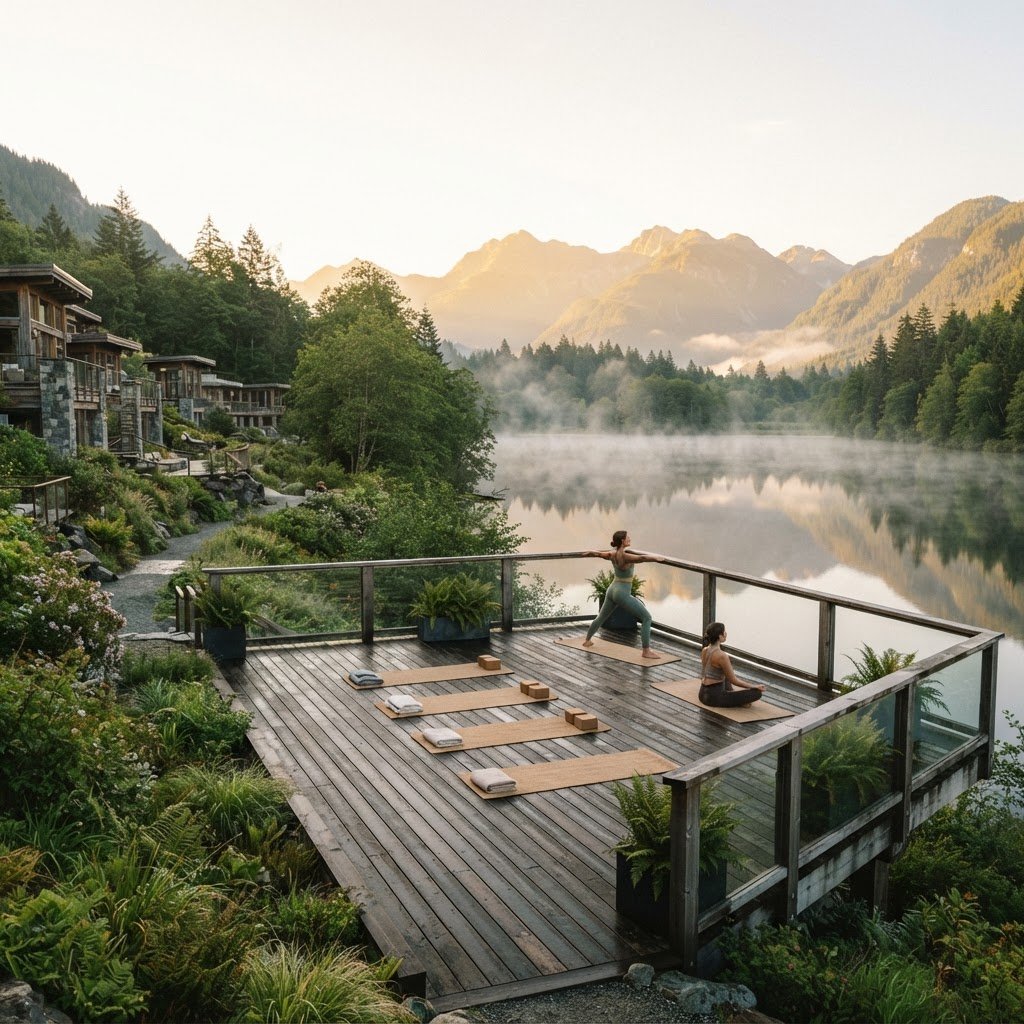
Wellness travel is a broad category, and that breadth is part of its appeal. At one end, there are multi-day retreats in remote locations: silent meditation centres in the mountains of northern Thailand, ayurvedic clinics on the Kerala coast, residential spa programs in the Swiss Alps. At the other end, there are weekend city breaks where travellers book a single session, a float tank, a sound bath, a forest therapy walk, and fly home the same day. The common thread is intention. The trip is not purely for leisure. It carries a purpose related to physical, mental, or emotional wellbeing.
The offerings have expanded well beyond the stereotypes. A wellness holiday in 2026 might involve cold-water swimming off the coast of Iceland, a sleep optimisation program at a clinic in Scandinavia, or a guided hiking and foraging trip along the coast of Ireland. It might be a solo trip, a couples’ retreat, or a group expedition with strangers who become friends over shared meals and shared discomfort. The category has blurred with adventure travel, with culinary travel, with cultural travel. What sets it apart is the focus on returning home in a measurably better state than when the traveller left.
Why the Shift Is Happening
The reasons behind the rise of wellness travel are layered, but a few threads are visible. Burnout is one. The slow erosion of the boundary between work and personal life, accelerated by remote work and mobile devices, has left many people in a state of chronic low-grade exhaustion. A standard holiday helps, but the recovery often feels incomplete. People return to the same inbox, the same pace, the same patterns. A structured wellness trip offers something different: a program, a reset, a set of practices that can be carried home.
Sleep is another driver. Poor sleep has become a public health obsession, and a generation that grew up staring at screens is now discovering that rest does not happen automatically. Sleep retreats, where guests follow strict wind-down routines, avoid blue light, and receive coaching from sleep specialists, are among the most heavily booked offerings in the wellness travel space. The irony is not lost on anyone. People are travelling to learn how to do the most basic human activity.
A third factor is the mainstreaming of practices that once sat firmly on the alternative fringe. Cold-water immersion, once the domain of eccentric winter swimmers, is now backed by peer-reviewed studies on inflammation and mood. Meditation, once associated with monasteries, is a feature of corporate wellness programs. Breathwork, once obscure, has its own instructor certification industry. The credibility gap has narrowed. Travellers are no longer embarrassed to say they are going on a meditation retreat. In some circles, it has become a status symbol.
The Demographic Spread
Wellness travel was once associated with a narrow demographic: affluent women in their forties and fifties, willing to spend generously on spa packages and yoga retreats. That profile has broadened dramatically. The fastest-growing group of wellness travellers is now people in their twenties and thirties, split roughly evenly across genders. Younger travellers, in particular, are treating wellness trips as a form of self-directed healthcare. They are less interested in luxury for its own sake and more interested in outcomes. Did the trip improve sleep? Reduce anxiety? Build a habit that lasts?
Families are a growing segment too. Multi-generational wellness trips, where grandparents, parents, and children spend a week at a resort with structured activities for each age group, are becoming a popular alternative to the traditional resort holiday. The appeal is partly logistical. Everyone is in one place, fed and entertained, but the activities are more nourishing than a water slide.
Corporate retreats have also entered the fold. Companies that once sent employees to conference centres with sticky-note workshops and a dinner function are now booking entire boutique wellness properties for team days or weekends. The language is different. The focus is on resilience, connection, and mental health rather than purely on team building. Whether this represents a genuine cultural shift in how organisations view employee wellbeing, or simply a new form of corporate performance, is a debate for another time.
The Economics Behind It
From the travel industry’s perspective, wellness is an attractive category. Wellness travellers tend to spend more per trip than leisure travellers. They stay longer, they book add-on services, and they return. A standard tourist might spend two nights at a hotel and move on. A wellness traveller might stay a week, book three treatments, attend daily classes, and buy products from the retreat’s shop. Repeat bookings are common. Travellers often develop a loyalty to a particular retreat or program, returning annually or biannually.
This economic profile has not gone unnoticed. Established hotel chains are adding wellness wings. Airlines are offering pre-flight meditation content and partner discounts with wellness brands. Insurance companies in several countries have begun offering premium discounts or reimbursements for wellness-related travel, treating it as a preventative health measure rather than a discretionary expense. The line between healthcare and hospitality is blurring.
Destinations that once marketed themselves purely on scenery or history are rebranding. Iceland promotes its geothermal baths. Japan has leaned into its onsen culture as a wellness tourism drawcard. The Blue Zone regions, areas identified for their unusually high concentration of centenarians, have become wellness pilgrimage sites. Travellers go not just to see longevity but to try to learn how to achieve it.
The Questions That Linger
Wellness travel is not without its tensions. The accessibility problem is the most obvious. A week at a premium retreat can cost as much as a month’s salary for many workers. The very concept of travelling to recover from the effects of work raises uncomfortable questions about the structure of modern working life. If people need to fly to another country to get enough sleep, something is broken closer to home.
There is also a question about what travellers actually take back with them. A retreat can produce a powerful short-term effect. The sleep is better, the nervous system settles, the body feels lighter. But the conditions that created the exhaustion are usually waiting at home. The real test of wellness travel is not what happens during the trip. It is what happens in the weeks after, when the routines established at the retreat meet the realities of daily life.
Some retreats have begun addressing this directly, offering follow-up coaching, at-home programs, and digital support. The most thoughtful programs treat the trip as the beginning of a change, not the entirety of it. The ones that succeed will be those that build a bridge between the extraordinary environment of the retreat and the ordinary environment of daily life.
Where It Goes From Here
The trajectory of wellness travel suggests continued growth, but the shape of it may shift. The emphasis could move further towards preventative health, with trips designed around specific concerns. Mental health, hormonal health, and longevity are already emerging as sub-categories. Technology will play a larger role, with wearable data being used to personalise retreat programs and track outcomes. The integration of AI into trip planning, already underway, may make wellness travel more accessible by tailoring programs to budgets and needs.
The deeper question is cultural. If wellness travel continues to grow, it may signal a broader rethinking of what holidays are for. The lie-on-a-beach model is not disappearing, but it is no longer the default. More travellers are asking what they want to feel like when they come home, not just what they want to see while they are away. The answer, increasingly, is not just rested. They want to feel different. They want to feel better.
The travel industry is listening. Whether the growing market can deliver genuine, lasting change, or whether it becomes just another form of consumption dressed in linen and lavender, will depend on the integrity of the operators and the expectations of the travellers. For now, the momentum is clear. The age of the recovery holiday has given way to something more purposeful. Whether that purpose is realised, or merely performed, is the journey that matters most.




