
A perspective piece from The Listening Market
For a while it seemed like the dinner party might be gone for good. The pandemic years turned hosting into a fraught, rule-bound exercise, and the recovery period favoured restaurants, bars, and the general appeal of being anywhere other than home. Group chats filled with dinner reservations and cocktail bar recommendations. The dining table became a workspace, a laundry folding station, or simply a surface that collected mail. But somewhere in the last year or so, something shifted. The table got cleared off. The good plates came out of storage. People started inviting each other over again, and the dinner party, quietly and without fanfare, came back.
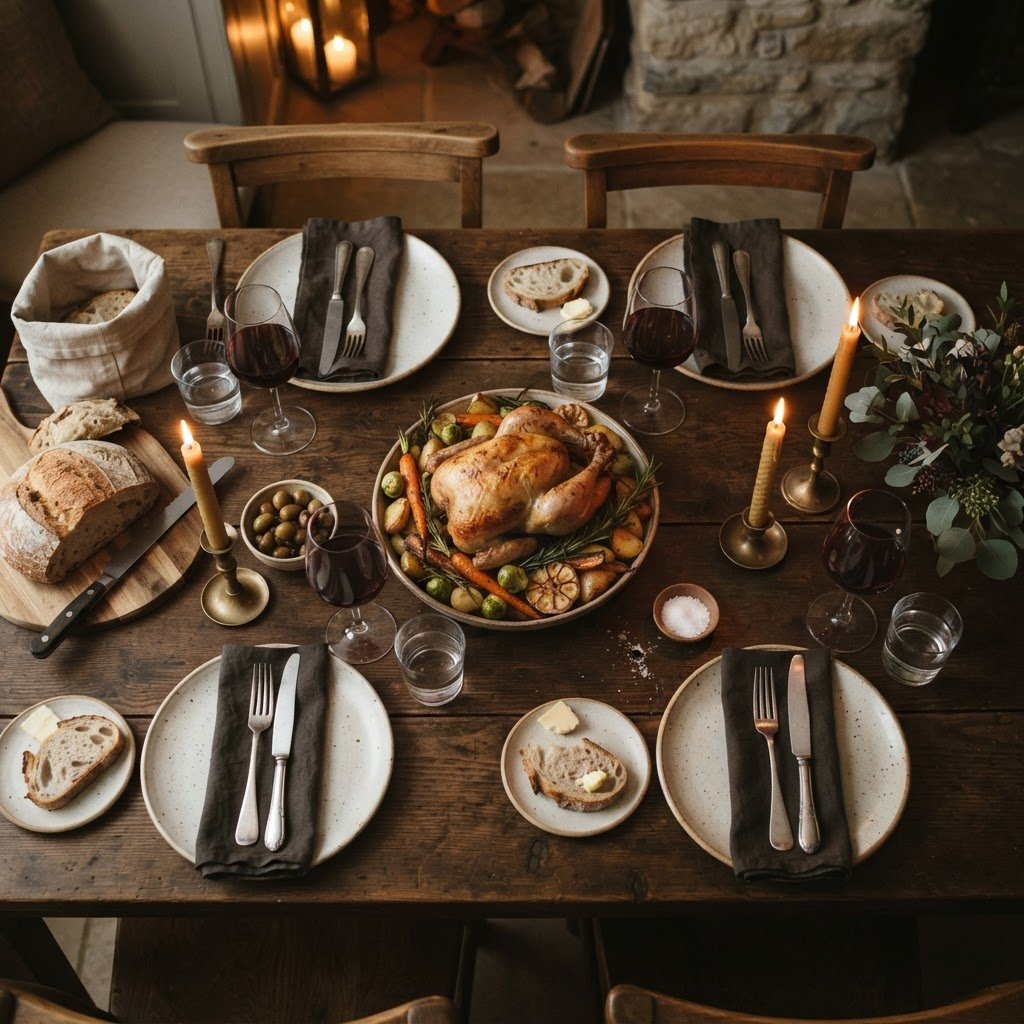
The return is not a nostalgic reenment of the dinner parties of previous decades. There is no attempt to recreate the formality of a three-course seated affair with matching wine glasses and a printed menu. The new dinner party is looser, more generous, and less performative. It is less about impressing guests and more about enjoying their company. The pressure to produce a restaurant-quality meal has given way to an acceptance that good food does not need to be complicated, and that the best evenings are often the ones where the host spends more time at the table than at the stove.
What distinguishes this wave from earlier incarnations is the role that cost plays. Eating out has become genuinely expensive. A dinner for four at a mid-range restaurant, once an unremarkable Friday night expense, now feels like a deliberate financial decision. Drinks, service charges, and the creeping price of every menu item have pushed the cost of dining out to a point where it no longer feels casual. Hosting at home, by contrast, offers an evening of equal or better quality at a fraction of the price. A roast chicken, a simple pasta, a pot of curry made in advance, these are not budget compromises. They are genuinely good meals that happen to cost less than a single round of mains at a restaurant.
The economics work in the guest’s favour too. Bringing a bottle of wine or a dessert costs less than a restaurant meal, and the experience feels more personal. There is no time limit on the table, no bill to split at the end, no need to calculate who ordered what. The social transaction is simplified to its essence: come over, eat, talk, stay as long as you like. The absence of commercial pressure changes the tone of the evening entirely. Conversations go deeper. Laughter comes more easily. The evening stretches naturally rather than being shaped by the logistics of a venue.
The food itself has evolved. The current generation of home hosts is not trying to replicate restaurant technique. Instead, there is a renewed appreciation for the kind of food that is difficult to order out but effortless to make at home. Slow-cooked stews that fill the house with warmth and smell. A whole fish baked with lemon and herbs. A table spread with mezze, bread, and salad where everyone serves themselves. These are dishes that benefit from being made in a home kitchen, in advance, without the time pressure of a dinner service. They also happen to be the kinds of meals that encourage sharing, which is the real point of the exercise.
The formality of dress has disappeared almost entirely. The invitation is more likely to say “come as you are” than to imply a dress code. Jeans and a nice jumper are perfectly acceptable. The signal that an evening matters is no longer communicated by what people wear but by the fact that someone has opened their home, set aside an evening, and made an effort to gather people they care about. That effort reads as more meaningful than a reservation at a popular restaurant.
Drinks have simplified too. The elaborate home cocktail bar, a staple of the lockdown era, has largely been replaced by a bottle of something good and a jug of water on the table. The focus has moved from the drinks to the conversation. A glass of wine with dinner is not about the wine but about the pause it creates, the moment of sitting down, the transition from arriving to settling in. The ritual matters more than the product.
The guest contribution has shifted in a healthy direction. Where it was once expected that guests would bring a dish to share, potentially turning the evening into a potluck with competing flavours and mismatched portions, the current convention leans toward bringing something supplementary: a bottle, a block of chocolate, some flowers. The host provides the meal, and the guest provides a gesture of thanks. This division of labour allows the host to control the menu while the guest contributes without the anxiety of figuring out what to cook that will complement, rather than clash with, the rest of the spread.
Timing has loosened considerably. The old dinner party started at seven and ended by ten, a compressed window that felt more like an appointment than an evening. The new version starts when people arrive, which is usually later than the stated time, and ends when it ends. Nobody watches the clock. The unhurried pace is part of the appeal. An evening that might have been two hours at a restaurant becomes four or five at home, and the extra time is where the best conversations happen, the ones that drift from work to family to whatever is on everyone’s mind without the self-consciousness of a public setting.
There is an intimacy to being in someone’s home that no restaurant can replicate. The choice of music, the lighting, the way the table is set, the books on the shelf, the art on the walls, these are all expressions of the host that create a context no venue could manufacture. Guests relax differently in a home than they do in a restaurant. Shoes come off. People migrate from the table to the couch. The evening develops its own rhythm rather than following the scripted progression of courses and coffee.
The revival has been helped along by a broader cultural shift toward valuing experiences over things, and specifically experiences that involve real human connection. After years of digital socialising, hybrid events, and the general flattening of social life into screens, there is an appetite for the physical, the tactile, the present. A dinner party is all of those things. It is people in a room, eating food someone made, having a conversation that cannot be paused or scrolled past. It is unedited and unoptimised, and that is precisely what makes it valuable.
The demographic driving the revival is broader than might be expected. It is not just older adults rediscovering a tradition from their youth. Younger adults, many of whom came of age during the pandemic and missed the social rituals that normally develop in the early twenties, are embracing home hosting with particular enthusiasm. For a generation that has socialised heavily through screens, the dinner party represents something novel and appealing: a structured social occasion that is entirely offline, entirely voluntary, and entirely about being present with other people.
The dinner party’s return does not mean the restaurant is dead. Eating out still serves a purpose that home cooking cannot: the experience of being served, the pleasure of a professional kitchen’s output, and the convenience of someone else doing all the work. But the balance has shifted. Where the default was once to go out and the exception was to host, the calculus is increasingly running the other way. Home is where the best evenings happen, and the table, cleared of laptops and mail and the debris of daily life, is where they happen.
The dinner party never really died. It just went quiet for a while, waiting for the conditions that make it appealing to return. The cost of living, the fatigue with digital socialising, the desire for genuine connection, and the simple pleasure of sharing a meal in a space that feels personal, these are the conditions, and they are here. The table is set. The invitation is open. All that remains is to show up.




