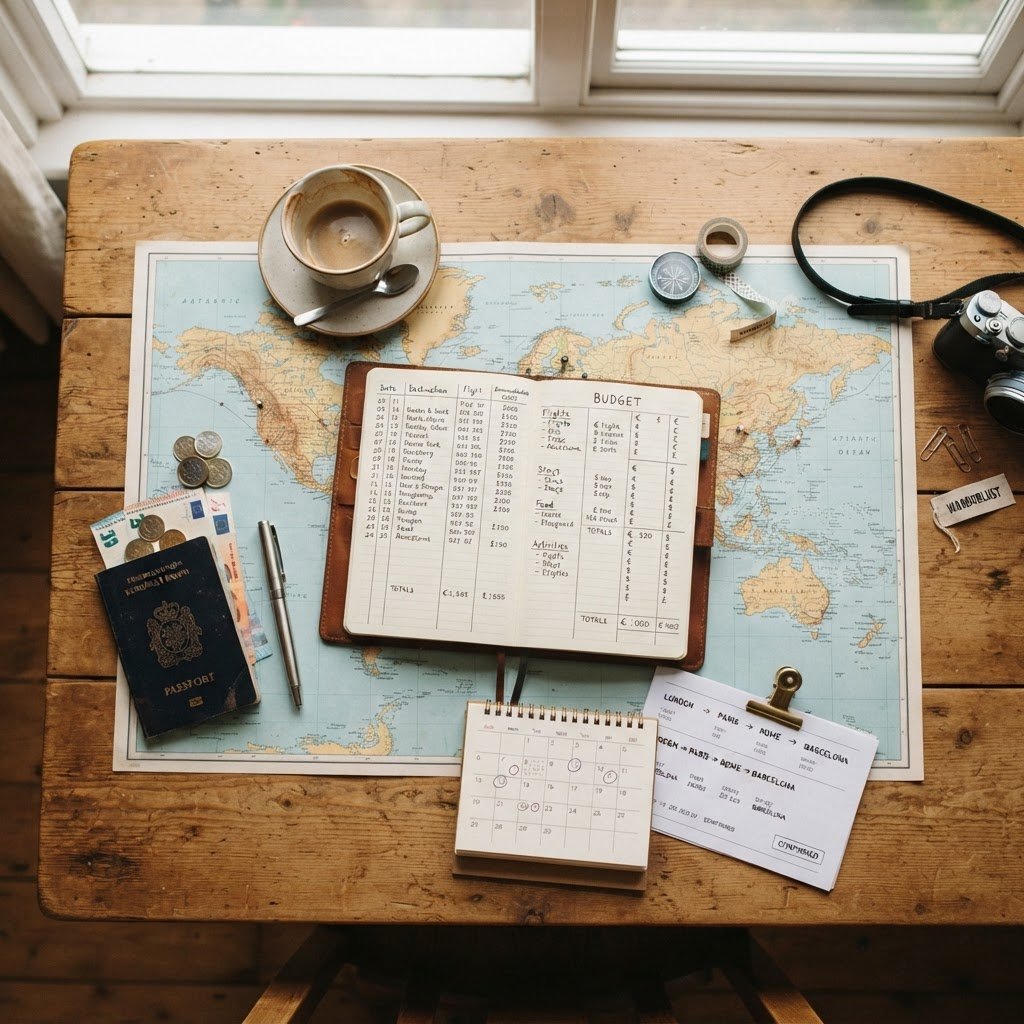
A perspective piece from The Listening Market
The dream holiday and the budget holiday have long been treated as separate categories, as though enjoying a trip and being careful with money are mutually exclusive pursuits. This false divide has cost countless travellers either their peace of mind or their bank balance, sometimes both. The truth is that the most memorable trips are rarely the most expensive ones, and with a clear approach to planning, the gap between what a holiday costs and what it delivers can be narrowed dramatically.
Planning a holiday without overspending is not about deprivation. It is about making deliberate choices at every stage, from the initial decision about where to go through to the final day of the trip. Each choice carries a trade-off, and understanding those trade-offs is the difference between a holiday that feels expensive and one that feels rich.
## Start With a Number, Not a Destination
The most common mistake in holiday planning is choosing the destination first and working out the budget later. This approach almost inevitably leads to overspending, because the emotional commitment to a place is made before any practical assessment of affordability. By the time the costs become clear, the desire to go is already too strong to reverse course.
Starting with a number changes the entire planning process. A fixed budget, even a rough one, creates a framework within which decisions can be made rationally rather than emotionally. When the total amount available is known, every subsequent choice, from flights to accommodation to daily spending, can be weighed against a concrete figure rather than a vague sense of what things usually cost.
This does not mean the destination is irrelevant. It means the destination is chosen from a pool of places that fit within the budget, rather than imposed on the budget after the fact. The world is full of extraordinary places at every price point, and the constraint of a budget often leads to discoveries that would never have been made otherwise.
## Timing Is Everything
The single biggest factor in holiday cost is when the trip happens. Peak season pricing can double or triple the cost of flights and accommodation compared to the same destination a few weeks earlier or later. The school holiday calendar, which governs peak pricing in many countries, creates artificial surges that have little to do with the quality of the experience at a destination.
Travelling in shoulder season, the weeks just before or after peak periods, offers a combination of lower prices, fewer crowds, and weather that is often nearly identical to peak season. The Mediterranean in late September, for example, is warm enough for swimming, quiet enough to enjoy, and dramatically cheaper than July. Ski resorts in January, after the New Year rush, offer the same snow at a fraction of the December cost.
For those with flexible schedules, this is the single most effective way to reduce costs without reducing the quality of the experience. For those constrained by school holidays, the strategy shifts to being early, booking months in advance to secure the best available rates before they rise.
## Rethinking Accommodation
The hotel is no longer the default option, and treating it as such is a missed opportunity for savings. The range of accommodation types available today is broader than it has ever been, and the cost differences between them can be substantial.
Apartments and self-catering properties offer two distinct advantages. The first is the per-night cost, which is often lower than a comparable hotel, particularly for groups or families. The second is the ability to prepare some meals at the accommodation, which can dramatically reduce food costs. Eating every meal at restaurants is one of the fastest ways to inflate a holiday budget, and having access to a kitchen for even breakfast and the occasional dinner can save hundreds over the course of a trip.
Guesthouses and bed and breakfasts occupy a middle ground, offering more character and local knowledge than a hotel at a lower price. Hostels, long shed of their backpacker-only image, now offer private rooms and en-suite facilities that rival budget hotels. The key is to match the accommodation type to the nature of the trip rather than defaulting to the familiar.
## The Flight Question
Flights are often the single largest expense in a holiday budget, and they are also the area where savings are most achievable with the right approach. The tools for finding cheap flights have never been better, with fare comparison sites, price alert systems, and flexible date search options all widely available.
Flexibility is the most powerful lever. Being willing to fly on a Tuesday instead of a Saturday, or to depart from a secondary airport, can reduce fares by half or more. The willingness to take a connecting flight rather than a direct route, while less convenient, can yield significant savings. For those with the time, indirect routing can also turn a layover into a bonus city visit at no additional accommodation cost.
The other flight-related saving is luggage. The trend toward charging for checked bags has made carry-on travel increasingly attractive. Travelling with carry-on only is not just cheaper, it is faster through airports and eliminates the risk of lost luggage. For trips of a week or less, a well-packed carry-on is sufficient for most travellers and removes a significant cost from the flight booking.
## Eating Well Without Overspending
Food is where many holiday budgets quietly spiral out of control. The combination of being in a new place, free from routine, and wanting to experience local cuisine creates a spending environment that is hard to control through willpower alone. A strategy is needed.
One approach is to allocate a daily food budget and stick to it, but this can feel restrictive and takes attention away from the experience. A more effective method is to make deliberate choices about which meals to spend on and which to keep simple. A traveller might choose to eat lunch at a local market, inexpensive and authentic, and save the larger budget for dinner at a restaurant that comes recommended. Breakfast, often overpriced in hotels, can be sourced from a local bakery at a fraction of the cost.
The location of meals matters enormously. Restaurants within sight of major tourist attractions routinely charge double what equivalent establishments charge a few streets away. Walking ten minutes beyond the tourist zone, into areas where locals eat, almost always yields better food at lower prices. This is not a compromise. It is often where the best food in a city is found.
## Free and Low-Cost Experiences
The assumption that a good holiday requires expensive activities is one of the most damaging misconceptions in travel planning. Many of the most rewarding experiences available in any destination are free or nearly so. Walking tours, public beaches, hiking trails, street markets, historic quarters, and public parks cost nothing and often deliver more memorable experiences than paid attractions.
Museums and galleries in many cities offer free admission on certain days of the week or month. City parks and botanical gardens are often among the most beautiful spaces in a destination. The simple act of walking through a neighbourhood, observing daily life, and stopping at a local café, can be more enriching than a guided tour at twenty times the cost.
The key is to approach a destination with curiosity rather than a checklist of must-see attractions. The attractions that appear in every guidebook are often the most crowded and the most expensive. The experiences that make a trip memorable are frequently the unplanned ones, the accidental discovery of a quiet square, the conversation with a shopkeeper, the local festival stumbled upon by chance.
## The Buffer and the Unexpected
No matter how carefully a holiday is planned, unexpected costs arise. A flight is delayed, a piece of luggage is lost, a sudden change in weather requires different clothing. Building a buffer into the budget, an amount set aside specifically for the unexpected, prevents these moments from becoming financial stress.
The buffer should be enough to cover a realistic emergency, perhaps ten percent of the total budget, without being so large that it encourages unnecessary spending. It exists to be drawn on if needed and carried home as savings if not. The psychological comfort of knowing it is there is itself worth the cost of setting it aside.
## The Return Home
The final stage of holiday spending often happens after the trip is over. The souvenirs, the duty-free purchases, the last-minute gifts, these are the expenses that people rarely plan for and frequently regret. Setting a firm limit on post-trip spending, or deciding in advance what, if anything, will be brought home, prevents the holiday from continuing to cost money long after the return flight has landed.
Planning a holiday without overspending is ultimately about intention. Every expense is a choice, and making those choices deliberately, with a clear sense of what matters and what does not, is what transforms a trip from a financial stress into a genuine experience. The goal is not to spend the least amount possible. It is to spend in a way that maximises the return on every dollar, so that the memories brought home are of the place, not of the price.