A perspective piece from The Listening Market
The obituary for the local cinema has been written so many times that it has acquired a patina of its own. First television was going to kill it, then home video, then the multiplex on the edge of town, then streaming, then a pandemic that shut the doors of every auditorium on earth at once. Each time, the small flat-ceilinged halls with the stubborn carpets and the volunteer who remembers everyone’s regular order were declared finished. And yet, in 2026, something strange is happening in the suburbs and small towns where these obituaries were filed. The lights are coming back on. Local cinemas are enjoying a quiet revival, and the audiences drifting back through their doors are not nostalgic relics so much as people who have spent a decade at home and decided, definitively, that the living room is not enough.
The obvious place to look for an explanation is the big screen itself, because size remains unmatched. A film watched on a laptop is a film being consumed; the same film filling a wall is a film being inhabited. The scale changes the grammar of the experience, making faces into landscapes and cities into weather systems. Modern sound design, one of the genuinely underappreciated arts of the last two decades, only makes sense at volume, with the low rumble of a ship arriving somewhere behind the ears. Anyone who has paused a film at home four times in an hour to answer a phone, let out a cat, or negotiate with a child knows that the story never quite builds the momentum it was built to have. The cinema’s core product turns out not to be the film at all, but two hours of unbroken attention, a commodity that home viewing struggles to sell.
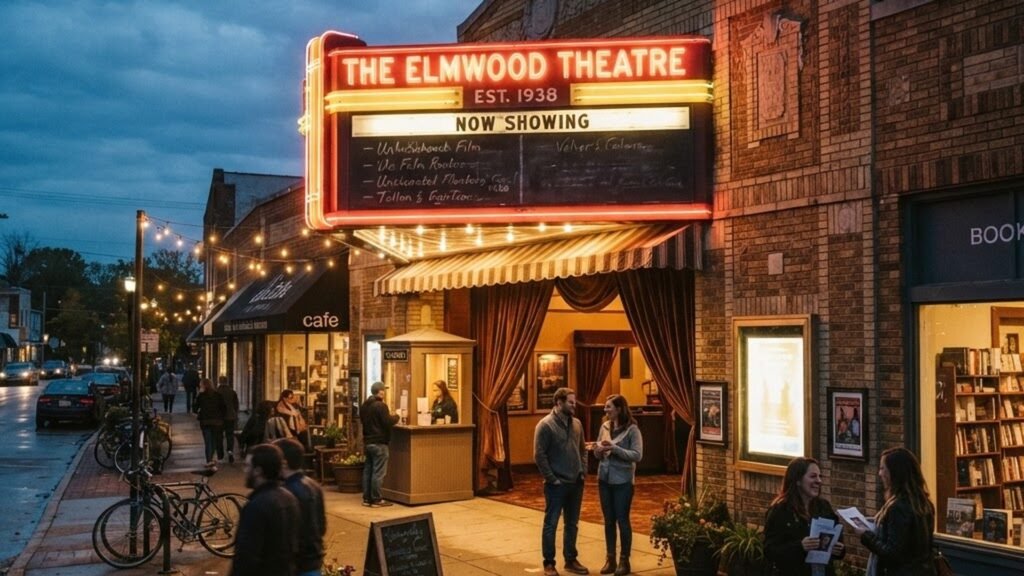
But scale alone would not be enough, because multiplexes have scale and still fight for every ticket. What the local hall has, and the out-of-town complex cannot copy, is neighbourhood. The revival is being led by single-screen and small venues embedded in the communities around them: the ninety-seat theatre above the bakery, the restored picture palace two streets from the beach, the community-run hall in a country town where the nearest alternative is a ninety-minute drive. These venues have rediscovered the old logic of the night out, in which the film sits at the centre of a small orbit of other pleasures: the walk there, the encounter with a neighbour in the queue, the argument about the ending that continues on the pavement outside. A screening is an appointment with other people who chose the same appointment.
Pricing has played its part in bringing people back through the doors. Streamers have raised their subscription fees again and again, to the point where a household’s monthly bundle of services now resembles a modest utility bill. A cinema ticket bought once or twice a month suddenly sits inside the same budget, particularly at the smaller venues that have positioned themselves as the affordable alternative to both the streaming stack and the expensive multiplex. Membership schemes have sharpened the arithmetic further: a modest monthly fee buys a few tickets, a discount at the snack bar, and the pleasant sense of holding a small stake in a local institution. In many towns, joining the little cinema is now what subscribing to a new service used to be, except that the money stays on the high street.
Programming is the other half of the story, and it has undergone a genuine renaissance at the small-venue end of the sector. A local cinema can take risks that a chain cannot, because its business is a relationship rather than a throughput target. That has meant repertory seasons, understated foreign films, restored classics, documentary nights, and sing-along screenings of films old enough to have raised their audiences’ parents. There is a growing appetite for exactly this idiosyncratic curation, the sense of walking into a place with taste rather than an algorithm. The multiplex asks audiences what they already know they want. The local venue, armed with a chalkboard and firm opinions, occasionally tells them what they did not yet know they wanted, and there is a real pleasure in that kind of being led.
The buildings themselves have become part of the draw. Many of the cinemas enjoying this revival spent their darkest years something short of loved, and their restorations have turned them into objects of genuine civic affection. Original mouldings have been repainted in defiant colour schemes, fragile neon has been nursed back to life, and a great many wobbly rows of seats have been replaced at ruinous expense by people who could have bought something easier to run. Community ownership models have appeared in towns where no commercial buyer would take the risk, with locals buying shares in their picture house the way earlier generations bought into a bakery or a football club. The cinema has become a flagship for the broader revival of local institutions, proof that a town can repair something everyone had agreed was lost.
Streaming deserves a strange kind of credit in this story, because the decade of watching everything at home taught audiences something no marketing campaign could have: curation has a value. Infinite choice turns out to be exhausting, and the endless scroll of a streaming menu, where every option is equally weighted and equally ignored, has trained a generation to long for someone else’s confident programming. There is also the matter of discovery: home viewing quietly herds viewers toward the same handful of titles, while a small cinema’s programming introduces audiences to films with no algorithmic reason to find them. The services that supposedly killed the cinema created, in their excess, the precise scarcity that a printed monthly programme now supplies.
The social rituals around going out have quietly reassembled around these venues too. A Thursday screening has become a fixture in the week’s small architecture: an early dinner, the film, the pavement debate. For loneliness-weary communities, the value of an evening spent in a room with a hundred strangers reacting in unison should not be understated. Laughter is moreish in company, and tension is better shared, and this is before considering the volunteers, the staff, the film society members who run the projector, and the small economy of the café next door that has learned to stay open late on screening nights. Cinemas are one of the last remaining places where a town meets itself in the dark, and 2026 has offered plenty of reminders that the meeting was missed.
The industry’s numbers still favour the big chains and the global blockbusters, and no one should pretend that every small cinema is thriving. Venues fail, rents bite, and the economics of a ninety-seat auditorium are fragile in the best of years. But the direction of travel at the local end of the business has reversed in a way that would have seemed fanciful when every small hall was an inevitability away from becoming flats. New small venues have opened, in converted chapels, warehouses, and shuttered banks. Older ones have reported their best years in decades. The revival is quiet because it is happening in the corners of the map that headlines rarely visit, one chalkboard and one neighbourhood at a time.
Even the small economics have tilted in the locals’ favour. Independent venues have learned from a decade of watching craft breweries and farmers’ markets flourish by selling identity rather than volume: the local cinema does not only show films, it has a coffee worth arriving early for, a cake made by someone whose name is on the box, a bar where the interval drink feels like part of the evening rather than a shakedown. Ticket prices stay honest, memberships arrive with personality, and the projector breaks often enough to make every smooth screening feel like a small collective achievement. None of this survives a spreadsheet, and all of it survives contact with the heart, which is the real reason small halls have opened their doors to a second century.
There is a lesson in it that travels beyond the cinema. The last decades delivered convenience so total that going out for entertainment began to look like a failing proposition, and the prediction that everyone would stay home was half right. But convenience, it turns out, is not the same as satisfaction. Left to their own devices, literally left to their own devices, people began to miss being part of a small gathered audience, and to notice that the night’s pleasure was never only on the screen but in the going. The local cinema’s revival is the comeback of an old building for the oldest of reasons: it turns out people wanted a place to be together, and the film has always been the excuse.