
A perspective piece from The Listening Market
For most people, cleaning the home is a recurring negotiation between the time available and the standards held in the mind. The right cleaner does not solve every problem, but it can make the difference between a task that takes twice as long as it should and one that finishes with the surface genuinely clean. The challenge is that no single product handles everything well. A solution that lifts grease from a stovetop may streak on glass. A product designed for delicate wooden surfaces may barely touch the grime on a bathroom tile. Choosing the right cleaner for the home is less about finding one hero product and more about understanding which surfaces need what, and matching the solution to the job.
The first principle is to understand the difference between cleaning, sanitising, and disinfecting. Cleaning removes dirt, dust, and visible grime. Sanitising reduces the number of bacteria on a surface to a safer level. Disinfecting kills a broader range of microorganisms. For most everyday home tasks, thorough cleaning is sufficient. Sanitising matters in kitchens and bathrooms and around illness. Disinfecting is reserved for specific situations, such as when someone in the household is sick. Understanding this distinction prevents the overuse of harsh chemicals in places where a gentler approach would do the job and protect the surfaces better.
Multisurface Cleaners and Their Limits
A multisurface cleaner is the foundation of most home cleaning kits. These products are formulated to work on sealed countertops, appliances, and finished surfaces without damaging them. They lift everyday grime, work well on kitchen benches, and leave a reasonable finish on most dust-collecting surfaces. The limitation is that multisurface cleaners are generalists. They handle light soil well but struggle with baked-on grease, hard water scale, or mould. Using a multisurface cleaner where a dedicated product is needed turns a five-minute task into a frustrating half-hour. The frustrating cleaner is often not the wrong product but the right one used in the wrong place.
Glass and Mirror Cleaners
Glass surfaces reward a different chemistry. The goal with mirrors, windows, and glass tabletops is a finish without streaks, and that requires a product formulated to evaporate evenly and leave no residue. A dedicated glass cleaner, often alcohol-based, spreads thinly and dries quickly. The technique matters as much as the product. A microfibre cloth, folded into quarters to expose four clean surfaces, lifts what the cleaner loosens without spreading it back. The mistake many people make is using a general cleaner on glass and then wondering why the surface looks worse than before. Glass rewards the right product and a light hand.
Kitchen Degreasers
The kitchen is where the most stubborn mess lives. Cooking spray, oil, and heat combine to create a film on range hoods, stovetops, and the tiles behind the stove. A kitchen degreaser is formulated to break down the fats and oils that ordinary cleaners leave behind. The difference is felt immediately on a stovetop that has been wiped but never truly degreased. The right degreaser lifts the film without endless scrubbing, and the surface feels smooth rather than clingy to the touch. For range hoods and filters, a degreaser in warm water can restore items that seemed beyond saving.
Bathroom Cleaners and the Honest Problem of Scale
Bathrooms present two distinct challenges. The first is soap scum and body oils on shower screens, tiles, and fittings. The second is hard water scale, the chalky white deposit that builds on taps, showerheads, and glass. These need different approaches. A bathroom cleaner with mild acidity dissolves hard water deposits that alkaline products merely smear. The scum and oils respond better to a cleaner designed to lift them. Recognising which problem is present determines which product to reach for. A glass shower screen covered in scale needs an acidic descaler, not a general bathroom spray, and the choice explains why the same spot returns week after week.
Mould and Where It Actually Lives
Mould is a recurring issue in bathrooms, laundries, and anywhere that stays damp. A product formulated for mould does more than bleach the stain. It addresses the growth beneath the surface. The mistake many people make is reaching for the strongest bleach available, which removes the colour but often leaves the organism intact. A dedicated mould cleaner, used with ventilation and time, addresses the root of the problem. Prevention matters more than removal in the long run. Improving airflow, fixing leaks, and keeping surfaces dry between uses reduces the recurrence far more than any product applied after the fact.
Floor Cleaners and the Surface Beneath
Floors make up the largest surface area in the home and deserve consideration rather than a single product. Hardwood floors need a cleaner formulated for sealed wood, one that cleans without leaving water to seep into joins. Tiles and grout benefit from a cleaner that lifts soil from the textured surface without leaving a film. Laminate and vinyl have their own tolerances. The wrong floor cleaner can leave a haze, cause damage over time, or simply fail to lift the dirt that accumulates in the grout lines. Matching the cleaner to the floor type is the difference between a floor that looks clean and one that is clean.
Delicate Surfaces and the Cost of the Wrong Product
Some surfaces in the home require particular care. Natural stone, such as marble and granite, reacts badly to acidic cleaners, which can etch the surface and leave a permanent dullness. Stainless steel scratches and shows streaks if the wrong product is applied. Wood, particularly older or untreated surfaces, can absorb water and cleaners in ways that change the finish. For these surfaces, a dedicated product is not an extravagance but a form of protection. The cost of the right cleaner is almost always less than the cost of repairing damage caused by the wrong one.
Eco-Friendly Options and What They Realistically Do
The appeal of eco-friendly cleaners has grown as people become more aware of what goes down the drain and into the air of their homes. Plant-based and biodegradable products can be effective for everyday cleaning, and many perform as well as conventional options on light soil. The honest caveat is that for heavy grease, hard water scale, and mould, the gentler products often require more effort or repeated applications. This is not a reason to dismiss them but a reason to set realistic expectations. The most effective approach for many households is a mix: eco-friendly products for everyday tasks and a few targeted conventional products for the jobs that demand them.
Concentrates and Refills
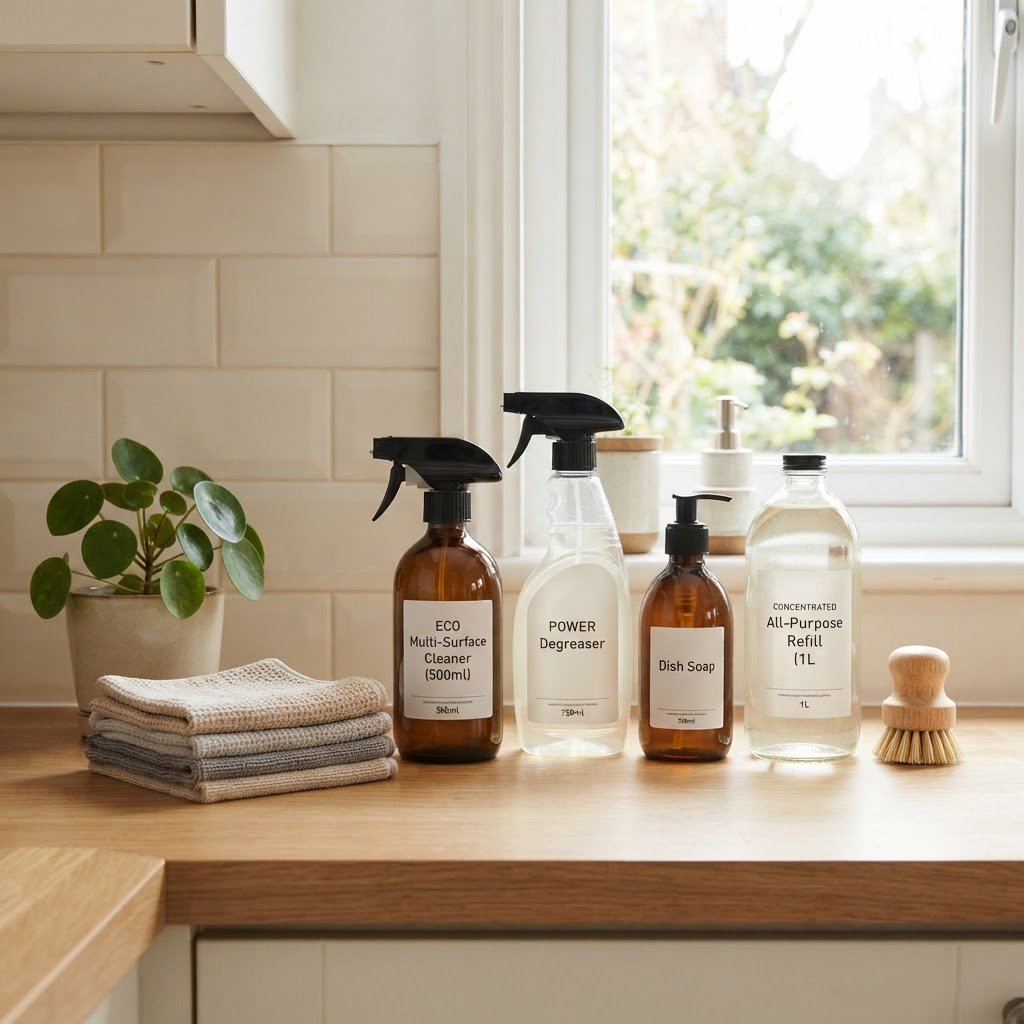
The way a cleaner is bought affects the cost and the environmental impact over time. Concentrates, diluted at home into reusable spray bottles, reduce plastic waste and the cost per use significantly. Refill systems, where the same bottle is topped up rather than replaced, work well for the products used most often. A cleaning kit built around a few concentrated products, diluted to the right strength for each task, is both more economical and simpler to store than a collection of single-use bottles. The approach requires a little planning but pays off in both money and clutter.
Reading the Label and the Safety That Follows
The most important habit when choosing any cleaner is to read the label. The instructions are not legal padding. They tell the user how long the product needs to sit to work, which surfaces it is safe on, and what precautions to take. The instinct to spray and wipe immediately is the reason many cleaners fail to deliver on their promise. A product that needs ten minutes to break down grime does nothing useful if it is wiped away in ten seconds. Ventilation, gloves, and keeping products away from children and pets are not optional cautions but the baseline of safe use.
Building a Kit Rather Than Collecting Products
The most effective approach to choosing cleaners for the home is to build a small, considered kit rather than accumulating products over time. A multisurface cleaner, a glass cleaner, a kitchen degreaser, a bathroom cleaner, a mould treatment, and a floor cleaner suited to the home’s surfaces cover almost every need. From that foundation, the rest depends on the specific home. A few microfibre cloths, a mop suited to the floor, and a set of brushes for the corners complete the kit. The right cleaner is not the one with the boldest marketing but the one that matches the surface, removes the soil, and protects what is beneath it. That understanding, applied consistently, is what keeps a home genuinely clean over time.
Focus Keyword: choosing the right cleaner for your home
Meta Description: A practical guide to choosing the right cleaner for every surface in your home, from glass and kitchens to bathrooms, floors, and delicate materials.
SEO Title: How to Choose the Right Cleaner for Your Home | The Listening Market




