
A perspective piece from The Listening Market
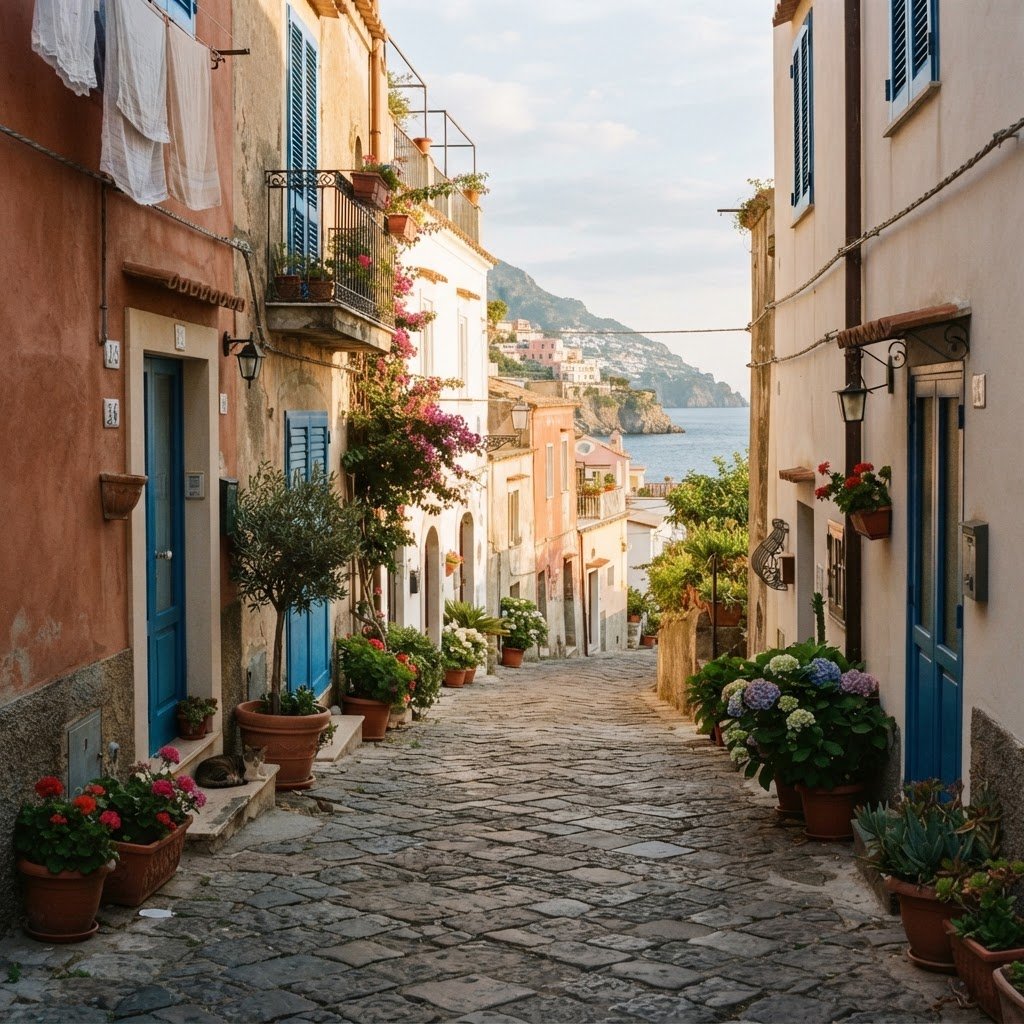
In the heart of almost every historic city in the world, there exists a curious phenomenon. Thousands of travelers stand shoulder to shoulder in a sun-baked plaza, their cameras trained on a famous clock tower or monumental fountain, waiting for the exact vantage point captured in millions of digital photos before them. The air is thick with the murmur of tour guides holding colorful umbrellas aloft, the clatter of overpriced espresso cups, and the persistent hum of smartphone notifications. Yet barely three blocks away, down a narrow alleyway where whitewashed walls curve around a quiet courtyard, a completely different world unfolds in near solitude. There, an elderly carpenter works with hand chisels in an open doorway, a neighborhood bakery turns out hot fig pastries for local school children, and the afternoon light filters through grapevines onto cool stone benches.
This striking contrast lies at the core of modern exploration. In an era dominated by hyper-optimized travel itineraries, algorithmic recommendations, and viral bucket lists, the world has grown simultaneously more accessible and remarkably homogenized. Major landmarks attract unprecedented crowds, transforming iconic cultural sites into high-density transit zones. For those seeking authentic resonance rather than passive consumption, the central challenge of modern journeying is clear: how to step off the beaten track and genuinely discover hidden gems travel narratives so often promise, but seldom explain how to find.
To discover hidden gems, travel must transform from an exercise in accumulation to an art of observation. Uncovering remarkable, uncrowded places is not a matter of secret handshakes or exclusive privilege. It is a mindset—a deliberate recalibration of how one moves through space, interprets geography, and engages with the quiet rhythms of daily life in unfamiliar territories.
The Architecture of the Tourist Trap and the Power of the Perimeter
To find what is hidden, one must first understand how tourist spaces are constructed. Travel infrastructure naturally concentrates visitors along predictable corridors. High-speed rail hubs, cruise terminals, major hotel districts, and landmark attractions form magnet points that draw millions into tightly defined geographic channels. Surrounding these magnets, commercial ecosystems emerge overnight, catering almost exclusively to short-term visitors. Laminated menus printed in six languages, souvenir kiosks selling mass-produced trinkets, and aggressive street touts are the inevitable hallmarks of these high-density zones.
Geographers and urban planners often refer to the concept of the spatial boundary or the “five-minute radius.” The vast majority of casual sightseers rarely stray more than three hundred meters from a primary attraction or a tour bus drop-off point. This creates a remarkably sharp gradient between the crowded spectacle and authentic neighborhood life. Crossing a single major avenue, stepping behind a cathedral rather than lingering in front of its façade, or ascending a steep stairwell that detours away from the waterfront instantly shifts the atmosphere.
The first rule of uncovering understated wonders is simple: break the perimeter. When arriving at any famous landmark, resist the urge to immediately join the central queue. Instead, pick a direction at random—preferably perpendicular to the main thoroughfare—and walk continuously for seven minutes without looking at a map. Within three blocks, the souvenir shops give way to ironmongers, residential apartment balconies, independent wine bars, and quiet public squares where children play football against medieval stone walls. The transition is often so immediate it feels almost miraculous, yet it is merely the logical result of how human movement bottlenecks in urban environments.
Deciphering the Rhythms of Local Life
Travelers who consistently discover hidden gems travel with a heightened awareness of time and community routine. Cities and villages are living organisms with distinct temporal pulses. When one aligns their footsteps with the everyday habits of residents rather than the schedules of tour operators, extraordinary experiences open up naturally.
Morning is perhaps the most revealing window of all. At seven in the morning, while most tourists are asleep in hotel rooms or waiting at continental breakfast buffets, historic districts belong entirely to the people who inhabit them. Street sweepers wash down stone pavements, delivery trucks unload fresh crates of bitter greens and morning catch at wholesale markets, and neighborhood espresso bars buzz with lively conversation. Standing at a zinc counter sipping a morning coffee alongside postal workers and municipal clerks yields a far richer sense of place than any museum audio guide can provide.
Food culture offers another brilliant compass for navigating away from tourist traps. Restaurants designed for visitors thrive on convenience, high turnover, and familiar menu items. Conversely, dining establishments that cater to locals rely on repeat custom, seasonal ingredients, and neighborhood loyalty. Recognizing the difference requires looking for specific, subtle markers:
Handwritten daily menus posted in the local language, often changing based on what was fresh at the market that morning. A dining room filled with multi-generational families or local workers taking their midday break. The absence of staff outside trying to lure passersby indoors with promises of English menus or free welcome drinks. A kitchen that operates on traditional dining hours—closing between afternoon service and late dinner—rather than staying open continuously for jet-lagged sightseers.
By prioritizing regional specialties over international crowd-pleasers, travelers support small culinary stewards while experiencing the true flavors of a culture. A tiny, three-table trattoria tucked inside a residential alleyway may not feature on glossy international blogs, but the hand-rolled pasta served there carries a depth of tradition that no tourist-district restaurant can replicate.
Leveraging Digital Silence and Micro-Geographies
In the digital age, the tools meant to aid travel often end up stifling spontaneity. Search engines and travel review platforms rely on popularity algorithms. The most reviewed places receive more visitors, generating more reviews, and cementing their status at the top of digital rankings. This feedback loop ensures that millions of people are guided toward the exact same handful of establishments in every major city on Earth.
To break free from this digital echo chamber, one must learn to manipulate digital tools in unconventional ways. Rather than searching in English for “best secret spots in Seville” or “hidden viewpoints in Kyoto”—queries that invariably lead to heavily visited places—smart travelers search using the native language of the destination. Translating terms like “public garden,” “artisan workshop,” “community library,” “scenic overlook,” or “historic bakery” into Spanish, Japanese, Italian, or French yields search results designed for residents rather than tourists.
Satellite imagery provides another invaluable blueprint for geographic discovery. Switching a mapping app from standard street view to high-resolution satellite imagery reveals hidden micro-geographies that standard maps obscure. One might spot a secluded cliffside path leading down to a turquoise cove, a hidden rooftop garden tucked behind a monastery, or a sprawling forested park on the edge of a working-class neighborhood. Topographical contours often hide breathtaking vistas that have escaped commercial development simply because they require a twenty-minute uphill hike rather than a cable car ride.
Public transportation systems, too, serve as gateways to unexpected discoveries. Instead of relying exclusively on taxi services or hop-on-hop-off tourist buses, riding local commuter trains, suburban tram lines, or public river ferries to their outer terminals unlocks unexplored corners of a region. Suburban market towns, coastal fishing villages, and regional university districts lie just thirty minutes beyond major city centers, offering authentic encounters, historic architecture, and peaceful streets at a fraction of the cost and crowd density.
The Art of Flânerie and Purposeful Wandering
In nineteenth-century Paris, the concept of the flâneur emerged—a passionate spectator, an aimless stroller who navigated city streets without a fixed destination, observing the subtle choreography of urban life. In contemporary travel, where every hour is often micro-scheduled into tickets, reservations, and transfer times, cultivating the spirit of the flâneur is nothing short of revolutionary.
Purposeful wandering requires letting go of the anxiety of efficiency. Travel culture often equates value with the sheer quantity of sights checked off a list. Yet the most enduring memories rarely stem from standing in a two-hour queue to view a famous painting for thirty seconds over a crowd of uplifted tablet screens. They arise from the quiet, unscripted hours: stumbling upon a baroque chapel where an organist is practicing in the late afternoon heat, discovering an antiquarian bookshop where the owner speaks passionately about rare maps, or sitting on a seawall watching fishermen mend nets as dusk settles over the harbor.
To practice purposeful wandering, dedicate entire half-days to unscripted exploration. Choose a neighborhood based solely on an intriguing architectural detail, a historic name, or a patch of green space on a map. Allow sensory cues to guide the route. Follow the tempting aroma of roasting coffee, the rhythmic clatter of an artisan weaver’s loom through a ground-floor window, or the echo of classical guitar music drifting from an old cloister. If a cobbled path looks intriguing, take it. If a stone staircase winds upward into an ancient neighborhood, climb it without knowing what sits at the top.
Getting momentarily lost should not be viewed as a logistical failure, but as a primary objective. It is precisely in those moments when familiar landmarks fade from view that true discovery begins.
Building Genuine Connections and Respectful Engagement
The desire to discover hidden gems travel enthusiasts harbor is fundamentally about connection—a yearning to touch the authentic pulse of a place and understand its human story. However, uncovering lesser-known places carries a subtle responsibility. Unvisited neighborhoods and delicate ecosystems are fragile, and thoughtful travelers must navigate them with humility and care.
Building meaningful connections with locals starts with simple, respectful curiosity. Rather than treating residents as props in a personal travel photo album, engage with them as knowledgeable hosts. Asking a neighborhood grocer, a market vendor, or a local librarian for a personal recommendation—not for the “top attraction,” but for their favorite park to read a book or the dish their family eats on feast days—opens doors to genuine hospitality. Learning even a few polite phrases in the local language demonstrates respect and breaks down cultural barriers far more effectively than fluent English ever could.
Furthermore, supporting local micro-economies is essential to preserving the character of quiet neighborhoods. Spending money at family-owned bakeries, buying crafts directly from independent artisans, and frequenting neighborhood taverns ensures that tourism benefits the communities being visited rather than distant corporate conglomerates. Tread lightly, respect local privacy in residential areas, and leave quiet places as peaceful as they were found.
The Rewards of a Quieter Journey
When travelers step away from the relentless pressure of guidebook highlights and viral photo spots, something remarkable happens to the nature of travel itself. The sense of urgency dissolves, replaced by a deep, immersive presence. Travel ceases to be a performance aimed at validating one’s presence at famous locations and becomes an intimate dialogue between the traveler and the world.
The true treasures of the world are rarely enclosed behind velvet ropes or advertised on highway billboards. They are tucked away in quiet mountain valleys where old traditions persist uninterrupted, in coastal tavernas where the daily menu depends entirely on the morning wind, and in urban side streets where history lives quietly in everyday routines. By embracing curiosity, stepping beyond the five-minute radius, and learning to listen to the subtle cues of geography and community, any journey can yield unforgettable discoveries that linger in the memory long after the return home.