
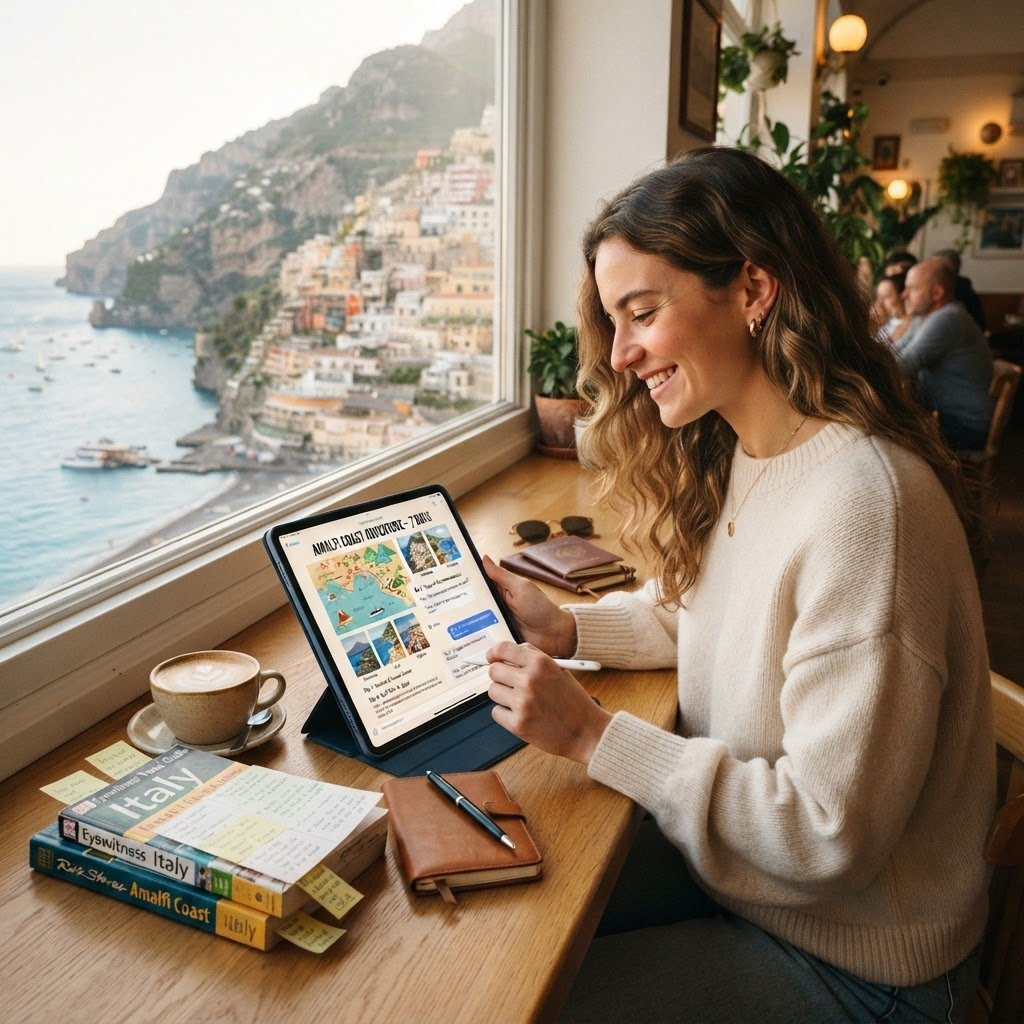
A perspective piece from The Listening Market
Planning a holiday used to be a project. It meant evenings spent scrolling through reviews, comparing prices across half a dozen booking sites, drafting itineraries in spreadsheets, and agonising over whether the hotel with the nice pool was worth the extra cost compared to the apartment that was closer to the city centre. It was not unpleasant exactly, but it was work, and for many people, the anticipation was mixed with a low-grade anxiety about making the wrong choice. The holiday had not even started, and it was already exhausting.
AI has changed this process in ways that are both obvious and subtle. The most visible change is in the planning itself. Where once a traveller had to piece together information from dozens of sources, AI-powered platforms can now synthesise preferences, budget, timing, and even past travel history into coherent recommendations within seconds. The experience is closer to talking to a knowledgeable friend who has been everywhere than to using a search engine. Describe what kind of trip sounds appealing, mention a few constraints, and the options appear, already filtered and ranked.
This is not just convenience. It is a fundamental shift in who gets to plan well. For people who lacked the time or confidence to research extensively, the barrier has dropped dramatically. A family that once defaulted to the same resort every year because planning something different felt overwhelming can now explore alternatives in an evening. A solo traveller who was hesitant about navigating an unfamiliar country can build an itinerary that accounts for language, transport, and safety considerations before booking a single thing. The tool does not replace judgement. It removes the friction that kept judgement from being exercised.
The personalisation goes deeper than destination recommendations. AI can now build day-by-day itineraries that account for opening hours, travel time between locations, seasonal weather patterns, and even the energy levels implied by the pace of the plan. Someone who wants a slow morning followed by an active afternoon can get a schedule that reflects that preference without spending an hour cross-referencing maps and reviews. The itineraries are not perfect, and experienced travellers still adjust them, but the starting point is so much further along that the adjustments are refinements rather than rebuilds.
Booking itself has become smoother. AI-driven platforms can track price patterns and suggest optimal booking windows, alerting travellers when fares drop or when holding off a few days is likely to save money. The guesswork has not been eliminated, but it has been informed, and for people who used to worry that they were overpaying because they booked at the wrong time, that reassurance has real value. Some platforms now handle the booking itself, executing reservations based on parameters set by the traveller, which reduces the mental load of managing multiple confirmation emails and booking references.
Once the holiday begins, the role of AI shifts from planning to supporting. Real-time translation has reached a point where meaningful conversations across language barriers are genuinely possible. Menus can be scanned and translated instantly. Directions can be given in a familiar accent. Questions that once required a phrasebook and a lot of pointing can now be asked and answered naturally. This has opened up destinations that previously felt out of reach, and for travellers who wanted to go beyond the tourist trail but were held back by language concerns, the world has become noticeably smaller in the best possible way.
Navigation has improved too. AI-enhanced maps can suggest routes that avoid crowds, identify scenic alternatives, and adapt in real time to conditions on the ground. For road trips, this means less time spent in traffic and more time spent on the roads that are actually worth driving. For city exploration, it means discovering neighbourhoods that guidebooks have not yet reached, and for many travellers, those discoveries are the moments that make a trip memorable.
The social dimension of travel has also been touched by AI. Platforms that match travellers with shared interests, suggest group activities based on individual preferences, and even facilitate introductions at hostels or events have made solo travel feel less solitary. The technology does not create the connection. People do that. But it creates the conditions where connection is more likely, and for travellers who want both independence and community, that balance is easier to strike than it used to be.
There are concerns, of course. The risk of over-reliance on AI recommendations is real. A traveller who follows every suggestion without deviating may end up with a trip that feels curated rather than discovered, efficient rather than surprising. The magic of travel often lies in the unplanned moments, the wrong turn that leads to a perfect café, the closed museum that forces a wander through an unexpected neighbourhood. AI can optimise a trip, but it cannot replicate the serendipity that makes travel transformative, and the best travellers will use the tools as a foundation, not a script.
There is also the question of what happens to local knowledge. If every traveller is guided by the same AI, do the hidden gems stay hidden, or do they become the next overcrowded hotspot? The travel industry has grappled with this for years, and AI does not solve it. If anything, it accelerates it. The responsibility falls on travellers to go beyond the first recommendation, to ask locals, to wander, and to accept that the best experiences are often the ones that were not on any list.
None of these concerns diminish the genuine improvement AI has brought to holiday planning. For most people, travel is a rare and precious use of time and money, and anything that makes it easier to plan, smoother to execute, and more accessible to those who previously felt excluded is a net positive. The tools will continue to evolve, and the travellers who learn to use them well, balancing efficiency with openness, will be the ones who get the most out of their journeys.
The holiday of 2026 starts earlier than it used to. It begins the moment someone describes the trip they want, and the planning that once felt like a chore now feels like the first chapter of the adventure. That may be the most meaningful change of all. Not the technology itself, but the way it has returned the focus to what travel was always supposed to be about. Not the logistics, but the experience. Not the planning, but the being there.




