A perspective piece from The Listening Market.
There is a particular anxiety that haunts small business owners when they hear about AI. It is not fear of replacement, exactly. It is something closer to identity crisis. If a machine can write the product descriptions, answer the customer emails, and predict what to order next week, what exactly is the owner for?
It turns out the answer is everything that matters.
The most successful small businesses in 2026 are not the ones that ignored AI, nor the ones that handed over the keys and walked away. They are the ones that found the sweet spot — using AI to handle the predictable while pouring more of themselves into the unpredictable. The result is not less human. It is more.
The Tasks That Disappeared
Talk to enough small business owners and a pattern emerges. The first thing they automate is always the same: the work nobody started a business to do. Nobody opened a bakery because they loved answering Instagram DMs at midnight. Nobody launched a clothing label because they were passionate about writing product descriptions for a website.
AI took those tasks. It drafted responses to common customer questions. It wrote listing descriptions that actually ranked on search. It generated social media posts in the brand’s voice, scheduled them for optimal times, and tracked which ones performed best. It turned two hours of daily admin into fifteen minutes of review and approval.
The owners did not mourn the loss. They celebrated it.
Customer Service Without the Wait
A bakery in Melbourne installed an AI chatbot on its website. Not the kind that frustrates people with canned responses — the kind that understands a question about dietary restrictions, checks the ingredient list for that day’s batch, and gives a real answer. Customers stopped waiting. The owner stopped losing evenings to email.
The trick was knowing where the bot stopped. Complex questions, upset customers, anything that needed empathy — those went straight to the owner. The bot handled the repeatable. The human handled the meaningful. The combination worked because each part did what it was best at.
This is the model that works. Not AI instead of a person. AI alongside a person, each playing its role.
Smarter Decisions With Better Data
A small clothing retailer used to order stock based on gut feeling and last year’s numbers. This year they started feeding sales data into an AI tool that spotted patterns they had been missing. Wednesday mornings were their biggest sales window. Certain colours moved faster in specific months. One product line was quietly cannibalising another.
The owner still made the final call. But the decisions were sharper, the margins were healthier, and the waste was lower. AI did not replace the owner’s intuition. It sharpened it.
The Human Element That Grew
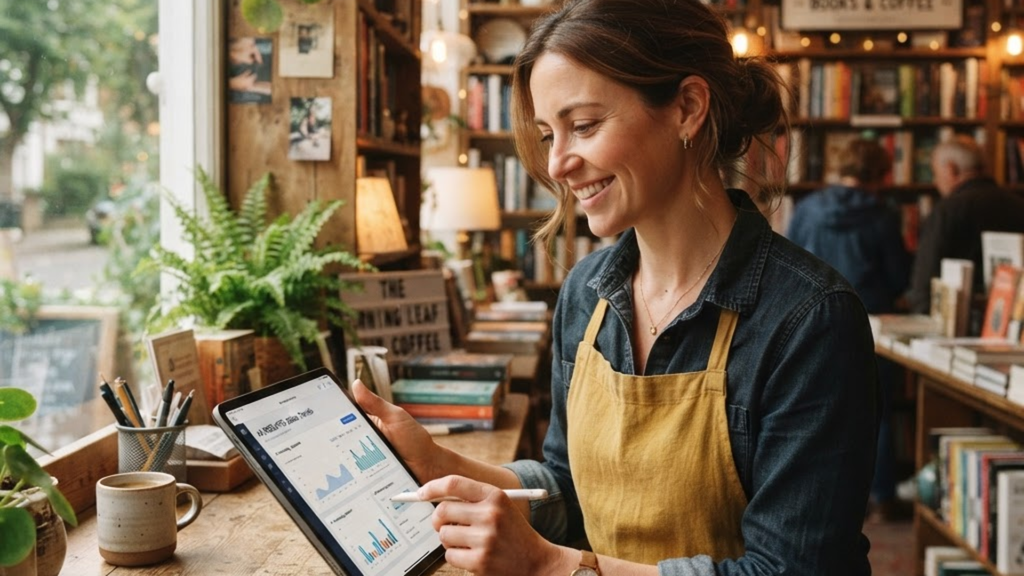
Here is the counterintuitive part. The businesses that adopted AI most aggressively did not become more sterile. They became more personal. With the admin handled, owners spent more time on the floor talking to customers. They hosted events. They improved their products. They showed up.
One café owner described it simply: “The AI does the work I hated. Now I do the work I love, more than I have in years.”
That is not a technology story. That is a freedom story. And it is playing out in small businesses everywhere.
What This Means Going Forward
The gap between businesses that use AI and those that do not is widening. Not because the technology is expensive — most tools cost less than a daily coffee. But because adopting them requires a shift in mindset. Owners have to be willing to experiment, to hand over tasks they have always done themselves, to trust something new with something important.
The businesses that do this well will not look like tech companies. They will look like exactly what they are — bakeries, boutiques, agencies, repair shops — just with less waste and more presence. More time for the work that makes them worth visiting in the first place.
AI is not making small businesses less human. It is giving them back the time to be more human than ever. That might be the most important use of the technology yet.