
A perspective piece from The Listening Market.
There was a time when second-hand shopping carried a quiet stigma. It was the thing you did when you could not afford new. You did not talk about where the jacket came from. You did not post the thrift store find on social media. It was practical, not proud.
That time is over.
In 2026, wearing something second-hand is not just acceptable — it is a statement. It says something about values, about taste, about a refusal to participate in a system that produces too much and values too little. The resale market is no longer a side economy. It is the economy, or at least a growing, undeniable part of it.
The Shift From Frugal to Fashionable
What changed first was perception. Somewhere between the rise of Depop, Vinted, and Instagram resale accounts, wearing second-hand stopped being something to hide and started being something to share. Influencers began posting thrift hauls with the same enthusiasm once reserved for designer unboxings. Vintage became a aesthetic category, not a bargain bin.
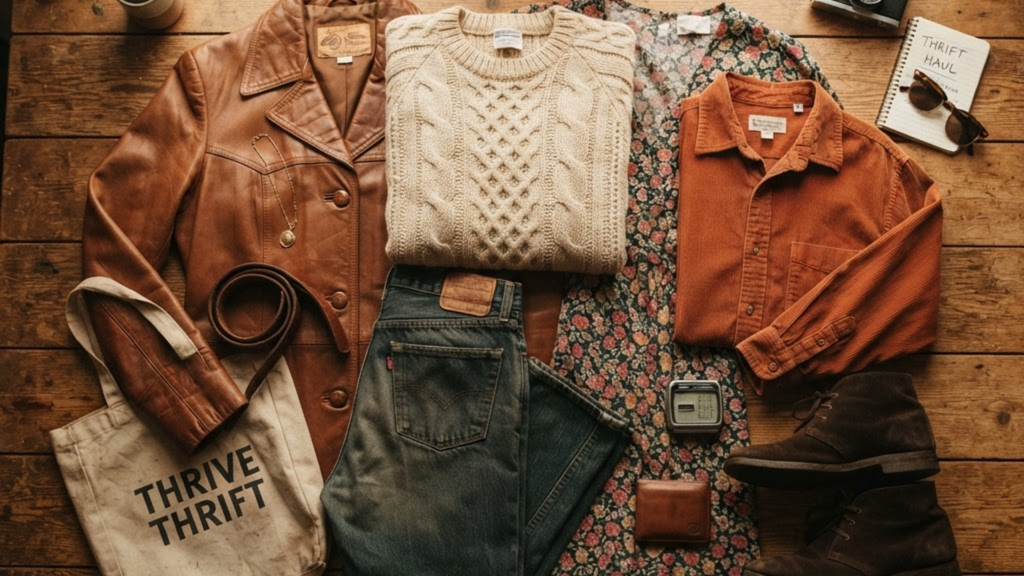
But perception alone does not build a movement. The real driver was quality. People who started second-hand shopping out of curiosity stayed because the clothes were better. A wool jumper from the nineties that still looked new after years of wear. A leather jacket that had already survived a decade and showed no signs of quitting. The contrast with fast fashion — items that pill, shrink, or fall apart after three washes — became impossible to ignore.
Second-hand shopping became mainstream not because people felt guilty about consumption, but because the products were simply better value. The fact that it happened to be better for the planet was a bonus, not the pitch.
The Platforms That Made It Easy
The infrastructure caught up with the culture. Resale platforms that once felt like online garage sales became curated marketplaces. Search got smarter. Filters got more precise. You could search by decade, by brand, by material, by fit. Buying second-hand became as easy as buying new — sometimes easier, because the supply was larger and the prices were lower.
For sellers, the friction also dropped. Apps that let you snap a photo, auto-generate a listing title and description, and price the item based on comparable sales turned a tedious process into a five-minute task. People who never would have bothered selling their old clothes started doing it regularly. The supply of quality second-hand goods exploded.
The Generational Divide That Was Not
It would be easy to frame second-hand shopping as a Gen Z phenomenon, a digital-native rebellion against the excess of previous generations. That would be partly true and mostly wrong. The fastest-growing segment of resale shoppers in 2026 is not young people — it is their parents.
Families dealing with the rising cost of living discovered that second-hand was not a compromise but a strategy. Children’s clothes, barely worn because kids outgrow everything in months, circulated through neighbourhood networks and resale platforms. Furniture for first homes came from estate sales rather than flat-pack warehouses. The economics made sense, and once the barrier of stigma fell, the logic was undeniable.
What Retail Is Learning
Traditional retailers are not ignoring this. Several major brands have launched their own resale programmes, buying back worn items and reselling them through branded marketplaces. The motivation is partly commercial — resale margins can be higher than new — and partly defensive. If customers are going to buy second-hand anyway, brands would rather they do it through the brand’s own channel than a competitor’s platform.
This is where it gets complicated. A brand selling its own second-hand goods is making a quiet admission: the product was good enough to last, and the customer who bought it first is not the only one who should benefit from that durability. Whether that admission changes how things are made, or just how they are resold, remains to be seen.
The Bigger Picture
The mainstreaming of second-hand shopping is not just a retail story. It is a values story. It suggests that a growing number of people are willing to challenge the default assumption that new is always better. That quality matters more than novelty. That the history of an object — the fact that it was worn, loved, and passed on — adds something rather than subtracting it.
This does not mean the end of new clothing. It means the end of the monopoly. For the first time in decades, buying new is one option among many, not the default. And when the default shifts, industries change.
The second-hand market in 2026 is not a niche. It is a mirror. It reflects a culture that is rethinking what it values, one pre-loved jacket at a time.