
A perspective piece from The Listening Market
Before 2020, home was where people went when they were finished with everything else. It was the endpoint of the day, the place you returned to after work, after socialising, after all the activities that constituted a life lived outside its walls. Home was a base, not a centre. It was where people slept, ate breakfast, and kept their belongings, but the actual living — the productive, meaningful, identity-shaping part — happened elsewhere. In offices, in restaurants, in gyms, in the spaces designed for the activities that filled the hours between morning departure and evening return. Then 2020 happened, and the geometry of daily life inverted.
Home became not the endpoint but the centre. It became the office, the gym, the school, the cinema, the restaurant, and the social venue, all at once, for weeks and months that stretched longer than anyone initially expected. This was not a choice. It was a forced experiment in living differently, conducted simultaneously by most of the world’s population, with no opportunity to opt out. Years later, the experiment is over, but the results are still being felt. The concept of home has changed, and there is no sign it is changing back.
The Workspace That Stayed
The most visible change is the home office. Before 2020, working from home was a perk offered by forward-thinking companies to a minority of employees. After 2020, it became a default that has proven remarkably sticky. Many companies have mandated return to office, some more forcefully than others, but the landscape has not reverted to its pre-2020 state. Hybrid arrangements, once rare, are now common. Full-time remote work, once radical, is now a standard option in many industries.
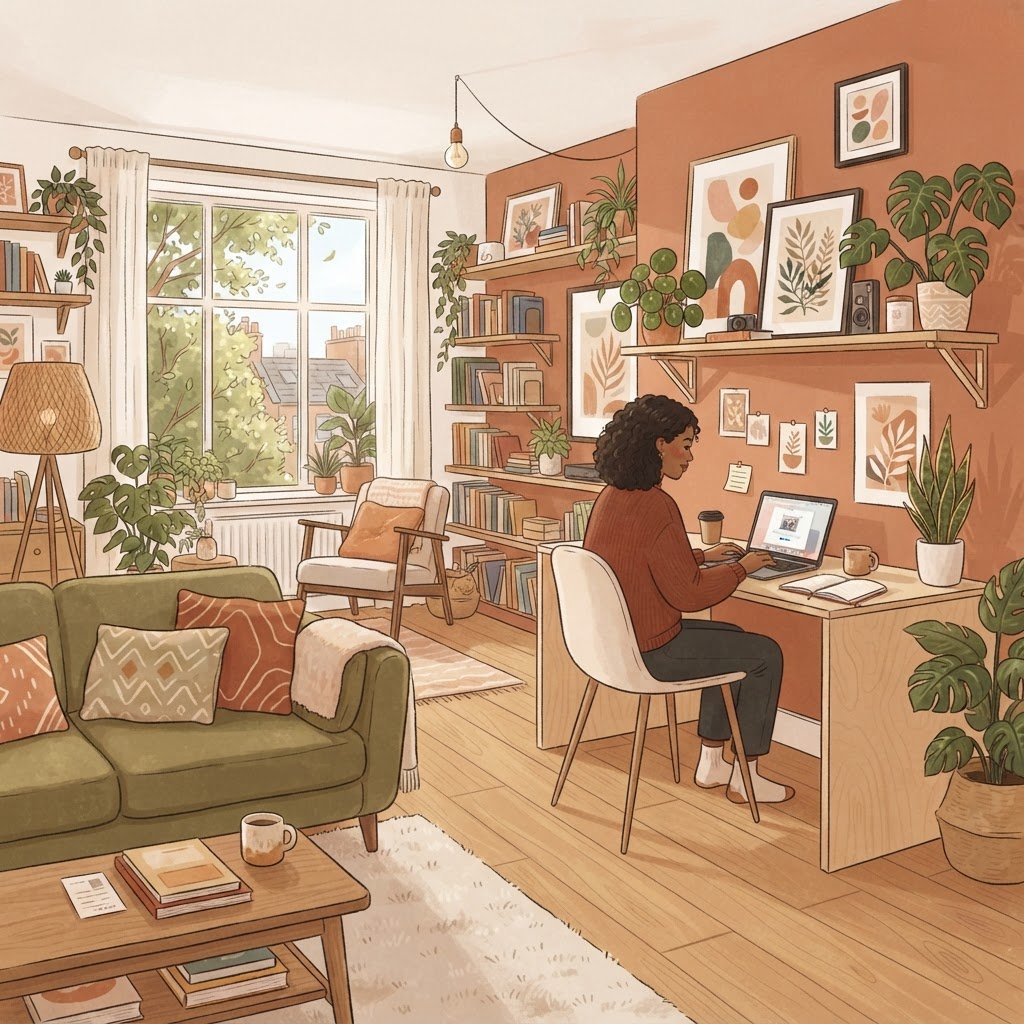
This has changed homes physically. Spare bedrooms have become offices. Dining tables have become desks. Kitchen counters have become standing workstations. The real estate market has reshaped itself around the assumption that people may need a dedicated workspace at home, not just a place to sleep. Homes are being bought, rented, and renovated with work in mind, in a way that would have seemed unnecessary to most people five years ago. The home is no longer just a place to live. It is a place to work, and this dual purpose has altered its meaning.
The Sanctuary Instinct
The forced confinement of 2020 triggered something deeper than a reconfiguration of furniture. It triggered a reassessment of what people want from their homes. When home was the only place available, its shortcomings became impossible to ignore. The uncomfortable chair, the poorly lit corner, the kitchen that was fine for reheating leftovers but inadequate for cooking actual meals, the bedroom that was a place to sleep but not a place to rest — these minor dissatisfactions became major ones when there was nowhere else to go.
The response was a surge in home improvement that has not fully subsided. People invested in their homes not just to increase property value, but to make the spaces they spent their days in actually pleasant to inhabit. Better lighting. More plants. More comfortable furniture. Outdoor spaces that were treated as extensions of the living area rather than neglected patches of grass. The home became an object of care in a way it had not been before, because people were spending enough time in it to care about the details.
This went beyond aesthetics. There was a shift in how people thought about the emotional function of their homes. Home became a sanctuary — not in the sense of a retreat from the world, although it was that too, but in the sense of a space that actively contributed to wellbeing rather than passively housing a person. The quality of the light mattered. The quality of the air mattered. The presence of nature, even a few plants on a windowsill, mattered. These were not luxuries. They were things that people had time to notice and motivation to address, and once noticed and addressed, they became expectations rather than aspirations.
The Re-evaluation of Space
The change in the concept of home has also changed what people want from the space around their homes. The neighbourhood became more important when people were spending more time in it. Local parks, local shops, walkable streets — these were no longer nice-to-haves but essentials, because the local area was the only area available. The assumption that a home was primarily a place to sleep and access to a city centre was what mattered, weakened. People who could work from anywhere started to ask why they were where they were, and whether somewhere else might serve them better.
This has contributed to population shifts that are still playing out. Smaller cities, rural areas, and suburbs have attracted people who no longer need to be physically close to an office. The classic trade-off — career advancement in exchange for urban living — has been partially uncoupled, and while it has not been eliminated, it has been loosened enough to give people choices they did not have before. The concept of home now extends beyond the walls of the dwelling to the community and the landscape around it, because people are spending more time in that community and that landscape.
What Stayed and What Faded
Not every change has been permanent. The home gym, for many people, has given way to a return to actual gyms. The home cinema has not replaced the cinema for those who enjoy going out. The home restaurant has not replaced the restaurant — people are dining out again, and the joy of being served in a space designed for the experience of eating has not been extinguished by the convenience of cooking at home. The home is no longer all things to all people, and the enforced versatility of 2020 has relaxed into a more sustainable balance.
But the residue of the shift remains. People work from home more than they did before. They invest in their homes more than they did before. They think about their homes differently — not as a place to store a life that happens elsewhere, but as a place where a significant portion of that life actually happens. The balance between home and away has shifted, and while the pendulum has swung back from its extreme, it has not returned to where it started. The concept of home has been permanently altered. Home is no longer the endpoint. It is the centre, and everything else orbits around it.