
A perspective piece from The Listening Market
A garden is one of the great pleasures of having a home, until it becomes one of the great burdens. What starts as a weekend project, a few seedlings, a new hedge, a patch of lawn, can quietly transform into a demanding, time-consuming responsibility that eats every spare hour and still looks untidy. The dream of sitting in a beautiful garden gives way to the reality of constantly maintaining one.
The good news is that a garden does not have to be either beautiful or easy. With the right choices, it can be both. Low-maintenance gardening is not about paving everything over or letting nature take over entirely. It is about designing a space that works with the climate, the soil, and the available time, so that the garden enhances life rather than consuming it.
Choose the Right Plants for the Climate
The single most impactful decision in a low-maintenance garden is plant selection. Plants that are suited to the local climate require less water, less feeding, less pest control, and less general fussing. They are already adapted to the conditions, which means they thrive without constant intervention.
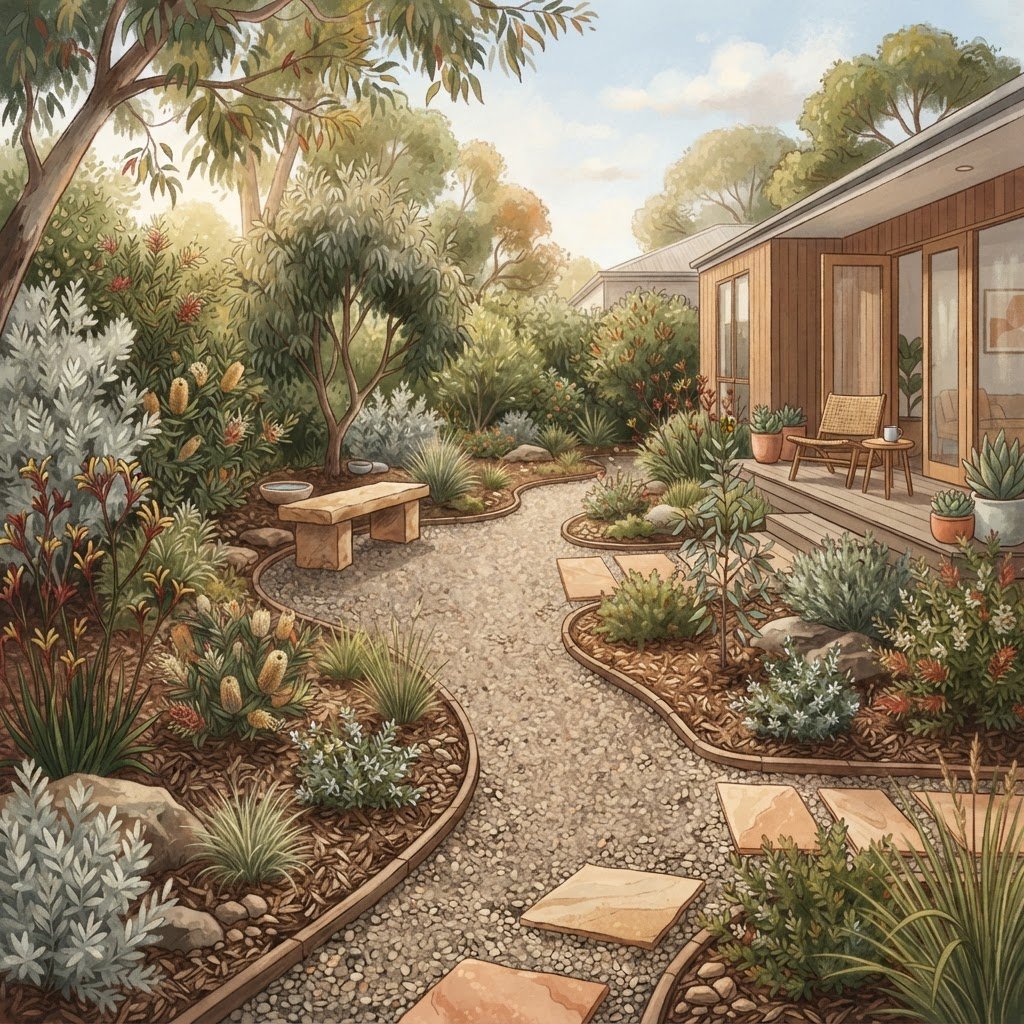
Native plants are an obvious starting point. They have evolved to handle the local rainfall patterns, temperature ranges, and soil types. In Australia, plants like grevilleas, kangaroo paws, and lilly pillies are not just beautiful but genuinely tough. They attract native birds and insects, and once established, they can largely be left to their own devices.
It is also worth being honest about the microclimate of the specific garden. A south-facing courtyard with limited sun is not the place for heat-loving Mediterranean herbs. A windy hilltop is not the place for delicate flowers. Matching plants to the actual conditions of the space, not the conditions wished for, saves years of frustration.
Reduce the Lawn
Lawn is the highest-maintenance element in most gardens. It needs regular mowing, edging, watering during dry periods, feeding to stay green, and weed control to stay tidy. For many households, the lawn is used occasionally but maintained constantly, which is a poor return on the effort invested.
Reducing the lawn does not mean removing it entirely. It means right-sizing it to match actual use. A small area of lawn for children to play on or for a table and chairs may be worth the effort. A large expanse that is walked across but rarely used is a candidate for replacement.
Alternatives include ground covers that do not require mowing, gravel or pebble areas with drought-tolerant plantings, or paved sections that create usable outdoor living space. Each of these options reduces the weekly maintenance load while still creating an attractive, functional garden.
For those who want to keep some lawn, choosing a slower-growing or drought-tolerant variety reduces the frequency of mowing and watering. Artificial turf is an option for some, though it comes with its own considerations around heat and environmental impact. The goal is to match the lawn to the lifestyle, not the other way around.
Mulch Generously and Often
Mulch is the closest thing to a magic trick in the garden. A thick layer of mulch suppresses weeds, retains moisture in the soil, regulates soil temperature, and breaks down over time to feed the soil. It also makes the garden look finished and cared for, even when nothing else has been done.
Organic mulches such as sugar cane, tea tree, or bark are ideal because they improve the soil as they decompose. A layer five to seven centimetres thick is enough to suppress most weeds and retain moisture. Mulch should be topped up once or twice a year as it breaks down.
The time spent mulching is repaid many times over in reduced weeding and watering. A garden that is mulched properly can go significantly longer between waterings, and the weeds that do appear are easy to pull because the soil surface stays loose. For anyone looking to reduce maintenance with a single action, mulching is the place to start.
Install Drip Irrigation
Hand watering a garden is one of those tasks that feels pleasant the first few times and becomes a chore by the third week. It is also inherently inefficient, delivering water unevenly and losing much of it to evaporation. A drip irrigation system solves both problems.
Drip irrigation delivers water directly to the root zone of plants, where it is needed, with minimal waste. Connected to a simple timer, it can water the garden automatically, even when no one is home. This is particularly valuable during hot periods when plants need consistent moisture to survive.
The initial installation takes a few hours and the materials are inexpensive. Once in place, the system reduces watering time to zero and uses significantly less water than hand watering or sprinklers. For a low-maintenance garden, automated watering is not a luxury. It is a fundamental part of the design.
Group Plants by Water Needs
One of the most common mistakes in garden design is mixing plants with different water requirements in the same area. The result is that some plants are overwatered while others are underwatered, and maintaining the area requires constant adjustment and attention.
Hydrozoning, the practice of grouping plants with similar water needs together, solves this problem. Plants that need regular water are grouped in one zone, while drought-tolerant plants are grouped in another. The irrigation system can then deliver the right amount of water to each zone without compromise.
This approach also makes the garden easier to understand. Instead of a patchwork of individual plants with individual needs, the garden becomes a series of zones, each with its own simple care routine. Maintenance becomes a matter of checking zones rather than tending individual plants.
Embrace Perennials Over Annuals
Annuals, the plants that complete their life cycle in a single season, are the most demanding type of plant in a garden. They need to be purchased, planted, watered, fed, deadheaded, and then removed and replaced at the end of the season. They provide a burst of colour but at a high cost in time and money.
Perennials, by contrast, come back year after year. They may die back in winter and re-emerge in spring, or they may stay green all year, but they do not need to be replanted. Once established, perennials require far less attention than annuals and provide lasting structure in the garden.
This does not mean annuals have no place. A few pots of seasonal colour near the entrance or on a patio can provide joy without overwhelming the maintenance budget. But the backbone of a low-maintenance garden should be perennials, chosen for their longevity, their suitability to the climate, and their ability to look good with minimal intervention.
Accept a Little Imperfection
Part of the stress of garden maintenance comes from the expectation that every plant should be perfect, every edge crisp, and every leaf spotless. This is a standard that no garden meets naturally, and pursuing it turns gardening into a battle against entropy.
A low-maintenance garden is one where a few weeds are acceptable, where plants are allowed to grow into their natural shapes, and where the overall impression is one of relaxed abundance rather than manicured control. This is not neglect. It is a different aesthetic, one that values the garden as a living, changing space rather than a display.
The gardens that bring the most joy are often the ones that are slightly wild, where plants have settled into their own rhythms and the space feels alive rather than curated. Letting go of the idea of perfection is not just a maintenance strategy. It is a way of enjoying the garden more while doing less.
Design for the Life Actually Lived
The best low-maintenance garden is one designed around the reality of how the space is used. If the garden is primarily viewed from the kitchen window, the design should prioritise what looks good from that angle. If it is used for weekend barbecues, it should have a functional entertaining area that does not require much upkeep. If it is a place for children to play, it should be safe and durable.
Too many gardens are designed for an idealised version of life, the one where the homeowner spends every weekend pruning and planting. Designing for the life actually lived means a garden that fits into the schedule rather than demanding a schedule of its own.
A garden should be a source of pleasure, not a second job. With thoughtful plant choices, smart irrigation, generous mulching, and a willingness to let go of perfection, any garden can become easier to maintain without losing the qualities that made it worth having in the first place. The goal is not to do nothing. The goal is to do less, enjoy more, and let the garden be what it was always meant to be, a place to breathe.