A perspective piece from The Listening Market
It usually starts small. A weekend spent baking bread that turns out better than expected. A friend asking where those handmade candles came from. A stranger on Instagram messaging to ask if that ceramic planter is for sale. For most people, a hobby stays a hobby, a private pleasure that fills evenings and weekends with something rewarding. But for a growing number of people, that moment of outside interest becomes the spark for something bigger. The question shifts from “Can I make this?” to “Could I sell this?” and suddenly the line between passion project and small business begins to blur.
The transition from hobby to business is not as dramatic as it might sound. It does not require quitting a job, renting a shopfront, or filing for incorporation on day one. What it requires is a shift in mindset, a willingness to treat the craft as something with commercial value, and a handful of practical steps that turn a pleasant pastime into a revenue-generating enterprise. The good news is that the infrastructure for doing this has never been more accessible.
The first thing to understand is that a hobby becomes a business the moment there is intent to make a profit. Tax offices take a relatively clear stance on this. If you are selling products or services with the goal of earning money, even small amounts, you are running a business in the eyes of the law. That means registering a business name, getting an Australian Business Number, and keeping records of income and expenses. These steps sound bureaucratic, but they are straightforward, and most can be completed online in under an hour.
The more interesting question is whether a hobby should become a business. Not every passion translates into a viable enterprise. The person who loves knitting scarves for friends may find that producing them at scale strips the joy from the process. The amateur photographer who enjoys shooting landscapes might discover that shooting weddings for paying clients is an entirely different kind of work. Before taking the leap, it helps to ask a few honest questions. Is there genuine demand beyond friends and family? Can the product or service be priced in a way that covers costs and leaves a profit margin? Is there willingness to spend time on the unglamorous side of business, the admin, the marketing, the customer service, alongside the craft itself?
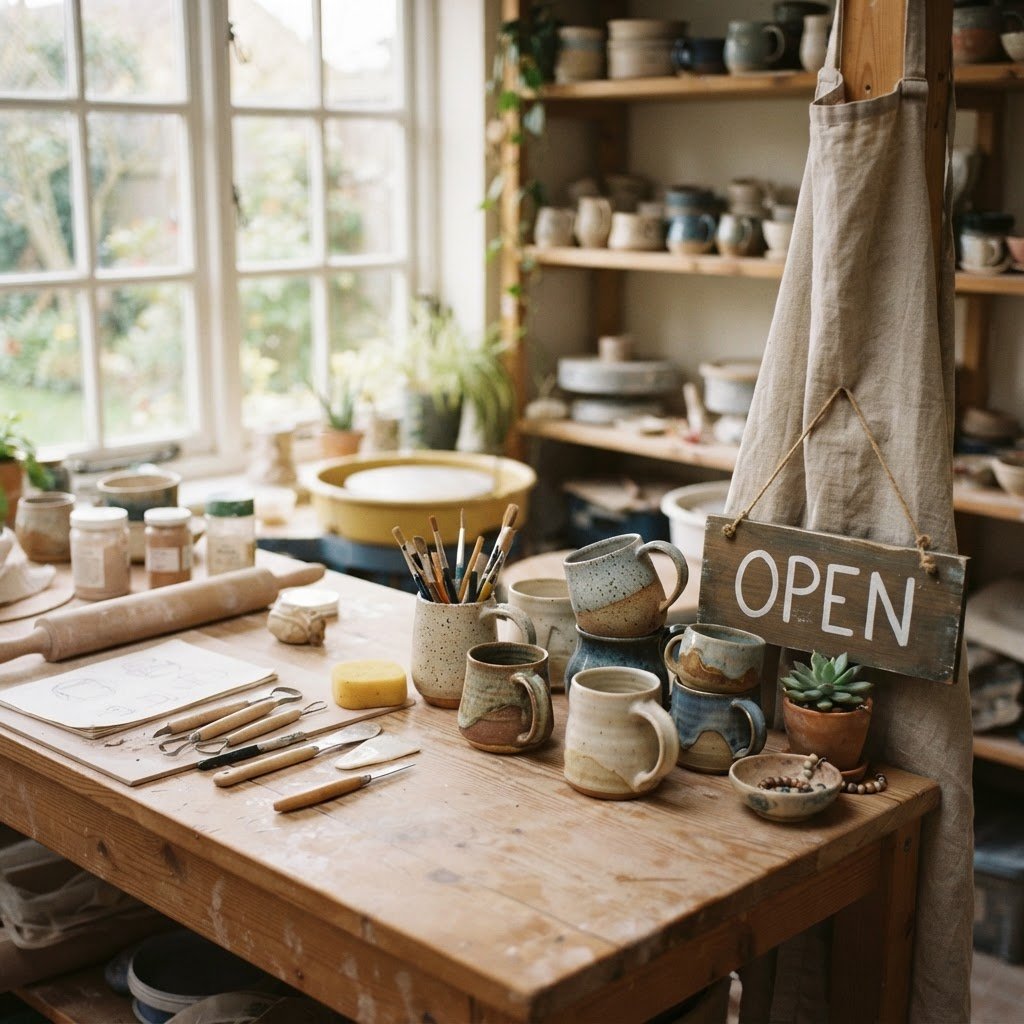
If the answer to those questions is yes, the next step is validation. The most common mistake new hobby-to-business founders make is investing heavily before confirming that people will actually pay. A better approach is to start with a minimum viable product, the simplest version of the offering that someone could buy. A single batch of preserves. One style of hand-thrown mug. A basic website with three products. Put it in front of real customers, not friends, and see what happens. The market will tell you quickly whether the idea has legs.
Pricing is where many hobbyists stumble. The temptation is to price low, partly out of uncertainty about the product’s worth and partly out of fear that no one will buy at a higher price. This almost always backfires. Underpricing not only erodes profit margins but also signals to customers that the product is amateur. A better approach is to calculate the true cost of materials, add an hourly rate for labour that reflects the skill involved, and include a margin for overheads. The resulting price may feel surprisingly high, but if the product is good, the right customers will pay it.
The internet has dramatically lowered the barrier to finding those customers. Marketplaces like Etsy provide instant access to a global audience of buyers actively looking for handmade and unique goods. Social media platforms, particularly Instagram and TikTok, function as free shop windows where product photography and short videos can build an audience without a marketing budget. A local market stall remains one of the best ways to test products in person, gather direct feedback, and build a customer base in the community. Most successful hobby-turned-business ventures use a combination of all three.
Time management becomes critical once the business starts generating real orders. The craft that once filled leisure hours now competes with production deadlines, packaging runs, and customer enquiries. Many hobbyists underestimate how much time the non-crafting side of the business will consume. Setting clear boundaries around work time, production time, and personal time helps prevent the business from swallowing the life that made it possible in the first place. The goal is to build something sustainable, not to trade one form of burnout for another.
Scaling a hobby business does not necessarily mean growing it bigger. Some of the most successful small craft businesses remain deliberately small, producing limited quantities and maintaining a sense of scarcity and exclusivity. Others grow by adding product lines, hiring help for production or admin, or wholesaling to retailers. There is no single right path. The decision should be guided by what the founder wants from the business, not by an assumption that bigger is always better.
Funding is rarely a major barrier at the early stage. Most hobby businesses are bootstrapped, meaning they grow using revenue from early sales rather than outside investment. The initial costs are typically modest: materials, packaging, a basic website, and perhaps a market stall fee. Reinvesting early profits into better equipment or marketing is usually sufficient to fuel gradual growth. Bank loans and grants are available for small businesses, but they are rarely necessary at the hobby-to-business transition point.
One of the most overlooked aspects of the journey is the emotional shift. A hobby is a refuge, a space where the rules are self-imposed and the outcomes are measured in satisfaction rather than sales. Turning it into a business changes that relationship. The craft becomes work, and work carries obligations, deadlines, and the pressure of meeting customer expectations. Some people find that this change enhances their relationship with the craft, giving it purpose and direction. Others find that it diminishes the joy. Both responses are valid, and it is worth being honest about which outcome is more likely before committing.
The stories of people who have made this transition successfully tend to share common threads. They started small and tested before scaling. They priced their work to reflect its true value. They were patient, allowing the business to grow organically rather than forcing it. And they maintained a genuine love for the craft, even as the business grew around it. The ceramicist who still gets excited about a new glaze. The baker who still eats the first slice of every loaf with the same satisfaction. The woodworker who still runs a hand over a finished piece and feels a quiet pride.
The economic context has made this kind of transition more viable than ever. The rise of the creator economy, the normalisation of side hustles, and the growing consumer appetite for handmade, local, and authentic products have created a market that rewards small-scale craftsmanship in a way that did not exist a decade ago. People are willing to pay more for something made by a person they can identify, a story they can connect with, and a product that carries the mark of individual effort rather than factory uniformity.
Turning a hobby into a small business is not a magic formula for wealth or freedom. It is work, sometimes hard and often unglamorous. But it is also one of the most accessible paths to building something of one’s own, something that started as a private pleasure and grew into a livelihood. For anyone sitting on a craft they love, wondering whether it could be more, the answer is worth exploring. The worst that can happen is a few sales and a better understanding of the market. The best is a life shaped around something you would be doing anyway.