
A perspective piece from The Listening Market
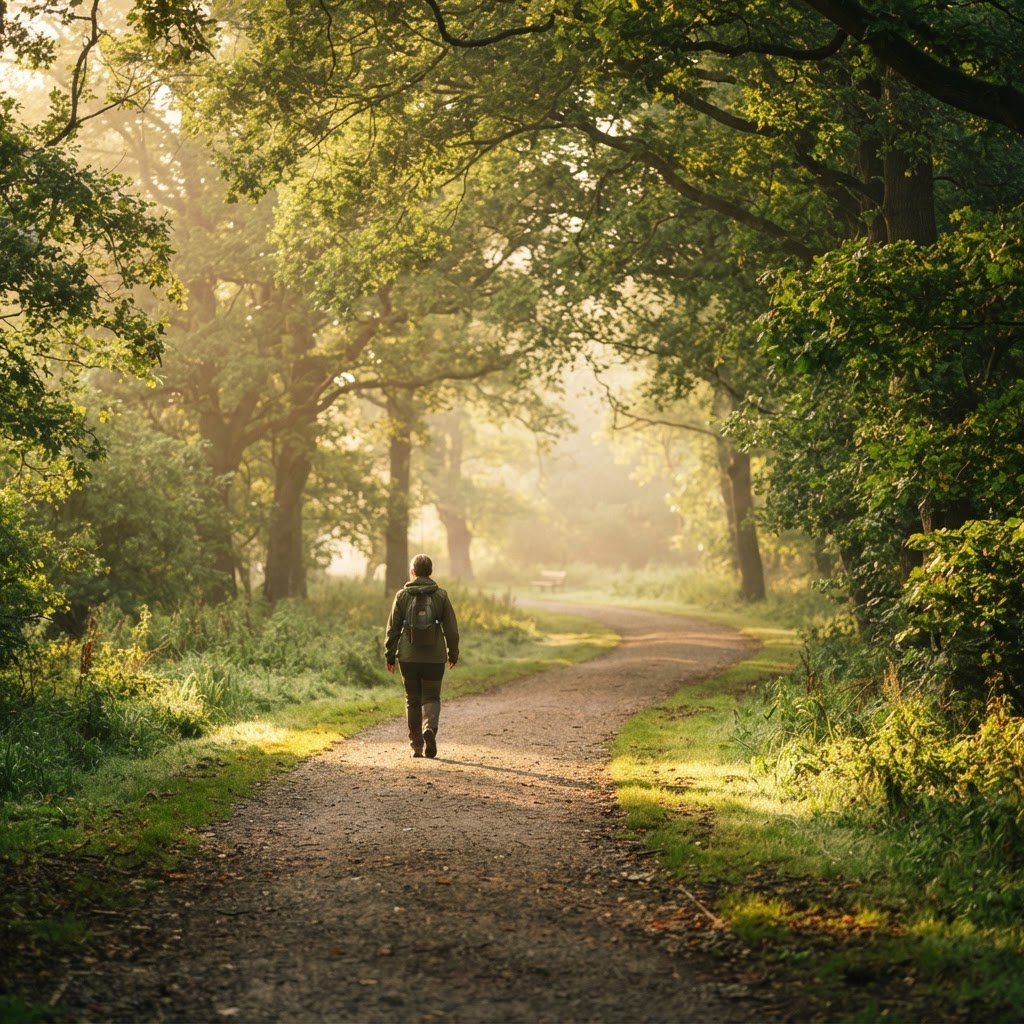
Something strange has been happening on city streets, suburban footpaths, and country lanes. People are walking. Not to get somewhere specific, not because their car broke down, and not because a fitness app told them to. They are walking because it feels good, because it clears the head, and because somewhere along the way, a simple stroll became one of the most valued rituals of the day.
The comeback of walking has been quiet but unmistakable. Social media feeds that once overflowed with high-intensity workout videos and elaborate gym routines now feature slow, sunlit walks through neighbourhoods. Trackers that used to celebrate marathon distances now buzz with satisfaction at a modest ten thousand steps. And the walking boot, a footwear style that spent years in the wilderness of uncool, has become one of the fastest-selling shoe categories in the country.
Part of the shift is physical. After years of sedentary work, screen fatigue, and the creeping realisation that sitting all day is slowly taking a toll, walking offers the lowest-friction movement available. No membership required, no equipment needed, no skill to master. Lace up a pair of shoes, step outside, and the body begins doing what it was designed to do. Studies have long shown that brisk walking reduces the risk of cardiovascular disease, helps regulate blood sugar, and supports joint health. But the latest wave of enthusiasm seems less about clinical outcomes and more about how walking makes people feel in the moment.
There is a cognitive dimension that often gets overlooked. Walking changes the way the brain works, and not in a vague, spiritual sense. Research from Stanford University found that creative thinking improves measurably during walking, with output increasing by an average of sixty percent compared to sitting. The rhythmic, low-attention demand of putting one foot in front of the other appears to free up mental resources for associative thinking, the kind that connects dots in unexpected ways. For anyone who has ever solved a problem mid-stroll or suddenly remembered something important on the way to the shops, the science simply confirms what the body already knew.
The mental health angle has become impossible to ignore. Walking outdoors, particularly in green spaces, has been shown to reduce activity in the subgenual prefrontal cortex, a brain region associated with rumination and negative thought loops. In practical terms, a walk in the park can literally interrupt the spiral of anxious overthinking. Therapists in growing numbers are conducting walk-and-talk sessions, trading the couch for the footpath. The combination of movement, fresh air, and the gentle sensory input of the outdoors creates conditions that feel restorative in a way that indoor environments struggle to match.
The social layer has evolved too. Walking has become a preferred way to spend time with others without the pressure of a seated conversation. Walking meetings have moved from Silicon Valley quirk to mainstream habit. Friends catch up on evening strolls instead of over coffee. First dates happen on park loops rather than across restaurant tables. The side-by-side dynamic of walking, as opposed to the face-to-face intensity of sitting across from someone, lowers the stakes and makes conversation flow more easily. There is a reason the phrase “a walking companion” has always carried a particular warmth.
Technology has played a curious role in the revival. For all the talk of digital detox, the most popular walking companions remain smartphones. Podcasts, audiobooks, and music have transformed the solo walk from a potentially tedious chore into an immersive experience. A thirty-minute walk becomes a chapter of a book, an episode of a show, or a deep dive into a topic of interest. The walking pace and the listening pace pair naturally, and the combination has turned many reluctant exercisers into daily walkers without ever framing it as exercise.
The trend has also been shaped by infrastructure. Cities that invested in wider footpaths, pedestrianised streets, and urban trail networks during the pandemic are now reaping the rewards. Where walking feels safe, pleasant, and purposeful, people walk more. Where the environment is hostile, dominated by traffic and noise, they do not. The cities seeing the biggest uptick in walking are not necessarily the ones with the most scenic routes but the ones that made the simple decision to prioritise people on foot over cars in queues.
The fashion industry noticed before the fitness industry did. The explosion of the gorpcore aesthetic, with its functional outdoor wear crossing into everyday street style, tracked perfectly with the walking boom. Brands that sold hiking boots and technical jackets to mountaineers suddenly found themselves selling to accountants and teachers who wanted to look the part on their morning commute. The walking shoe became a lifestyle object, not just a performance one, and the line between outdoor gear and everyday fashion dissolved almost entirely.
There is something deeper going on beneath the surface trends. Walking is one of the few activities that resists optimisation. It cannot really be hacked, gamified beyond a step count, or compressed into a more efficient format. It takes the time it takes. In a culture that has spent two decades finding ways to do everything faster, the deliberate slowness of walking has become a form of quiet rebellion. It is a small, daily act of choosing presence over productivity, or at least finding a way to let them coexist.
The generational picture is interesting. Younger adults, often painted as chronically indoor and screen-bound, have been among the most enthusiastic adopters. The “hot girl walk” phenomenon on social media reframed walking as a confidence practice rather than a fitness chore. The messaging was simple: walk outside, listen to something engaging, think about goals, and feel better. It was not about burning calories or hitting a target. It was about reclaiming a small pocket of the day for oneself, and the framing resonated with a demographic that had been told to optimise every waking hour.
For older adults, walking has emerged as a practical longevity strategy. The research is strikingly consistent on this point. Older adults who walk regularly show better cognitive function, greater mobility, and lower rates of depression than their sedentary peers. Walking speed has even been proposed as a rough indicator of overall health, with slower speeds correlating with higher mortality risk. The prescription is almost embarrassingly modest: walk regularly, walk briskly when possible, and do it for life.
The economic ripple effects are real. Walking tourism has surged, with long-distance trails reporting record usage. Local businesses along popular walking routes have seen foot traffic translate into real revenue. The pub at the halfway point of a circular walk is no longer just a convenient stop but a destination that shapes the route itself. Entire trip itineraries are now built around walking, from coastal path holidays to urban walking tours that promise a slower, more intimate experience of a city than a bus tour ever could.
Even the workplace is adapting. Some companies have begun offering walking breaks as a formal part of the workday, recognising that the productivity lost in time away from the desk is more than offset by the clarity and energy gained. The stereotype of the executive pacing while on a phone call turns out to have been onto something. Movement and thinking are not separate activities for the human brain. They are deeply intertwined, and separating them into a desk and a gym misses the point entirely.
None of this is to say that walking is a cure-all. It will not replace structured exercise for those who need it, and it will not resolve the structural issues that make many neighbourhoods unwalkable. But its return to the centre of daily life reflects something important about the current moment. People are looking for practices that are sustainable, enjoyable, and grounded in the real world rather than the digital one. Walking checks all those boxes without trying.
The simplest explanation for the walking comeback may be the most honest one. Walking feels like something humans were always supposed to do. It is the original form of transport, the oldest form of exercise, and the most basic way of engaging with the world outside. Every other trend in fitness and wellness eventually circles back to the question of how to move the body in a way that is natural, repeatable, and rewarding. Walking was the answer all along. It just took a while to remember.




