A perspective piece from The Listening Market
The word calm gets thrown around so casually it risks losing its meaning. It’s printed on candles, stitched into throw pillows, printed across wellness products in fonts that are supposed to look soothing. But the calm that people are chasing in 2026 isn’t decorative. It’s functional. It’s the difference between ending a day feeling like you’ve been dragged through it and ending a day feeling like you moved through it on your own terms.
The people finding real calm aren’t the ones buying more things. They’re the ones building different routines — small, deliberate adjustments to the architecture of their days that make the difference between surviving and actually living.
The Morning That Belongs to You
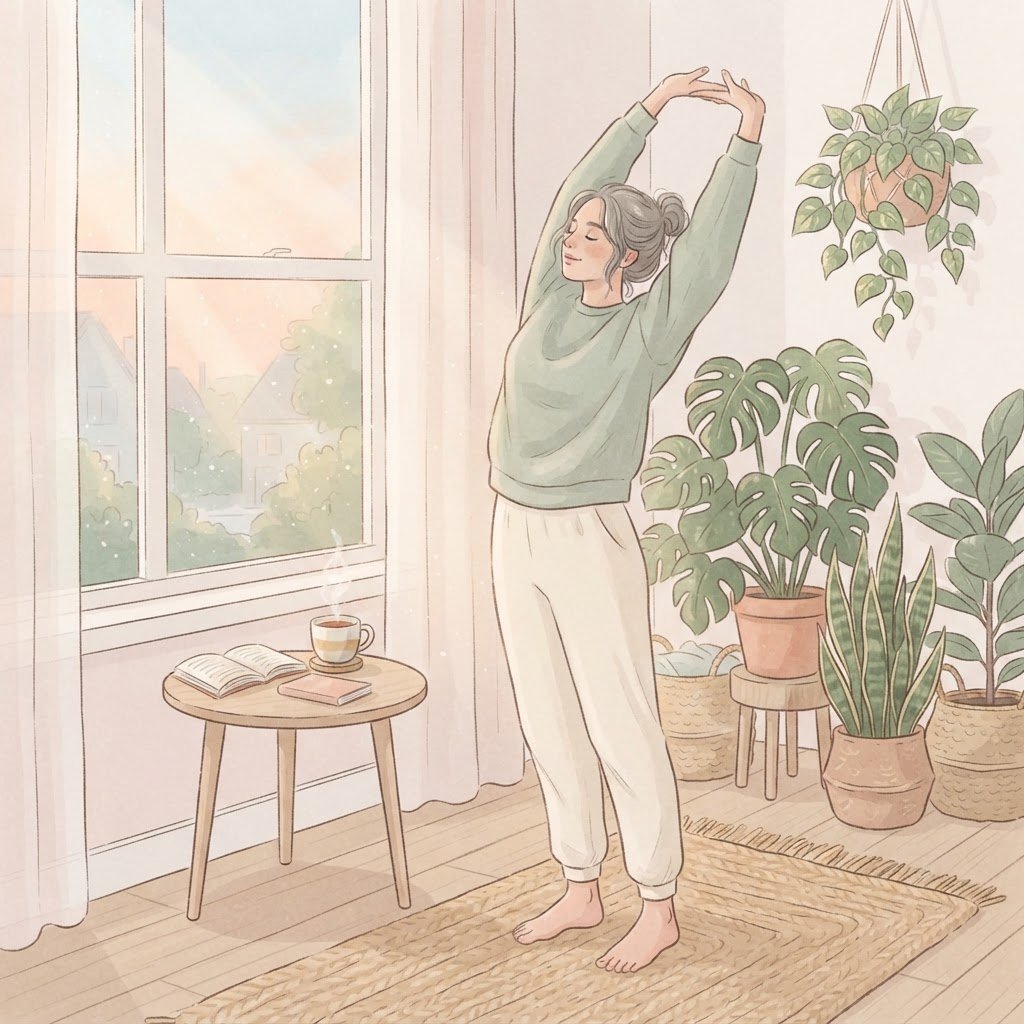
The most common shift people describe is reclaiming the first thirty minutes of the day. Not for meditation or journaling or cold plunges — just for themselves. Before the phone. Before the news. Before the inbox opens like a door to a room full of obligations.
Emma, a teacher in Adelaide, describes her routine simply. She wakes up, makes tea, and sits by the window. Sometimes she reads. Sometimes she just watches the street wake up. The phone stays in the bedroom. She says it’s the single change that made her feel like a different person — not transformed, just returned to herself.
According to the American Psychological Association, morning routines that include even brief periods of quiet reflection can significantly reduce cortisol levels and set a calmer neurological baseline for the entire day. The science supports what people are discovering through trial and error.
The Walk That Isn’t Exercise
Another pattern: the walk. Not the power walk, not the tracked-on-an-app walk, not the cardio walk. Just a walk. Outside. Without a destination. Without earbuds. Without a step count to hit.
People describe these walks the way they used to describe going to the gym — as non-negotiable. Twenty minutes, usually after lunch or before dinner. The purpose isn’t fitness. The purpose is decompression. It’s the gap between doing and being, and it turns out the body knows the difference even when the calendar doesn’t.
Harvard Health research has documented that regular walking — particularly in nature — reduces anxiety, improves mood, and enhances creative thinking. The benefits are physical, but the primary draw is psychological.
The Evening Shutdown
If the morning is about starting slowly, the evening is about ending deliberately. People are building shutdown rituals — specific actions that signal to the brain that the day is over. For some, it’s closing the laptop and putting it in a drawer. For others, it’s dimming the lights at a set time. For many, it’s a kitchen cleanup that serves as both practical and ceremonial — the day’s last task, performed with attention rather than haste.
The key element is consistency. A shutdown ritual works not because of what it contains but because of what it communicates to the nervous system: this is over. You can stop now. Without a ritual, the day doesn’t end — it just trails off into restless scrolling and half-watched episodes.
Single-Tasking as a Practice
The most quietly radical routine change people are making is also the simplest: doing one thing at a time. Eating without watching. Walking without listening. Working without seventeen tabs open. It sounds almost comically basic, but in a culture that has equated multitasking with competence, single-tasking is a genuine act of resistance.
The appeal is neurological. Every task switch carries a cognitive cost — what researchers call switching penalty — and accumulating these penalties throughout the day produces a specific kind of exhaustion. People who single-task report finishing the day tired but not depleted. The work was done, but the mind wasn’t wrung out in the process.
The Phone Boundary
Nearly every calmer routine in 2026 involves a phone boundary of some kind. Not a digital detox — those are too extreme to sustain. Just a line that the phone doesn’t cross. The dinner table. The bedroom. The first hour of the morning. The last hour of the evening.
People describe these boundaries not as restrictions but as reclamations. The dinner table without a phone becomes a place where conversation happens. The bedroom without a screen becomes a place where sleep arrives without a fight. The morning without notifications becomes a time that belongs to the person living it, not the person being notified.
The Calm That Lasts
What ties all these routines together is their modesty. None of them require equipment, apps, or significant time. None of them promise transformation. They simply create small pockets of quiet in a loud day — and those pockets, accumulated over weeks and months, produce something that feels less like a wellness achievement and more like a life that fits.
Calm, it turns out, isn’t something you find. It’s something you make room for.