
A perspective piece from The Listening Market
There was a time when a holiday meant a meticulously colour-coded spreadsheet. Day one: museum, lunch reservation, walking tour. Day two: early train, second city, three attractions before dinner. The goal was to see as much as possible, tick off every recommendation, and return home with a camera roll full of evidence that the trip had been worthwhile. For decades, this was what travelling looked like for millions of people. The pace was frantic, the schedule was sacred, and the thought of spending an entire afternoon doing nothing in a foreign city felt like a waste.
Something has changed. Across the travel industry, from booking platforms to boutique hotels to travel blogs, a different kind of holiday is gaining ground. It does not have a single name, but the people taking it know exactly what it is. A no-rush holiday. A trip where the plan is to have very little plan. Where the most important booking is a table at a café that serves good coffee slowly. Where a whole day might be spent walking one neighbourhood, browsing one market, or sitting on one beach. The no-rush holiday is not about seeing less. It is about experiencing more of what is already there.
The reasons behind this shift are tangled up in broader changes in how people think about rest, work, and time. For a start, the boundary between work and life has blurred for many people. Remote work, always-on communication, and the dissolution of the traditional office have made it harder to genuinely switch off. When work follows people everywhere through a phone in their pocket, the idea of a holiday as an escape starts to feel insufficient. A few days of sightseeing does not undo months of accumulated mental fatigue. Travellers are increasingly looking for something deeper, a break that actually resets the nervous system rather than simply providing a change of scenery.
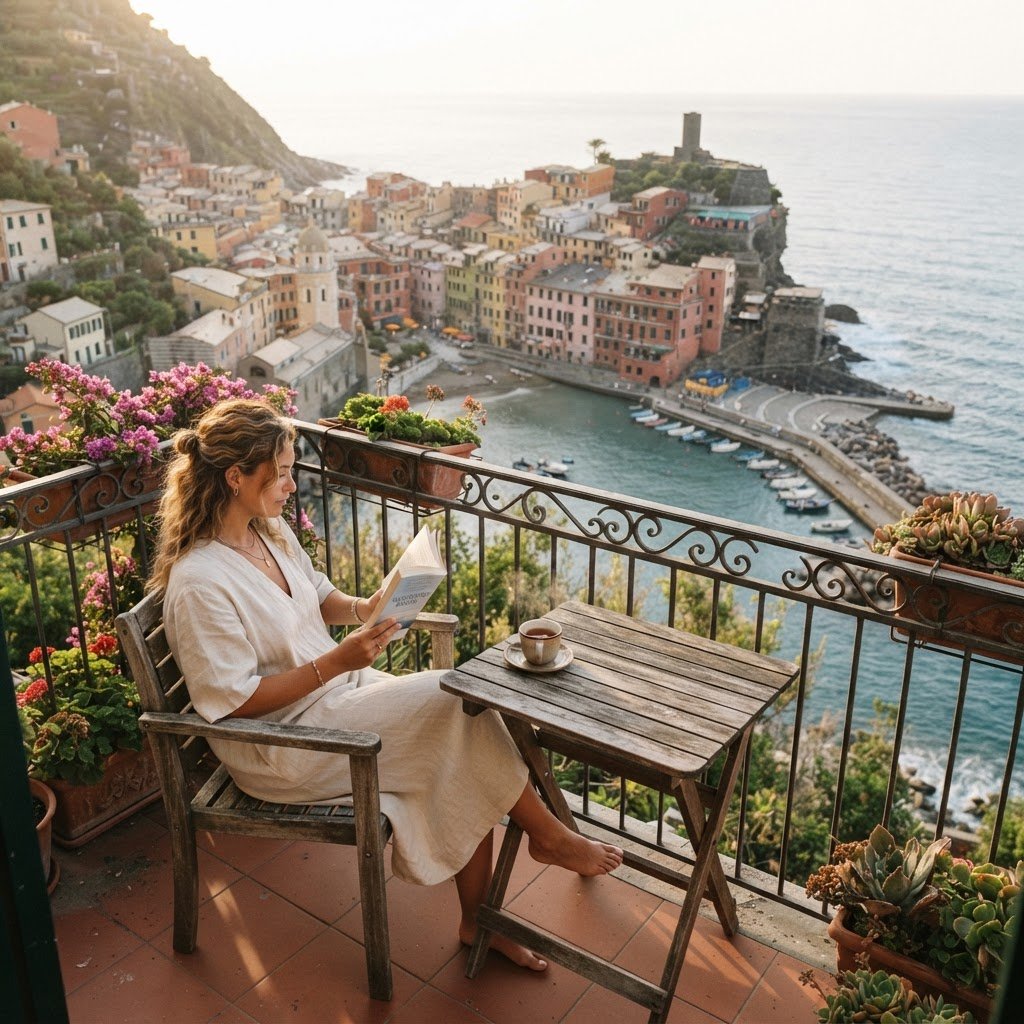
The no-rush holiday answers that need. By stripping away the pressure to see everything, it creates space for the kind of experiences that are restorative in a way that ticking off attractions is not. Reading a book in a park. Lingering over a long lunch. Having an unhurried conversation with a local shopkeeper. Watching the light change over a coastline as the afternoon drifts into evening. These are not the moments that make it onto postcards or Instagram grids, but they are the moments people remember years later. They are the moments that make a holiday feel like a holiday rather than a military campaign.
The travel industry has noticed. A growing number of accommodations are marketing themselves around the concept of slowness. Boutique hotels and guesthouses that emphasise calm, simplicity, and local immersion over amenity checklists. Holiday rentals that come with a bicycle and a bread knife rather than a concierge and a pool. Tour operators offering single-experience days, a cooking class, a guided walk, a vineyard visit, rather than full-day bus tours with forty stops. Even airlines are adapting, with some promoting “slow travel” routes that encourage longer stays in fewer destinations rather than multi-city whirlwinds.
The influence of remote work on this trend cannot be overstated. The ability to work from anywhere has created a new category of traveller, the person who extends a trip by a week or two and works remotely for part of it. These “workations” or “bleisure” trips naturally lend themselves to a slower pace. When there is no need to cram everything into a five-day window, the pressure dissolves. A month in one town becomes feasible, and with it, the opportunity to settle into a rhythm that feels less like a tourist and more like a temporary local. This is not for everyone, and it requires a level of job flexibility that many people do not have. But for those who can, it is redefining what a holiday can be.
There is also a quieter, more philosophical dimension to the rise of slow travel. It reflects a growing awareness that constant productivity, even in leisure, is exhausting. The same impulse that drives people to optimise their mornings, track their steps, and gamify their hobbies has long driven them to optimise their holidays. See ten cities in twelve days. Visit five countries in a fortnight. Maximise the return on the investment of time and money. But the回报 on a holiday is not measured in countries visited or landmarks photographed. It is measured in how restored the person feels when they come home. By that metric, a week spent doing almost nothing in one beautiful place may deliver more genuine rest than a two-week grand tour of Europe.
The environmental dimension is part of the picture too. Awareness of the carbon footprint of flying has made many travellers rethink the multi-flight itinerary. Train travel, which is inherently slower, is experiencing a renaissance partly for environmental reasons and partly because it is simply a more pleasant way to travel. Watching the countryside roll by from a train window, with no security queues and no middle seat, is an experience that air travel has never been able to match. The rise of night trains across Europe, the expansion of high-speed rail, and the growing appeal of domestic and regional travel all point in the same direction. People are choosing to travel less far, less fast, and less often, but to go deeper when they do.
Social media has played a paradoxical role in all of this. On one hand, platforms like Instagram have fuelled the bucket-list mentality, creating a relentless visual culture of must-see destinations and photogenic experiences. On the other hand, a counter-movement has emerged, with accounts dedicated to slow travel, hidden corners, and the beauty of ordinary moments in unfamiliar places. The aesthetic of the no-rush holiday, morning coffee on a quiet balcony, a handwritten journal, a simple meal at a family-run restaurant, has its own visual appeal. It is quieter than the waterfall-selfie school of travel photography, but it resonates with people who are tired of performing their leisure for an audience.
For the travel industry, the shift presents both opportunities and challenges. Destinations that have built their appeal on high-volume, fast-turnaround tourism may need to rethink their models. If visitors are staying longer but visiting fewer places, the economic distribution changes. A town that previously saw day-trippers for four hours might now host week-long visitors who spend their money at local bakeries, bookshops, and markets rather than at ticket booths and souvenir stalls. This can be a good thing for local economies, spreading spending more evenly and reducing the wear and tear of mass tourism. But it requires infrastructure that supports longer stays, from reliable internet to laundry services to grocery stores that cater to visitors.
For travellers themselves, the no-rush holiday asks for a different kind of preparation. Instead of researching every attraction and building a day-by-day itinerary, the preparation is more about mindset. Choosing one base rather than three. Booking a few key experiences and leaving the rest open. Accepting that some days will be uneventful and that this is the point. Packing lighter. Leaving the laptop behind, or bringing it and using it sparingly. Being willing to change plans based on a conversation with a local or a sudden change of weather. These are small adjustments, but they require a conscious letting go of the instinct to control and optimise.
What the no-rush holiday ultimately offers is permission. Permission to stop performing, stop achieving, stop collecting experiences like stamps in a passport. Permission to be bored, to wander, to waste an afternoon. In a culture that increasingly treats time as a resource to be maximised, this permission is rare and valuable. The rise of slow travel is not really about travel at all. It is about a growing recognition that the best use of time is sometimes to use it slowly, and that the richest experiences often come not from going further or faster but from staying put and paying attention.




