A perspective piece from The Listening Market
For a while, it seemed like home cooking might be heading the way of letter-writing and landline telephones. A thing people used to do. The kitchen, once the heart of the home, was increasingly being outsourced. Meal delivery apps made it possible to eat restaurant-quality food without leaving the sofa. Supermarket ready meals grew more sophisticated by the year. The message was clear and persistent. Cooking takes time, and time is the one thing nobody has enough of.
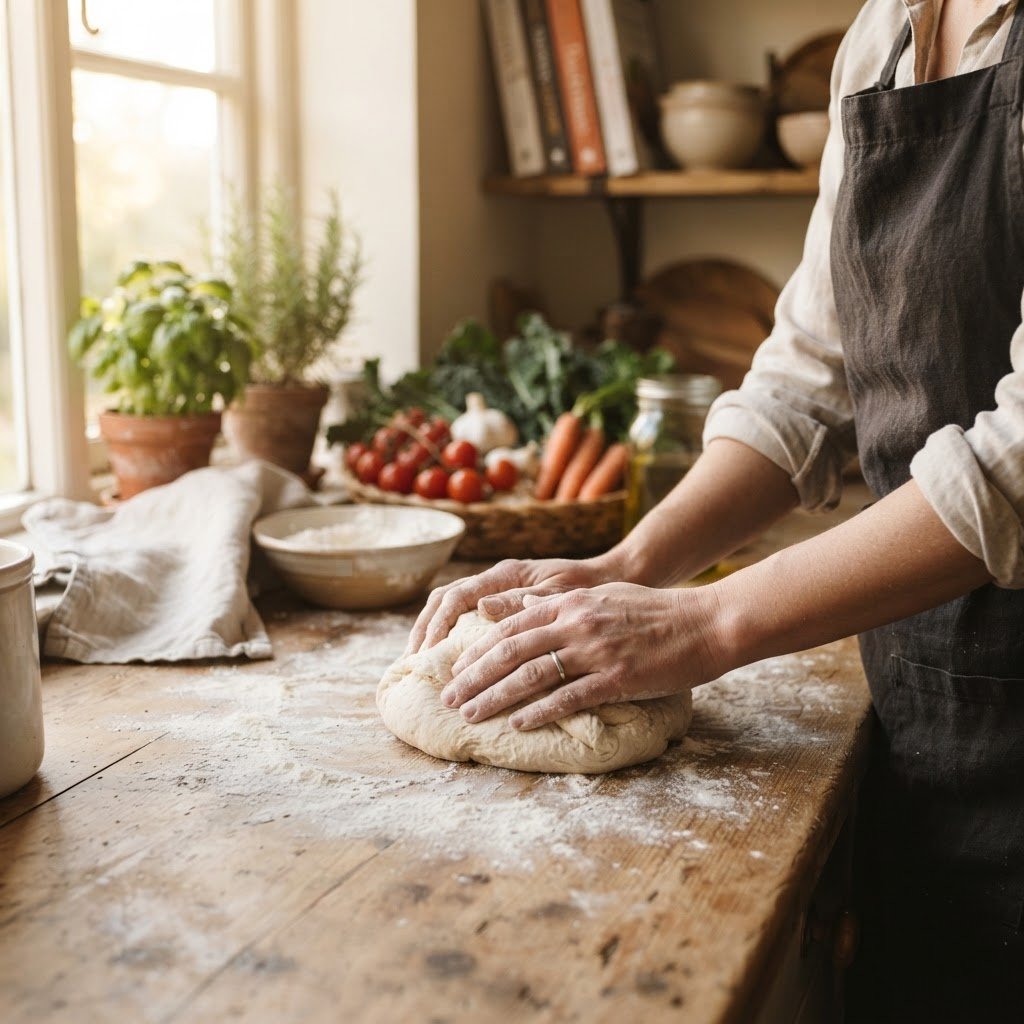
And yet, something has shifted. Across kitchens, cookware stores, and social media feeds, a different story is emerging. People are not just cooking at home again. They are cooking simply, deliberately, and with a kind of quiet pleasure that feels different from the sourdough-fueled frenzy of a few years ago. This is not about elaborate dinner party menus or competition-level plating. It is about the return of the ordinary meal. A pot of soup on a Tuesday. A tray of roasted vegetables on a Thursday. A loaf of bread that does not need to be Instagrammed.
The reasons for this rediscovery are layered. Cost is certainly part of it. The cumulative price of a year of takeout and delivery has become impossible to ignore. As the cost of living has risen across much of the world, cooking at home has shifted from being a lifestyle choice to an economic necessity for many households. But framing it purely as a budget decision misses something important. People who start cooking at home to save money often discover that they keep doing it for reasons that have nothing to do with money. They like it. They like the rhythm of it, the satisfaction of it, the way it changes the texture of an evening.
There is a growing body of research suggesting that people who cook at home regularly tend to eat better. Not necessarily in a calorie-counting sense, but in the quality and variety of what they consume. Home-cooked meals typically contain more vegetables, less salt, less sugar, and fewer ultra-processed ingredients than their restaurant or packaged equivalents. This is not a surprise. When someone cooks for themselves, they control what goes in. They can taste and adjust. They can decide how much butter is enough. The connection between home cooking and health is not about willpower or discipline. It is about the simple fact that being involved in the preparation of food changes the relationship with eating.
The word “simple” is doing important work in this trend. The rediscovery of home cooking is not about replicating restaurant dishes or chasing culinary perfection. It is about a set of skills and habits that were once completely ordinary and have become, oddly, a little radical. Knowing how to make a basic tomato sauce. Being able to roast a chicken without consulting a recipe. Having a handful of weeknight meals that can be made from memory in thirty minutes. These are not impressive feats. They are the building blocks of a life where dinner is something made rather than ordered, and their return is quietly significant.
Social media has played a curious role. The same platforms that once drove people toward increasingly elaborate food projects have become home to a counter-movement. Accounts dedicated to simple, unfussy cooking have grown enormous followings. Videos of someone making a basic lentil soup or a simple pasta dish, with no music, no fast cuts, no ingredient lists scrolling across the screen, have become a form of comfort viewing. The appeal is not aspirational. It is reassuring. It says that ordinary food, made with ordinary ingredients, is enough. That message cuts against years of food content that equated cooking with performance.
The mental health dimension of cooking is also being taken more seriously. Therapists and wellbeing writers have begun describing cooking as a form of mindfulness, a way of being present that does not require meditation or an app. The tactile nature of cooking, chopping, stirring, kneading, requires a kind of attention that pulls people out of their heads and into their hands. The kitchen becomes a space where the phone can be put down, where the senses take over, where the reward is immediate and tangible. For people who spend their working days in front of screens, the physicality of cooking can be genuinely restorative.
There is also a social element that should not be overlooked. Cooking at home, even simply, creates the possibility of eating together. The table becomes a place where people gather rather than a surface for holding delivery boxes. The act of sharing food that someone has made, however basic, carries a different weight than sharing food that someone has ordered. It is not about the quality of the meal. It is about the gesture. Someone spent time making this. That act of care, however small, is one of the oldest forms of human connection, and its absence has been quietly felt in households where cooking has faded.
The practical barriers to home cooking are real and should not be dismissed. Not everyone has a well-equipped kitchen. Not everyone has the time, especially in households where work schedules are demanding and unpredictable. Not everyone had the experience of learning to cook at home and feels confident in the kitchen. These are not trivial obstacles. But the trend toward simple cooking is partly about lowering the bar. The message is not that everyone should be making three-course meals from scratch. It is that a few reliable, simple dishes, made regularly, can change the shape of a week. The bar does not need to be high. It needs to be reachable.
Grocery shopping is part of the shift. People who cook at home tend to shop differently. They buy more whole ingredients and fewer prepared items. They think in terms of meals rather than products. This changes the relationship with the supermarket, which for many people has become a place of bewildering choice and impulse decisions. Cooking simple meals regularly creates a natural structure around shopping. A rough plan for the week, a list that reflects it, and a kitchen that is stocked with the basics. None of this is revolutionary. It is the way most people shopped a generation ago, and its return feels less like nostalgia and more like common sense reasserting itself.
The generational aspect of this trend is worth noting. Younger people who grew up with food delivery as a default are discovering home cooking in a way that feels new to them, even if it is ancient in human terms. Cooking classes, both in-person and online, are seeing strong enrolment from people in their twenties and thirties who want to learn the basics. Cookware sales to first-time cooks are up. There is a sense of discovery, of people finding that the thing they assumed was tedious and difficult is actually straightforward and satisfying. This is not a trend driven by nostalgia for a past people remember. It is a trend driven by people encountering something that was always there and realising it was better than they expected.
What makes the rediscovery of simple home cooking feel durable rather than fleeting is that it is not built on a single impulse. It is not just about money, or health, or mindfulness, or social connection. It is about all of these things at once, converging in a practice that happens to address several modern anxieties simultaneously. Cooking at home costs less, tends to be healthier, creates a moment of presence in the day, and opens the door to shared meals. Few activities offer that combination of benefits. The fact that it also produces something tangible and useful at the end, a meal that can be eaten and enjoyed, gives it a satisfaction that many other pursuits struggle to match.
The kitchen has been written off before. It was supposed to disappear into the cloud of food delivery apps and meal kit subscriptions and smart ovens that do everything automatically. Instead, something stranger and more encouraging has happened. People have walked back into it, rolled up their sleeves, and remembered that the simplest meals, made with their own hands, are often the ones that taste the best. Not because the technique is perfect or the ingredients are expensive, but because they are the product of time, attention, and the ancient, unremarkable act of making something to eat.