
A perspective piece from The Listening Market
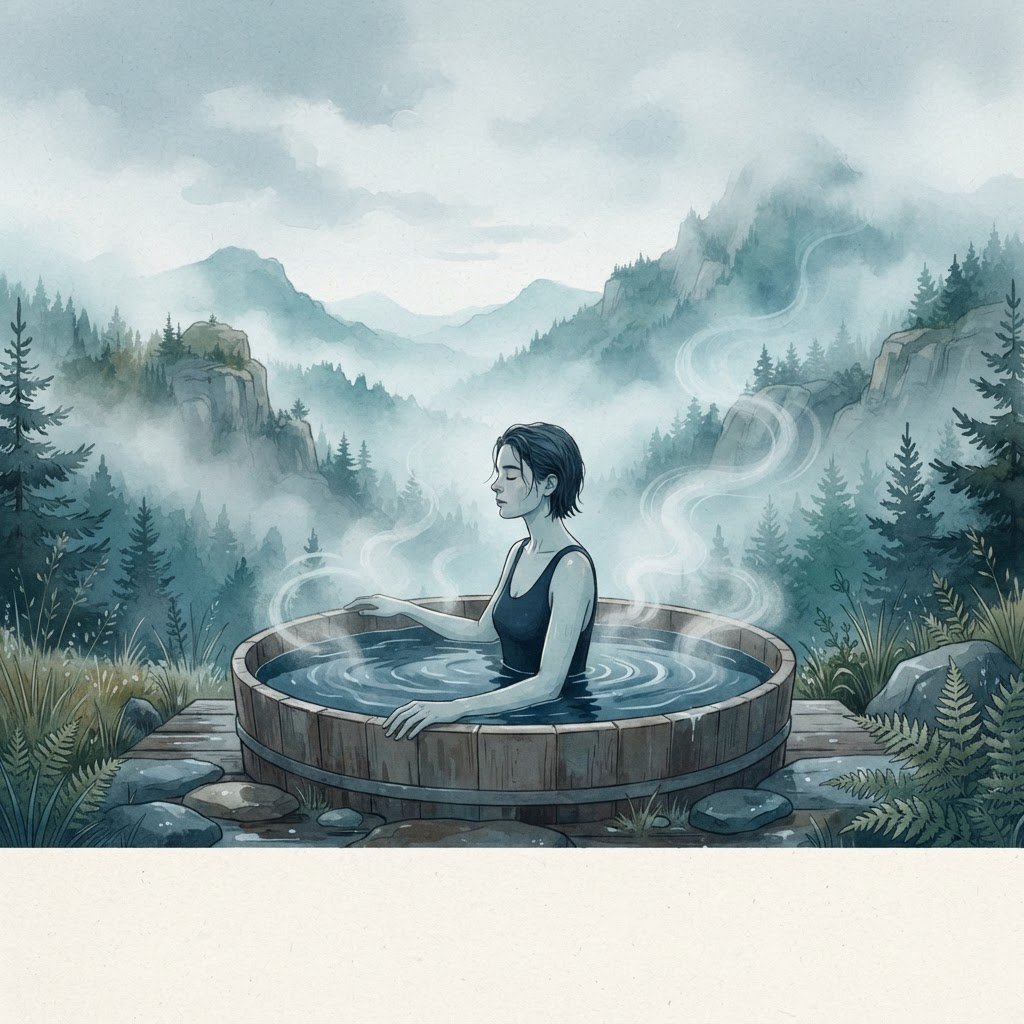
There is something about cold water that commands attention. Step into a river in winter, or a backyard tub filled with water chilled to four degrees, and the body responds immediately. The breath quickens, the skin tightens, the mind narrows to a single point of focus. For a few seconds, there is no room for anything else. The inbox, the argument, the deadline, all of it disappears. There is only the cold and the decision to stay in it.
A few years ago, this was the practice of a small and devoted fringe. Wim Hof, the Dutch man known for ice baths and breathwork, had a following, but it was a niche one. Cold water swimming was something done by hearty souls in northern European countries, a cultural tradition that outsiders observed with a mixture of admiration and bewilderment. The idea of deliberately immersing yourself in cold water, by choice, for health, was not something most people had encountered, and if they had, they had filed it under things they would never try.
That has changed. Cold plunges have moved from the margins to the mainstream with remarkable speed. Backyard ice baths have become a status symbol in certain circles. Purpose-built cold plunge tubs, with temperature controls and filtration systems, are selling for thousands of dollars. Gyms and wellness centres are adding cold plunge pools alongside their saunas. Social media is full of videos of people stepping into cold water, gasping, and then describing how alive they feel. What was once extreme has become aspirational.
The question is why. Wellness trends come and go, and most of them fade as quickly as they appear. Cold plunges have a quality that sets them apart: the experience is immediate, visceral, and undeniable. Unlike a supplement that might or might not be doing something, or a meditation practice whose benefits accumulate slowly and invisibly, the cold plunge delivers an instant, unmistakable sensation. You feel different the moment you get out. Whether that difference is physiological or psychological, and the evidence suggests it is both, the feeling is real enough that people come back for it.
The science behind cold water immersion is more substantial than the sceptics might expect, though it is still developing. Studies have suggested that regular cold exposure can reduce inflammation, improve circulation, and boost the immune system. There is research indicating that cold water may increase norepinephrine, a neurotransmitter involved in attention and mood, by significant amounts. Some studies have found links between cold water swimming and improvements in conditions ranging from depression to chronic pain. The evidence is not yet conclusive, and much of it comes from small studies that need to be replicated, but it is enough to suggest that the practice is more than a placebo.
What the research has not fully captured, and what the people who do it describe most consistently, is the mental effect. The cold plunge is, above all, an exercise in voluntary discomfort. You choose to do something hard, something unpleasant, and you stay with it. In a world that has been engineered for comfort, from heated car seats to same-day delivery, the deliberate pursuit of discomfort is a counterintuitive act. But there is something about it that resonates. People who start cold plunging often describe a shift that goes beyond the physical. They feel more resilient, more capable, more willing to face difficult things in other areas of their lives. The cold water becomes a kind of training ground, a daily proof that you can do hard things.
This psychological dimension may explain why the practice has spread so widely in the post-pandemic years. The pandemic disrupted routines, isolated people, and left many searching for ways to feel a sense of agency and control. The cold plunge offers both. It is something you do, not something that is done to you. The decision to get in the water is yours, and the act of staying in it is a choice you make moment by moment. In a time when so much felt beyond individual control, the cold plunge was a small, daily reclamation of agency.
The community aspect should not be underestimated either. Cold water swimming groups have formed in cities and towns around the world, bringing people together for a shared experience that is as much about connection as it is about health. There is something bonding about shared discomfort, something that breaks down the usual social barriers. People who would never have met in other circumstances find themselves standing in a lake together, shivering and laughing. The cold water does not care about your job title or your background. It is an equaliser, and that equality creates a kind of camaraderie that is increasingly rare.
The commercial side of the trend has grown just as quickly. The market for cold plunge tubs, chillers, and accessories has expanded rapidly, with companies offering everything from inflatable tubs for a few hundred dollars to premium units with built-in temperature control for several thousand. The accessibility of the equipment has lowered the barrier to entry. You no longer need to live near a cold lake or have a chest freezer you can convert. You can order a tub online, fill it from a garden hose, and be plunging by the weekend. This convenience has been crucial to the mainstreaming of the practice.
As with any wellness trend that grows quickly, there are caveats. Cold water immersion is not for everyone. People with certain cardiovascular conditions should be cautious, as the shock of cold water can put stress on the heart. The benefits, while real for many, are not universal, and the research is still catching up with the enthusiasm. There is also the risk that the practice becomes another thing people feel they should be doing, another entry on the long list of wellness obligations that can make modern life feel like a performance rather than a lived experience. The cold plunge is valuable in part because it is a choice, and that value diminishes if it becomes an expectation.
There is also the question of sustainability. Wellness trends tend to have a life cycle. They rise, they peak, and they either become permanent fixtures or fade into the background. Cold plunges have the advantage of being simple, cheap if you use natural water, and immediately rewarding. They do not require a subscription, a guru, or a specialised diet. They require only cold water and a willingness to get in it. That simplicity may be what gives the practice staying power. It is hard to monetise a lake.
What seems clear is that the cold plunge has tapped into something deeper than a wellness fad. It is a response to a world that is increasingly comfortable, curated, and frictionless. People are not just looking for health benefits. They are looking for something real, something that cannot be simulated or optimised. The cold is real. It does not negotiate. It does not care about your intentions. It simply is, and you either get in or you do not. In a culture saturated with optimisation and self-improvement, there is something refreshing about an experience that cannot be gamified.
The people who have made cold plunging a regular part of their lives describe it in language that goes beyond health. They talk about clarity, about presence, about the way the cold strips away everything except the moment. They talk about the contrast between the cold and the warmth that follows, the way a hot drink feels different after you have been in freezing water, the way an ordinary morning feels different when it started with a deliberate shock. These are not measurable outcomes, but they are meaningful ones, and meaning is what people are ultimately searching for.
The cold plunge may or may not be here to stay. It may settle into the background of wellness culture, joining meditation and yoga as practices that some people do and most people know about. It may fade, replaced by the next thing that promises to make people feel alive. But whatever happens to the trend, the impulse behind it, the desire for something real and uncomfortable and immediate, is not going away. The world will keep getting more comfortable, and the pull of discomfort will keep getting stronger. The cold water is just one way of answering it.




