
A perspective piece from The Listening Market
There was a time when getting your first car was a rite of passage, a symbol of adulthood as reliable as turning eighteen or finishing school. The car meant freedom. It meant you could go where you wanted, when you wanted, without asking permission or checking a timetable. It was a private space on wheels, a bedroom extension, a personal statement trimmed in metal and glass. For generations, the question was not whether you would get a car but when, and what kind.
That question is starting to sound different. Across cities and suburbs, among people in their twenties and thirties and increasingly beyond, a growing number are asking whether they need a car at all. Not because they cannot afford one, though many cannot, but because the math has changed. The freedom that a car once represented is now available through other means, and the costs of ownership, financial and otherwise, have become harder to ignore.
The financial case is the most obvious. Owning a car has always been expensive, but the expenses have crept upward in ways that are hard to dismiss. Insurance premiums have risen, fuel prices have been volatile, and the cost of repairs has climbed as vehicles have become more complex. A modern car is a computer on wheels, and fixing it requires specialised tools and expertise that did not exist a generation ago. Add in registration, parking fees, tolls, and the steady depreciation that eats away at the car’s value every year, and the total cost of ownership can easily run into thousands of dollars annually. For something that sits idle for ninety-five percent of its life, that is a substantial commitment.
The alternative has become more viable because the alternatives have multiplied. Ride-sharing services, once a novelty, are now mundane. Car-sharing platforms let you rent a vehicle by the hour for the trips that genuinely require one. E-bikes and scooters have appeared on city streets, offering a way to cover short distances without breaking a sweat or waiting for a bus. Public transport, long the unglamorous option, has been improving in many cities, with real-time tracking apps that make it more predictable and less frustrating than it used to be. None of these options replaces a car entirely on its own, but together they create a patchwork that covers most of what most people need most of the time.
The shift toward remote and hybrid work has also weakened the case for car ownership. The daily commute was the single biggest reason most people needed a car. Remove that commute, or reduce it to two or three days a week, and the car’s utility drops sharply. What was once a daily necessity becomes an occasional convenience, and the economics of paying for something you use occasionally look very different from the economics of paying for something you use every day. People who worked out the monthly cost of their car and compared it to the cost of occasional ride-shares and weekly grocery deliveries found that the math was not close. The car was costing them far more than the alternatives, and they were not using it enough to justify the difference.
There is also a cultural dimension to this shift that goes beyond money and convenience. The car was once a status symbol, a way of signalling success and aspiration. A nice car in the driveway said something about who you were and where you were going. That signalling has become more complicated. Among younger demographics, the status symbols have shifted. A premium e-bike, a well-chosen apartment in a walkable neighbourhood, the freedom of not being tied to a monthly car payment, these are the things that now carry a certain kind of cachet. The car is not gone, but it is no longer the only thing that says you have made it.
Environmental awareness plays a role too, though it is harder to measure than the financial factors. Some people are choosing to live car-free because they are concerned about emissions and want to reduce their personal carbon footprint. For others, it is a side benefit rather than a primary motivation. Either way, the result is the same: fewer cars on the road, less traffic, less pollution, and a quieter city. The people who make this choice are not necessarily doing it for the planet, but the planet benefits all the same.
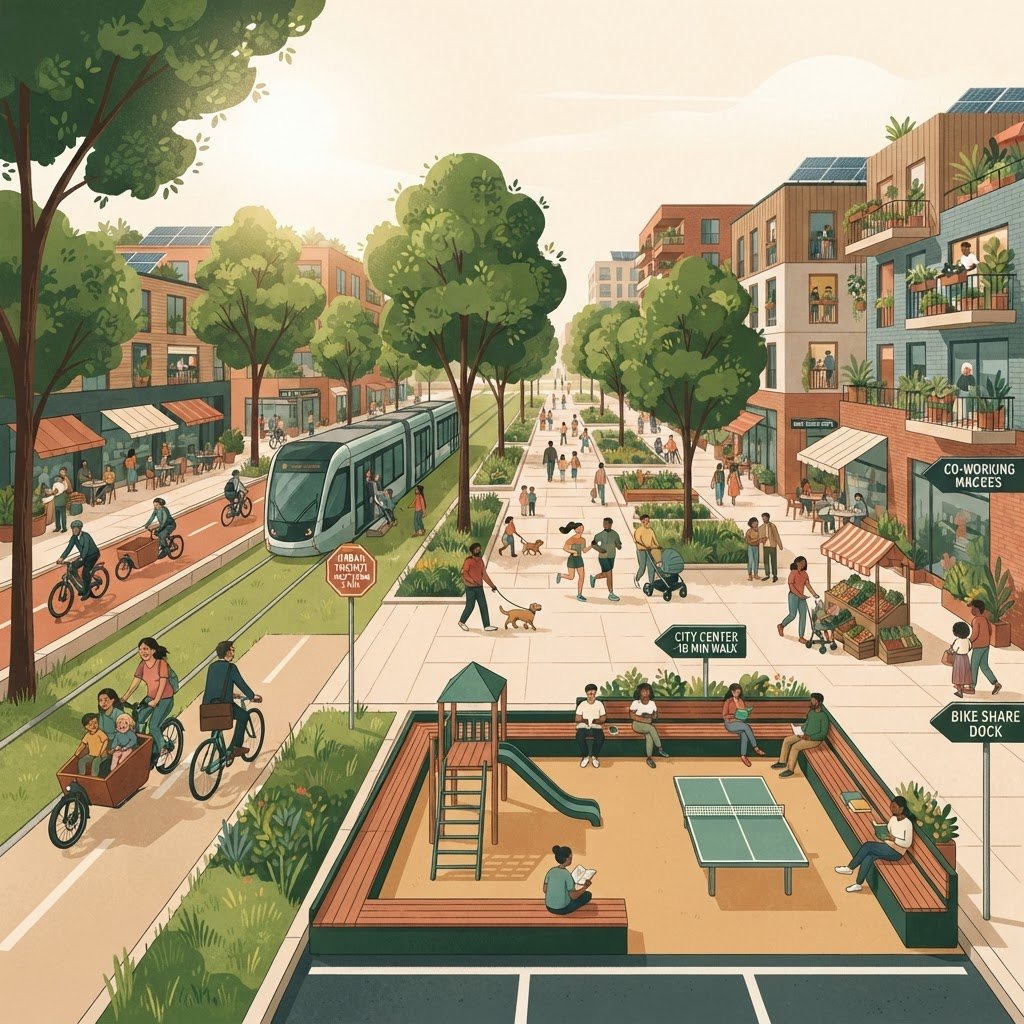
The urban planning world has noticed. Cities that once designed their streets around cars are slowly redesigning them around people. Bike lanes that were painted as temporary pandemic measures have been made permanent. Some city centres have restricted or banned private vehicles entirely, transforming busy roads into pedestrian spaces. Parking lots, some of the most valuable real estate in any city, are being reconsidered. Could that space be used for housing, for parks, for anything other than storing idle vehicles? The question is being asked more often, and the answers are increasingly leaning away from the car.
Not everyone can make this choice, and that is important to acknowledge. Living car-free is easier in dense cities with good public transport and harder in suburbs and rural areas where distances are long and alternatives are sparse. It is easier for people who work from home and harder for those whose jobs require travel. It is easier for people without children and harder for parents juggling school runs, sports practices, and the logistics of family life. The car-free life is not a universal solution, and presenting it as one would be naive. But for a growing number of people in a growing number of places, it is a viable choice that was not available a decade ago.
What is interesting is how many people who try living without a car find that they do not miss it. The anxiety that precedes the decision is often greater than the reality that follows it. People worry about the trips they will not be able to make, the things they will not be able to do, the freedom they will lose. In practice, they discover that they walk more, cycle more, and use their neighbourhood differently. They spend less time in traffic and more time outside. They notice things they used to speed past. The car was a convenience, but it was also a kind of isolation, a glass bubble that moved people through the world without ever letting them touch it.
There is a certain irony in the fact that the car, the ultimate symbol of freedom, has become for many a kind of burden. The freedom to drive anywhere is paired with the obligation to maintain, insure, park, and pay for the vehicle that makes it possible. The freedom to live without a car is a different kind of freedom, one that comes from having less to worry about and fewer fixed costs to carry. It is the freedom of a lighter life, and for a growing number of people, that trade feels worth making.
The car will not disappear. It will remain essential for many people and many purposes, and the technology behind it, electric vehicles, autonomous driving, will continue to evolve. But the assumption that everyone should have one, that adulthood and car ownership are inseparable, is loosening. The car’s place in daily life is shrinking from a necessity to an option, and options, by definition, can be declined.
What is emerging in its place is something more flexible, more adaptive, and more aware of the actual cost of things. A world where you use a car when you need one and do not pay for it when you do not. A world where the streets belong to people as much as to vehicles. A world where freedom is measured not by what you own but by what you are free from. For a growing number of people, that world is not a fantasy. It is simply the way they have chosen to live, and the choice, once made, has turned out to be easier than they expected.




